
Adipotide vs Retatrutide: Targeted Fat Apoptosis vs. Triple-Agonist Metabolic Enhancement

Disclaimer: The following information is for educational and informational purposes only. The compounds discussed, including Adipotide (FTPP) and Retatrutide, are strictly for laboratory research use only. They are not approved for human consumption, diagnostics, or therapeutic applications. Always consult safety data sheets (SDS) and adhere to institutional review board (IRB) guidelines when handling these research chemicals.
Quick Answer: Adipotide vs Retatrutide at a Glance
When evaluating adipotide vs retatrutide, the fundamental distinction lies in their mechanisms of action. Adipotide is a peptidomimetic that induces targeted apoptosis in the blood vessels supplying white adipose tissue, causing localized fat necrosis. Conversely, Retatrutide is a multi-receptor triple agonist (GLP-1, GIP, GCGR) that drives systemic weight loss by suppressing appetite, regulating insulin, and accelerating basal metabolic rate without destroying cellular infrastructure.
Table of Contents
- The Evolution of Advanced Fat Reduction Peptides
- Mechanism of Action: Adipotide (FTPP)
- Mechanism of Action: Retatrutide
- Head-to-Head Clinical Data and Efficacy
- Safety Profiles, Toxicity, and Side Effects
- B2B Perspectives: Sourcing & Synthesis
- B2C Perspectives: Advanced Biohacking
- Combining Modalities
- Frequently Asked Questions (FAQs)
- Key Takeaways
The Evolution of Advanced Fat Reduction Peptides
To appreciate the distinct biochemical pathways of these two compounds, we must first examine the evolutionary trajectory of metabolic and anti-obesity peptide research. For decades, the pharmaceutical and advanced biohacking communities have sought the “holy grail” of fat reduction: a compound that can rapidly eliminate lipid stores while preserving lean skeletal muscle and maintaining physiological homeostasis.
Moving Beyond First-Generation GLP-1s
The widespread introduction of Glucagon-Like Peptide-1 (GLP-1) receptor agonists, such as Semaglutide, fundamentally disrupted obesity management. By mimicking native gut incretin hormones, these peptides delay gastric emptying and signal satiety to the hypothalamus. However, first-generation GLP-1s are biochemically limited; they strictly reduce caloric intake (the “energy in” side of the equation). They do not inherently upregulate basal metabolic rate or energy expenditure. Consequently, subjects often experience a metabolic plateau, coupled with a highly undesirable loss of lean muscle mass (sarcopenia) due to severe caloric restriction.
Recognizing these limitations, biochemists began exploring multi-receptor agonism—combining GLP-1 with Glucose-Dependent Insulinotropic Polypeptide (GIP) to mitigate gastrointestinal distress and enhance glycemic control, giving rise to dual agonists like Tirzepatide. Simultaneously, an entirely separate, more aggressive branch of research emerged from cancer pharmacology: angiogenesis inhibition.
Why the Distinction Between Apoptosis and Agonism Matters
This divergence in research philosophy is perfectly encapsulated when analyzing adipotide vs retatrutide. The approach behind Adipotide (also known as Prohibitin-Targeting Peptide 1 or FTPP) is purely structural and destructive. It operates on the premise that adipose tissue behaves similarly to a solid tumor; if you starve it of its blood supply, the tissue will die. It is an agent of targeted necrosis.
Retatrutide (LY3437943), on the other hand, represents the pinnacle of systemic metabolic optimization. It is a unimolecular polyagonist that does not destroy cells but rather reprograms the body’s neuroendocrine signaling. By activating three distinct receptors (GLP-1, GIP, and the Glucagon receptor), it addresses both appetite suppression and lipid oxidation simultaneously. Understanding whether a research protocol requires localized tissue destruction or holistic neuroendocrine modulation is the critical first step in evaluating these peptides.

Figure 1: Conceptual illustration contrasting Adipotide’s targeted apoptosis mechanism with Retatrutide’s triple-receptor metabolic enhancement.
Mechanism of Action: Adipotide (FTPP) and Targeted Fat Apoptosis
Adipotide is a synthetic peptidomimetic engineered with a highly specific homing sequence. Its mechanism of action is completely divorced from the endocrine system, hormones, or the central nervous system’s appetite regulation centers. Instead, it relies on a fascinating vascular targeting mechanism.
Targeting Prohibitin in White Adipose Tissue (WAT)
The foundational science behind Adipotide hinges on a specific amino acid sequence: CKGGRAKDC. This sequence has an incredibly high binding affinity for a membrane-bound protein called prohibitin (PHB). In most healthy, normal tissues, prohibitin is located intracellularly, primarily within the mitochondria, where it plays a role in regulating cell proliferation and respiration. However, in the endothelial cells that line the microvasculature supplying white adipose tissue (WAT), prohibitin is anomalously expressed on the exterior surface of the cell membrane. Adipotide capitalizes on this biological quirk.
The Process of Angiogenesis Inhibition and Cell Death
Once Adipotide binds to the endothelial prohibitin, it unleashes its active payload: a pro-apoptotic domain. This domain triggers a rapid, programmed cell death (apoptosis) cascade within the endothelial cells.
- Vascular Collapse: The endothelial cells undergo apoptosis, causing the micro-capillaries supplying the white adipose tissue to collapse and degrade.
- Hypoxia and Starvation: Stripped of oxygen and vital nutrients, the dependent adipocytes (fat cells) are pushed into a state of severe hypoxia.
- Adipocyte Necrosis: Unable to survive without a vascular supply, the white fat cells die.
- Macrophage Clearance: The immune system dispatches macrophages to the site of the dead adipose tissue to engulf the necrotic lipid debris and clear it.
Mechanism of Action: Retatrutide and Triple-Receptor Agonism
If Adipotide is a targeted scalpel, Retatrutide is a systemic metabolic thermostat. Developed by Eli Lilly, Retatrutide is a single synthetic peptide engineered to agonize three distinctly different cellular receptors simultaneously. This “triple G” (GLP-1/GIP/GCGR) approach orchestrates a massive, synergistic shift in metabolic homeostasis.
The Synergistic Triad: GLP-1, GIP, and GCGR
| Targeted Receptor | Primary Physiological Function | Contribution to Fat Loss & Metabolic Health |
|---|---|---|
| GLP-1 | Delays gastric emptying; signals satiety to the hypothalamus. | Dramatically reduces caloric intake; blunts food noise; improves glucose-dependent insulin secretion. |
| GIP | Regulates lipid storage; acts on the CNS to regulate nausea. | Enhances insulin sensitivity; buffers the nausea typically caused by high-dose GLP-1 activation; improves lipid clearance. |
| GCGR | Stimulates hepatic glycogenolysis and gluconeogenesis; upregulates thermogenesis. | The missing link: Increases energy expenditure (basal metabolic rate); rapidly oxidizes hepatic lipids (liver fat clearance). |
Systemic Metabolic Enhancement
The inclusion of the Glucagon receptor (GCGR) agonism is what truly elevates Retatrutide above dual-agonists. Historically, stimulating glucagon was viewed as counterproductive for glycemic control, as glucagon raises blood sugar. However, biochemists discovered that when GCGR agonism is paired with the insulin-stimulating effects of GLP-1 and GIP, the glycemic effects neutralize each other. What remains is the profound thermogenic and lipolytic (fat-burning) effect of glucagon.

Figure 2: Professional laboratory data visualization comparing the acute reduction effects of Adipotide vs. the sustained metabolic weight loss curves of Retatrutide.
Adipotide vs Retatrutide: Head-to-Head Clinical Data and Efficacy
When comparing the efficacy models of adipotide vs retatrutide, researchers must account for the vastly different timelines, study models, and ultimate outcomes of these two compounds. Adipotide’s data is largely relegated to preclinical animal models, whereas Retatrutide boasts robust human clinical trial data.
Speed of Action and Visible Results
Adipotide: In highly cited studies involving obese rhesus macaques, Adipotide demonstrated an astoundingly rapid reduction in fat mass. Within a mere 4-week protocol of daily subcutaneous injections, subjects exhibited an 11% reduction in total body weight, accompanied by a 39% reduction in overall body fat volume.
Retatrutide: While lacking the acute, overnight “ablation” effect of Adipotide, Retatrutide displays unprecedented compounding efficacy over an extended timeline. In Phase 2 clinical trials, human subjects administered the highest dose (12 mg weekly) experienced an average weight reduction of approximately 24.2% over 48 weeks, without hitting a metabolic plateau.
Visceral vs. Subcutaneous Adipose Reduction
- Visceral Fat: Adipotide heavily targets this area, as there are more prohibitin-expressing endothelial cells to bind to. Retatrutide also severely depletes visceral fat, primarily because its GCGR component rapidly clears ectopic fat from the liver.
- Subcutaneous Fat: Adipotide’s efficacy is potent, destroying the vascular supply indiscriminately. Retatrutide reduces subcutaneous fat systematically as overall body fat percentage declines due to sustained caloric deficits.
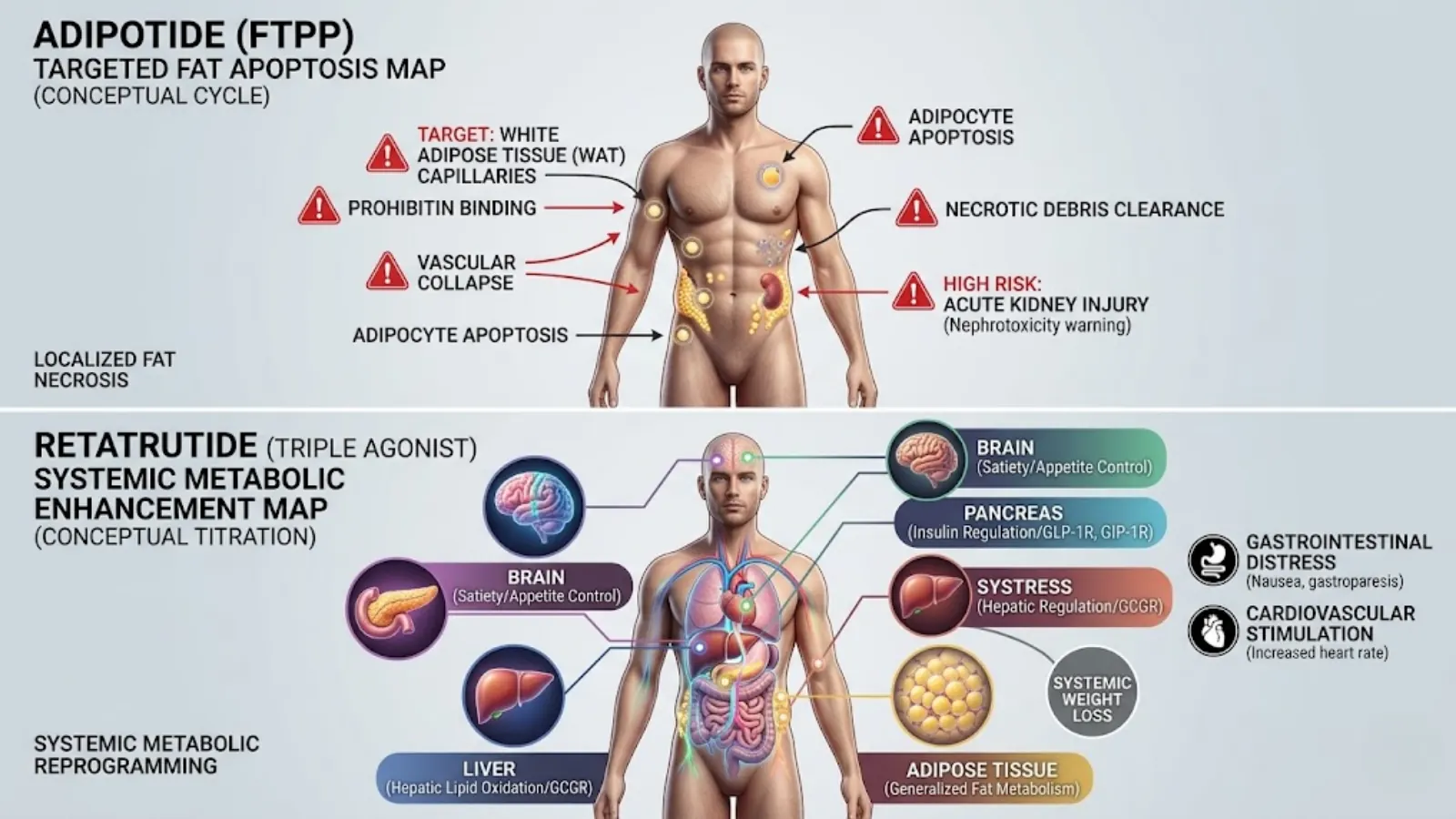
Figure 3: Physiological targeting map illustrating localized apoptosis (Adipotide) versus systemic receptor agonism (Retatrutide).
Safety Profiles, Toxicity, and Known Side Effects
When evaluating the viability of adipotide vs retatrutide for longitudinal research, the starkest contrast emerges in their respective safety and toxicity profiles.
Adipotide’s Renal Toxicity Considerations
The fundamental flaw in Adipotide’s clinical viability is its off-target binding affinity. While the prohibitin (PHB) protein is heavily expressed on WAT endothelial cells, it is also expressed in the proximal tubules of the kidneys. Systemic administration inadvertently triggers apoptosis within the renal cortex. In macaque studies, researchers observed a high incidence of dose-dependent renal lesions. This acute tubular necrosis manifests as severe dehydration, anuria, and dangerous elevation in serum creatinine levels.
Retatrutide’s Gastrointestinal and Cardiac Profile
Retatrutide bypasses localized necrosis entirely. However, its systemic neuroendocrine manipulation carries a distinct set of side effects. Because Retatrutide powerfully agonizes the GLP-1 and GIP receptors, the gastric emptying rate is severely delayed. In research subjects, this frequently presents as dose-dependent nausea, dyspepsia, vomiting, and constipation. Furthermore, Glucagon (GCGR) receptor agonism can directly increase the resting heart rate, peaking at around 24 weeks before stabilizing.
B2B Perspectives: Sourcing, Synthesis, and Laboratory Purity
For laboratory researchers, compounding pharmacies, and wholesale distributors, the acquisition and verification of these peptides require vastly different biochemical protocols.
Molecular Weight, Stability, and Storage Protocols
Adipotide (FTPP) is a relatively short, linear peptide complex. With a molecular weight of approximately 2611 g/mol, it is highly susceptible to enzymatic degradation. It must be stored at strictly -20°C or lower. Once reconstituted with bacteriostatic water, its molecular stability plummets, requiring usage within 7 to 14 days.
Retatrutide (LY3437943) is a 39-amino-acid peptide with a molecular weight of roughly 4731 g/mol. To prevent rapid clearance, biochemists attached a C20 fatty diacid moiety. This lipid attachment binds to serum albumin in the bloodstream, extending the half-life to nearly six days. It is highly sensitive to sheer stress during reconstitution.
HPLC Testing and Verifying Third-Party COAs
Laboratories must demand High-Performance Liquid Chromatography (HPLC) coupled with Mass Spectrometry (LC-MS) data. For Adipotide, purity levels must exceed 98%. For Retatrutide, researchers must check the COA for the presence of trifluoroacetic acid (TFA) salts. High levels of residual TFA are cytotoxic; premium labs perform a counter-ion exchange to convert the peptide into a safer acetate salt form.

Figure 4: Conceptual representation of advanced biohacking protocols, monitoring tools, and research peptide vials.
B2C Perspectives: Advanced Biohacking Considerations
Disclaimer: The following section discusses observed, theoretical protocols utilized within the underground biohacking community. These compounds are not approved for human use.
Theoretical Dosing Protocols and Cycles
Because of its extreme toxicity, biohackers utilizing Adipotide approach it via short, aggressive “blast” cycles (e.g., daily injections for 2-4 weeks) to induce acute adipose necrosis before severe renal lesions fully form. Conversely, Retatrutide is utilized via long-term “titration” protocols. Because the half-life is nearly six days, it is administered via a single weekly subcutaneous injection, titrating upward over 4 to 6 months.
Rebound Weight Gain and Homeostasis
When a subject ceases Retatrutide, the exogenous hormone signaling vanishes, suppressed ghrelin rebounds, and hyperphagia often leads to rapid weight regain. With Adipotide, because the fat cells were physically destroyed, they cannot “refill.” However, in a caloric surplus, the body will eventually undergo adipogenesis to create new fat cells.
Combining Modalities: Can Apoptosis and Agonism Co-Exist?
The Risks of Synergistic Stacking
From a biochemical standpoint, stacking an apoptotic agent with a triple-agonist is a recipe for acute systemic failure. When Adipotide induces necrosis, the kidneys process a massive influx of cellular debris, requiring robust hydration. Retatrutide frequently induces chronic, mild dehydration and elevates heart rate. Combining these effectively guarantees extreme nephrotoxicity and acute kidney injury (AKI). There is no synergistic benefit that outweighs the catastrophic physiological stress.
Frequently Asked Questions (FAQs) About Adipotide vs Retatrutide
Which is better for stubborn fat loss: Adipotide or Retatrutide?
For systemic, sustainable fat loss, Retatrutide is vastly superior and significantly safer. Retatrutide addresses the root neuroendocrine causes of obesity. Adipotide can destroy localized fat rapidly, but its extreme toxicity makes it unviable for safe fat reduction.
What is the mechanism of action of Adipotide compared to Retatrutide?
Adipotide works by triggering localized apoptosis in the blood vessels that feed white fat cells. Retatrutide works systemically by agonizing three hormone receptors (GLP-1, GIP, and GCGR) to suppress appetite and optimize metabolism.
How does Retatrutide impact metabolic health compared to Adipotide?
Retatrutide fundamentally improves metabolic health by lowering blood glucose and improving insulin sensitivity. Adipotide has zero positive impact on metabolic health; it merely destroys adipose tissue structurally.
What are the differences in molecular stability between the two peptides?
Adipotide is a fragile, short-chain peptide that degrades rapidly. Retatrutide is a highly engineered, 39-amino-acid peptide featuring a C20 fatty acid attachment, granting it exceptional stability and a systemic half-life of nearly six days.
Key Takeaways: Which Peptide Fits Your Research Model?
- Mechanism of Action: Adipotide operates on a destructive model (targeted apoptosis). Retatrutide operates on a holistic optimization model (triple-receptor agonism).
- Efficacy vs. Safety: Adipotide induces rapid localized fat loss but carries severe renal toxicity. Retatrutide offers profound, compounding weight loss with manageable gastrointestinal side effects.
- Clinical Relevance: Adipotide remains a preclinical tool for studying angiogenesis. Retatrutide is poised to become a foundational compound in global obesity management.
- Biohacking Reality: The community is shifting away from high-risk, acute chemical interventions toward hormonally optimized metabolic enhancement protocols.