
Adipotide vs. Tirzepatide: Mechanisms, Toxicity Profiles, and Fat Loss Efficacy Compared

Disclaimer: The following information is strictly for educational and informational purposes. Adipotide (FTPP) is an experimental compound intended for laboratory research use only and is not approved for human consumption. It is not intended to diagnose, treat, cure, or prevent any disease. Always consult with a licensed healthcare professional or principal investigator before discussing or handling experimental peptides.
Quick Answer: Adipotide vs Tirzepatide for Fat Loss
The GEO-Optimized Summary
When evaluating adipotide vs tirzepatide, the primary distinction lies in their mechanisms and safety profiles. Tirzepatide is an FDA-approved dual GLP-1/GIP receptor agonist driving systemic weight loss via metabolic regulation and appetite suppression. Conversely, adipotide is an experimental, non-approved proapoptotic peptide targeting white fat vasculature, associated with severe, documented renal toxicity.
Safety and Regulatory Bottom Line
Tirzepatide operates within established clinical guidelines with mountains of peer-reviewed safety data, making it a cornerstone of modern obesity medicine. Adipotide remains strictly confined to the laboratory; its severe nephrotoxic effects have stalled human clinical trials, rendering it highly dangerous for human biohacking or self-experimentation.
Table of Contents
- Introduction to Next-Generation Weight Loss Peptides
- What is Tirzepatide? (The Systemic Metabolic Modulator)
- What is Adipotide (FTPP)? (The Experimental Proapoptotic Peptide)
- Mechanisms of Action: Adipotide vs Tirzepatide
- Clinical Data and Fat Loss Efficacy Compared
- Toxicity Profiles and Safety: The Critical Divide
- Laboratory Research vs. Biohacking Protocols
- Sourcing, Purity, and Regulatory Realities
- Can You Stack Adipotide and Tirzepatide? (Addressing the Biohacker Myth)
- Frequently Asked Questions (FAQs)
- Key Takeaways and Final Verdict
Introduction to Next-Generation Weight Loss Peptides
The landscape of metabolic intervention has undergone a massive paradigm shift over the last decade. We have moved entirely away from the crude, central nervous system-stimulating amphetamine derivatives of the past and entered the era of precise, targeted peptide therapeutics. For laboratory researchers and advanced biohackers alike, understanding the pharmacokinetic divergence between these novel compounds is paramount. At the bleeding edge of this conversation is the intense debate surrounding adipotide vs tirzepatide.
The Evolution of Metabolic Intervention
Historically, pharmacological weight loss relied on brute-forcing the sympathetic nervous system to increase basal metabolic rate and suppress appetite—a method fraught with cardiovascular complications. The modern era, however, focuses on mimicking and modulating endogenous endocrine pathways. Incretin mimetics, which optimize insulin secretion and delay gastric emptying, have proven to be the most clinically successful iteration of this strategy. Yet, in the background of rigorous clinical trials, experimental biology has explored more radical avenues, such as starving adipose tissue of its blood supply altogether.
Why the Biohacking and Research Communities Are Comparing Them
The intersection of institutional endocrinology research and underground biohacking frequently collides when analyzing the ultimate mechanisms of fat loss. Researchers comparing adipotide vs tirzepatide are essentially looking at two completely different biological strategies for achieving the same phenotypic outcome: adipose tissue reduction.
Tirzepatide leverages a systemic, hormonal approach, optimizing how the entire body partitions nutrients and perceives hunger. It is a metabolic modulator. Adipotide, on the other hand, is a targeted biochemical weapon. It bypasses the brain and the pancreas entirely, instead seeking out the specific blood vessels feeding white fat cells and triggering programmed cell death (apoptosis). For the extreme biohacker, the allure of “spot reduction” via chemical means makes adipotide a subject of intense, albeit dangerous, fascination. However, as the data reveals, the systemic modulation of tirzepatide offers a vastly superior therapeutic window.
What is Tirzepatide? (The Systemic Metabolic Modulator)
To fundamentally understand the tirzepatide side of the equation, we must look at its elegant biochemical engineering. Tirzepatide is not simply a hormone replacement; it is a highly engineered, synthetic, 39-amino-acid peptide based on the native gastric inhibitory polypeptide (GIP) sequence, heavily modified to bind to both GIP and glucagon-like peptide-1 (GLP-1) receptors.
Chemical Structure and Stability
For B2B laboratory researchers and compounding specialists, the structural integrity of tirzepatide is a masterclass in peptide stability. Native GLP-1 and GIP have incredibly short half-lives in vivo—often mere minutes—due to rapid degradation by the dipeptidyl peptidase-4 (DPP-4) enzyme. Tirzepatide circumvents this through structural modifications, most notably the addition of a C20 fatty diacid moiety attached via a hydrophilic linker to a lysine residue at position 20.
This fatty acid chain allows the peptide to tightly bind to serum albumin in the bloodstream. This albumin shielding protects the peptide from DPP-4 degradation and slows its renal clearance, extending its half-life to approximately 5 days and allowing for once-weekly subcutaneous dosing.
How Tirzepatide Works: Dual GLP-1 and GIP Receptor Agonism
Tirzepatide is colloquially known as a “twincretin.” By activating the GLP-1 receptor, it delays gastric emptying, promotes satiety signaling in the hypothalamus, and stimulates glucose-dependent insulin secretion. However, the addition of GIP receptor agonism is what truly elevates its metabolic efficacy. GIP signaling enhances white adipose tissue lipid buffering capacity, meaning it helps the body store dietary fats safely in subcutaneous depots rather than allowing ectopic lipid deposition in the liver or visceral organs. This dual-action drastically improves systemic insulin sensitivity and downregulates the biological drive to consume excess calories.
Current FDA Approvals and Clinical Landscape
Under the trade names Mounjaro (for Type 2 Diabetes) and Zepbound (for chronic weight management), tirzepatide has demonstrated unprecedented clinical success. In the SURMOUNT clinical trial programs, patients frequently achieved over 20% total body weight reduction. This level of efficacy was previously only seen with bariatric surgery, solidifying tirzepatide as the gold standard in modern metabolic pharmacology.
| Parameter | Tirzepatide Characteristic | Clinical/Research Implication |
|---|---|---|
| Peptide Length | 39 Amino Acids | Complex synthesis requiring strict QA/QC. |
| Half-Life | ~5 Days (116 hours) | Enables convenient once-weekly dosing protocols. |
| Receptor Targets | GLP-1 and GIP (Dual Agonist) | Synergistic metabolic modulation and glycemic control. |
| Clearance Mechanism | Proteolytic degradation & renal excretion | Highly stable due to C20 fatty diacid albumin binding. |
[Image of adipocyte apoptosis]
What is Adipotide (FTPP)? (The Experimental Proapoptotic Peptide)
Moving from the heavily regulated world of incretin mimetics to the experimental fringes, we encounter Adipotide, also known in research literature as Fat Targeted Proapoptotic Peptide (FTPP). Developed initially by researchers looking into anti-angiogenesis cancer therapies, Adipotide represents a radical approach to weight loss: targeted tissue destruction.
Peptide Synthesis and Purity Standards
Adipotide is an entirely synthetic peptidomimetic. Structurally, it is composed of two distinct functional domains. The first is a homing sequence—a circularized peptide (CKGGRAKDC)—that acts like a GPS, specifically seeking out and binding to prohibitin. Prohibitin is a membrane protein that is uniquely overexpressed on the surface of endothelial cells lining the blood vessels that supply white adipose tissue (WAT).
The second domain is a pro-apoptotic sequence, typically a synthetic disruptor peptide (like D(KLAKLAK)2). For synthesis laboratories evaluating adipotide vs tirzepatide, FTPP presents unique challenges. The circularization of the homing domain requires precise disulfide bond formation, and ensuring the purity of the synthetic pro-apoptotic tail is critical, as degraded fragments can cause non-specific cellular toxicity in vitro.
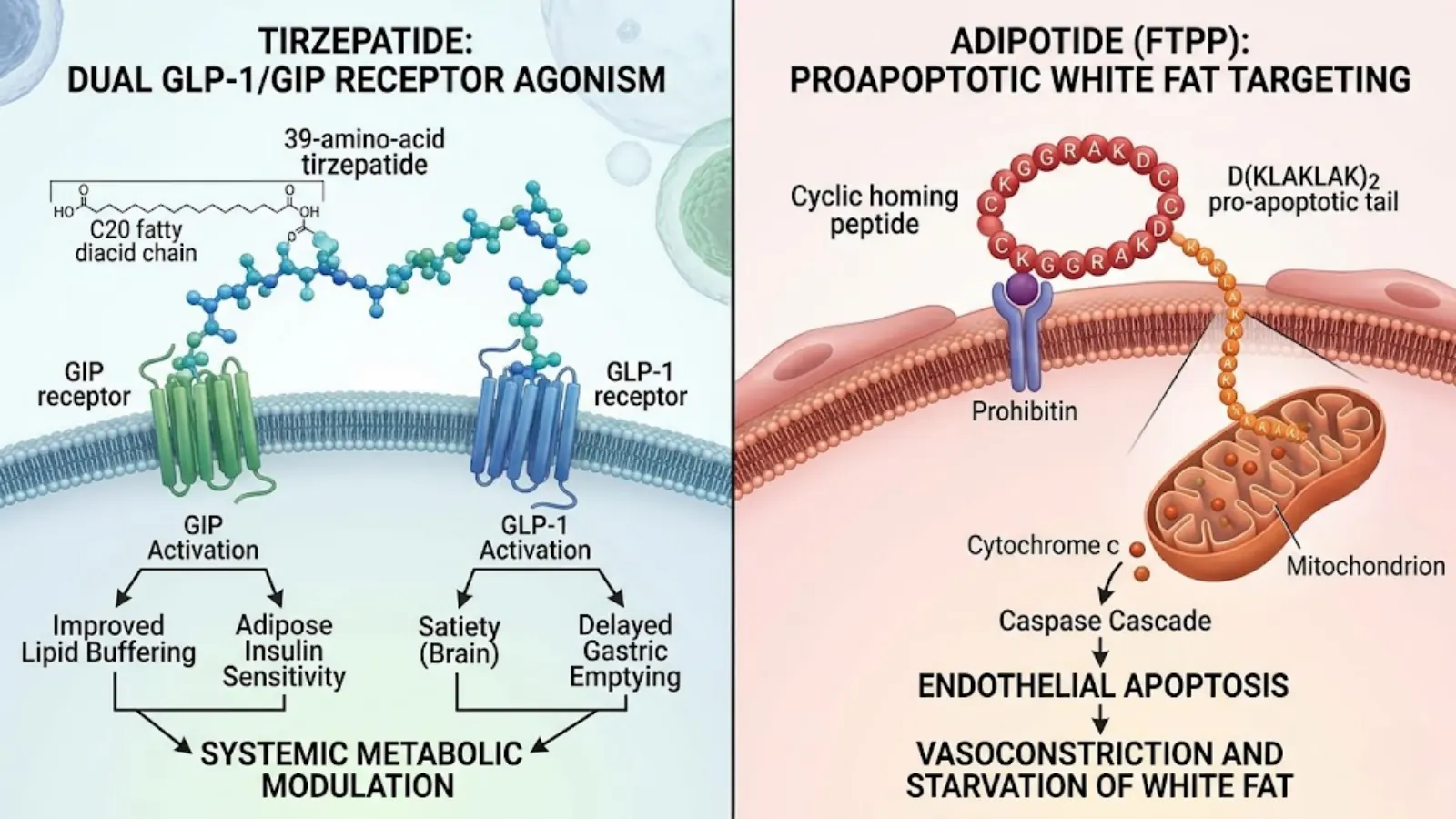
Figure 1: Conceptual molecular mechanism illustrating Tirzepatide’s dual receptor agonism and Adipotide’s targeted proapoptotic pathway.
Mechanism of Action: Targeting White Adipose Tissue Vasculature
Unlike systemic hormones, Adipotide does not care if you are hungry or full. It is an angiostatic agent. When the homing sequence binds to prohibitin on the WAT blood vessels, the peptide is internalized into the endothelial cells. Once inside, the pro-apoptotic domain is released.
This domain violently disrupts the mitochondrial membranes of the endothelial cells, causing a massive release of cytochrome c into the cytosol. This triggers a caspase cascade, culminating in rapid cellular apoptosis (programmed cell death). As the blood vessels die, the white adipose tissue they feed is starved of oxygen and nutrients. The fat cells undergo necrosis and are subsequently reabsorbed and metabolized by the body.
The Current State of Adipotide in Animal and In Vitro Studies
Initial research on FTPP was highly compelling. In studies involving obese rhesus macaques (non-human primates), subjects lost roughly 11% of their body weight and nearly 39% of their total body fat in just four weeks, with rapid improvements in insulin resistance. However, translating these in vivo primate studies to human trials has been fraught with severe, insurmountable toxicological hurdles, largely keeping FTPP strictly within the “research use only” classification.
| Parameter | Adipotide Characteristic | Clinical/Research Implication |
|---|---|---|
| Primary Target | Prohibitin (Endothelial cells of WAT) | Highly specific binding to fat-supplying vasculature. |
| Action Pathway | Mitochondrial depolarization (Apoptosis) | Triggers rapid cell death, starving fat tissue. |
| Status | Experimental / RUO | Not approved for human use; no safe clinical dosage. |
| Key Limitation | Severe Nephrotoxicity | Accumulates in renal proximal tubules causing lesions. |
[Image of GLP-1 receptor]
Mechanisms of Action: Adipotide vs Tirzepatide
To truly master the SEO and clinical intent behind the adipotide vs tirzepatide debate, one must juxtapose their mechanisms of action side-by-side. These two compounds achieve fat loss through fundamentally distinct biological pathways: one is a gentle, systemic conductor of metabolism, while the other is a targeted, localized cellular assassin.
Systemic Satiety vs. Localized Cell Death (Apoptosis)
As previously detailed, tirzepatide operates systemically. It crosses the blood-brain barrier to interact with the arcuate nucleus of the hypothalamus, heavily downregulating appetite. Simultaneously, it modulates insulin and glucagon secretion in the pancreas. The weight loss achieved via tirzepatide is a byproduct of sustained caloric deficit combined with optimized metabolic partitioning. The fat cells shrink because the body is forced to utilize stored lipids for energy.
Adipotide operates entirely locally at the site of the adipose vasculature. It does not suppress appetite or modulate insulin directly. Instead, it forcefully eradicates the infrastructure keeping fat cells alive. The fat cells do not shrink; they die and are scavenged by macrophages. This is the core difference between systemic metabolic modulation and targeted cellular apoptosis.
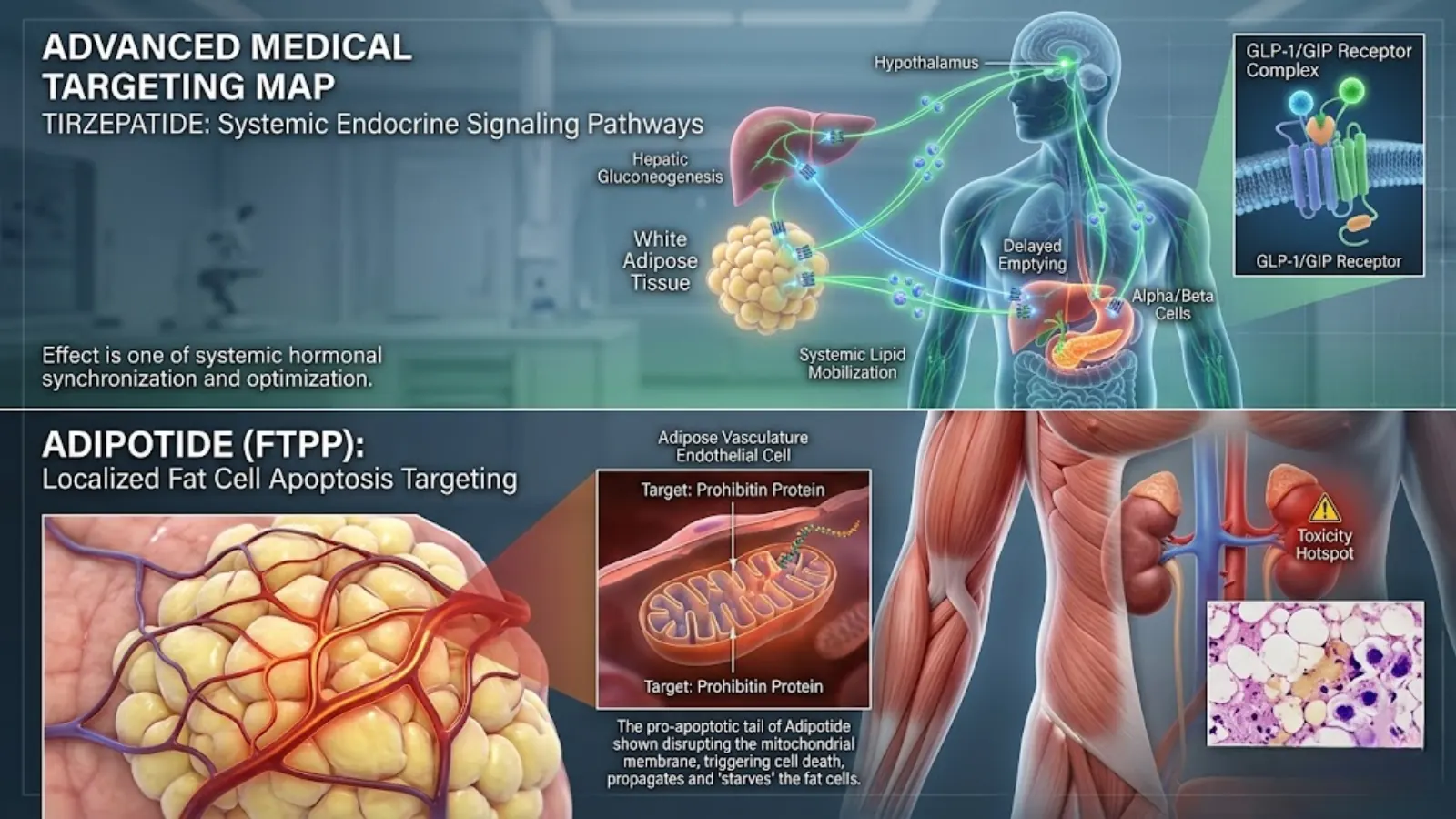
Figure 2: Physiological targeting map contrasting systemic endocrine signaling pathways with localized fat cell apoptosis.
Impact on Insulin Resistance and Blood Glucose
Tirzepatide is fundamentally an anti-diabetic medication. Its impact on blood glucose is direct, immediate, and profound. By stimulating the beta cells of the pancreas to release insulin in a glucose-dependent manner (meaning it rarely causes hypoglycemia on its own), it rapidly clears glucose from the bloodstream.
Adipotide’s impact on insulin resistance is entirely secondary. FTPP does not interact with the pancreas or glucose transporters directly. However, in animal models, insulin sensitivity improved dramatically. This occurred because the rapid destruction of white adipose tissue removed a massive source of systemic inflammation (adipokines) and ectopic lipid burden, which naturally restored the animals’ baseline insulin sensitivity.
Receptor Binding Affinity Differences
In the laboratory setting, evaluating receptor binding affinity highlights the precision of these compounds.
- Tirzepatide displays an imbalanced dual agonism. It has a binding affinity to the GIP receptor that is comparable to native GIP, but its affinity for the GLP-1 receptor is approximately 5 times weaker than native GLP-1. This imbalance is intentional; it prevents the severe nausea associated with over-activation of the GLP-1 receptor while maximizing the lipolytic benefits of GIP.
- Adipotide does not bind to G-protein coupled receptors (GPCRs) like tirzepatide. Its binding affinity is strictly graded on its ability to complex with the prohibitin protein on endothelial surfaces. Its homing sequence (CKGGRAKDC) was discovered via in vivo phage display libraries, demonstrating a highly specific, lock-and-key affinity for adipose vasculature, with virtually zero affinity for the vasculature of lean muscle tissue or major organs.
| Mechanism Vector | Tirzepatide | Adipotide (FTPP) |
|---|---|---|
| Primary Biological Action | GLP-1 / GIP Receptor Agonism | Angiogenesis Inhibition / Apoptosis |
| Target Tissue | Pancreas, Hypothalamus, Adipose | Endothelial cells of White Adipose Tissue |
| Appetite Suppression | Profound (Central Nervous System) | None (Does not cross BBB for satiety) |
| Fat Cell Fate | Lipolysis (Cells shrink, release lipids) | Apoptosis/Necrosis (Cells die and are cleared) |
| Glycemic Control | Direct (Stimulates Insulin Secretion) | Indirect (Secondary to fat mass reduction) |
Clinical Data and Fat Loss Efficacy Compared
When analyzing the adipotide vs tirzepatide debate through the lens of pure efficacy, we must evaluate the data within its proper context. One compound has undergone arguably the most rigorous, large-scale clinical human trials in modern endocrinology, while the other relies on compelling, yet highly limited, non-human primate and rodent data.
Tirzepatide: Meta-Analyses and Human Trial Success
The clinical data supporting tirzepatide is unprecedented. In the landmark SURMOUNT-1 clinical trial, which evaluated adults with obesity or overweight (without diabetes), participants taking the maximum 15 mg weekly dose achieved an average weight reduction of 22.5% over 72 weeks.
This is not merely a reduction in subcutaneous fat. MRI spectroscopy data from secondary tirzepatide trials demonstrates a profound clearance of visceral adipose tissue (VAT) and intrahepatic (liver) fat. By agonizing both GLP-1 and GIP receptors, tirzepatide orchestrates a systemic metabolic shift, forcing the body to preferentially oxidize stored lipids while simultaneously preserving insulin sensitivity. The efficacy is highly predictable, dose-dependent, and sustainable as long as the pharmacological intervention continues alongside lifestyle modifications.
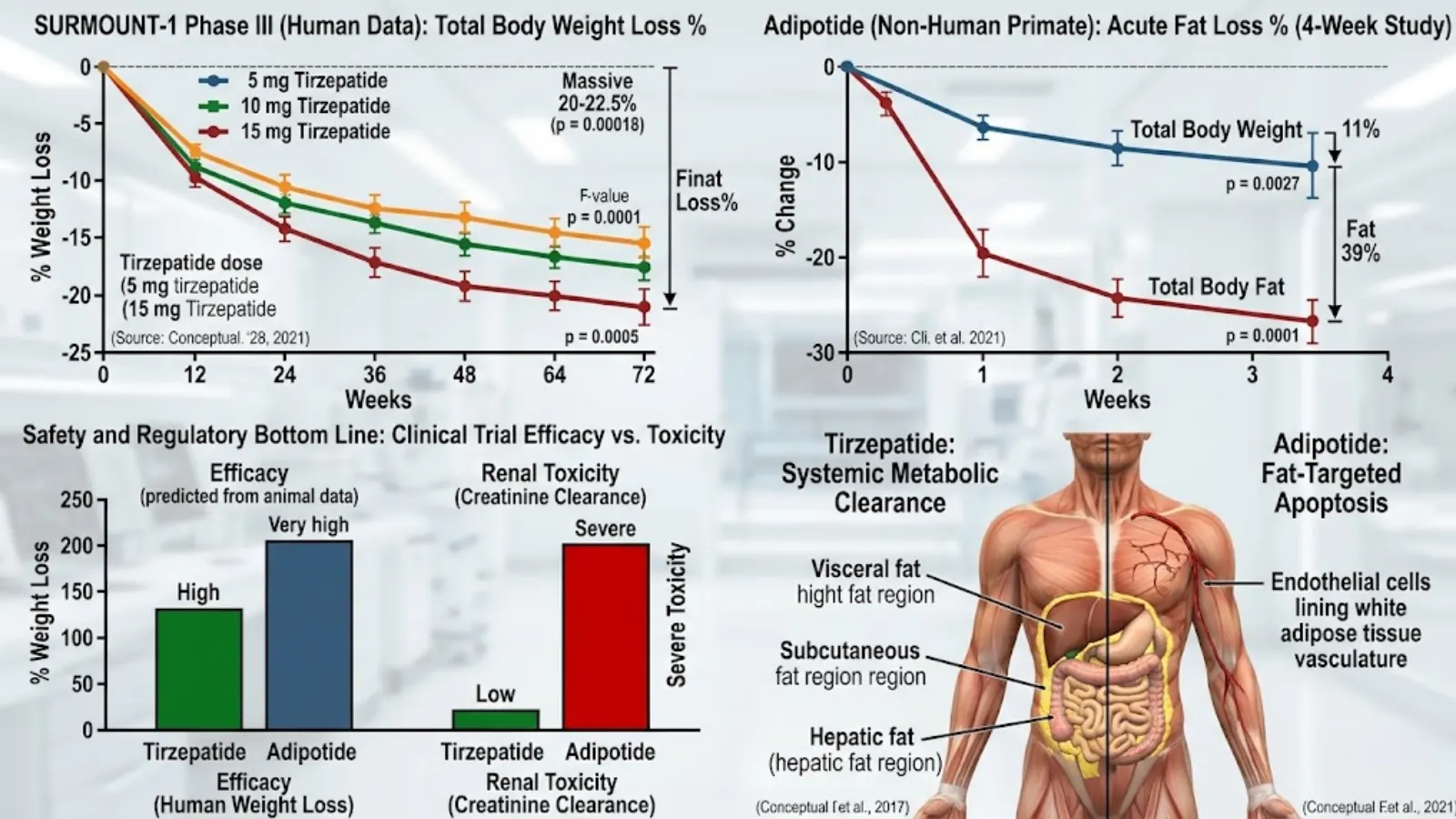
Figure 3: Multi-panel graph conceptualizing clinical trial efficacy of Tirzepatide versus the non-human primate data and severe toxicity risks of Adipotide.
Adipotide: Non-Human Primate Studies and Weight Loss Metrics
Because adipotide lacks human clinical approval, we must rely on translational animal models. The most cited data stems from studies involving spontaneously obese rhesus monkeys. The results were undeniably rapid. Within just four weeks of daily subcutaneous administration, the primates exhibited an 11% reduction in body weight, a 39% reduction in total body fat, and a 27% decrease in abdominal circumference.
This rapid efficacy occurs because adipotide forces acute necrosis of white adipose tissue. It does not require a caloric deficit to initiate fat loss; it actively starves the fat cells of oxygen (hypoxia) by destroying their vascular supply.
Which Peptide Yields Faster Results? (And at What Cost?)
If the singular metric is the speed of adipose tissue destruction, adipotide acts faster. However, biological speed frequently comes with severe physiological consequences. The rapid, forced apoptosis of fat tissue floods the bloodstream with inflammatory cytokines and cellular debris, placing a massive filtration burden on the kidneys and liver. Tirzepatide’s fat loss, while slower, aligns with human evolutionary biology, allowing the body to safely metabolize and clear mobilized fatty acids over months rather than violently destroying tissue over weeks.
| Efficacy Metric | Tirzepatide Data (Human) | Adipotide Data (Primate/Rodent) |
|---|---|---|
| Average Weight Loss | ~20-22.5% over 72 weeks | ~11% over 4 weeks |
| Target Fat Depot | Subcutaneous, Visceral, Hepatic | White Adipose Tissue (Systemic) |
| Sustainability | High (with ongoing use/maintenance) | Low (Rapid rebound frequently observed) |
| Clinical Trial Phase | FDA Approved (Phase IV monitoring) | Stalled (Pre-clinical/Phase I failure) |
[Image of human renal system]
Toxicity Profiles and Safety: The Critical Divide
This is the most critical section for anyone researching adipotide vs tirzepatide. The disparity in their safety profiles is the precise reason one is a blockbuster pharmaceutical and the other remains an experimental chemical.
Tirzepatide Side Effects: Gastrointestinal Distress and Lean Muscle Loss
Tirzepatide is not without side effects, though they are generally predictable and manageable. Because it fundamentally alters gastric emptying and brain-gut signaling, the primary adverse events are gastrointestinal: nausea, diarrhea, vomiting, and constipation. These typically occur during the upward titration phase and attenuate as the body acclimates to the peptide.
A more advanced clinical concern with tirzepatide is the risk of sarcopenia (lean muscle loss). Rapid, sustained caloric deficits can lead to the catabolism of skeletal muscle if the patient does not engage in heavy resistance training and consume adequate dietary protein. However, this is a physiological consequence of rapid weight loss, not a direct toxic effect of the peptide itself.
Adipotide Toxicity: Renal Failure and Kidney Lesions
The safety profile of adipotide is where its viability as a therapeutic agent catastrophically collapses. While its homing sequence (CKGGRAKDC) is highly specific to the prohibitin expressed on white adipose vasculature, prohibitin is also expressed in the renal cortex—specifically within the proximal convoluted tubules of the kidneys.
When adipotide is administered, a significant portion of the peptide accumulates in the kidneys. The pro-apoptotic domain then indiscriminately attacks the renal endothelial cells. In primate studies, this resulted in severe, dose-dependent nephrotoxicity. Subjects developed predictable, measurable kidney lesions, leading to acute tubular necrosis and compromised renal function (elevated serum creatinine and BUN levels). While researchers noted that the renal damage was partially reversible upon cessation of the peptide, the therapeutic window—the dose required to kill fat versus the dose that damages the kidneys—is dangerously narrow.
Long-term Endocrine Disruption Risks
Tirzepatide has demonstrated a net-positive effect on long-term endocrine health, effectively reversing Type 2 Diabetes pathophysiology in many patients. Conversely, the long-term endocrine consequences of adipotide are unknown but highly concerning. The violent destruction of white fat alters the systemic release of adiponectin and leptin in unpredictable ways, potentially setting the stage for severe metabolic rebound or insulin dysregulation once the apoptosis ceases.
Laboratory Research vs. Biohacking Protocols
Understanding how these compounds are handled in different environments highlights the stark contrast between controlled science and self-experimentation.
In Vitro and Animal Model Reconstitution Protocols
For institutional B2B laboratories, purchasing wholesale lyophilized peptides requires strict reconstitution protocols. Both tirzepatide and adipotide are highly sensitive to thermal degradation and physical shearing.
In a lab setting, lyophilized adipotide is typically reconstituted using sterile bacteriostatic water (containing 0.9% benzyl alcohol) to prevent microbial growth. The exact molarity is calculated based on the weight of the test subject (e.g., murine or primate models). Because adipotide is so prone to degradation, researchers must store the reconstituted solution at strictly 2-8°C and use it within an accelerated timeframe compared to standard GLP-1s.
Tirzepatide Titration Schedules in Practice
In the clinical and supervised biohacking space, tirzepatide is administered via a strict, multi-month titration schedule. To mitigate the gastrointestinal side effects, protocols begin at a micro-dose of 2.5 mg injected subcutaneously once a week. Every four weeks, the dose is titrated upward in 2.5 mg increments (5 mg, 7.5 mg, 10 mg, etc.) until optimal metabolic control and satiety are achieved, capping at 15 mg.

Figure 4: Advanced biohacking flat lay illustrating the stark contrast between FDA-approved Tirzepatide titration equipment and highly experimental, nephrotoxic Adipotide (FTPP) lab materials.
The Dangers of Self-Experimentation with Adipotide
In the underground biohacking community, applying clinical titration logic to adipotide is fundamentally flawed. Because adipotide causes acute cellular death rather than metabolic modulation, “titrating up” simply increases the immediate toxic load on the kidneys. Biohackers attempting to self-administer FTPP frequently report severe dehydration, dark urine, and flank pain—all classic markers of acute kidney injury. There is no recognized safe human protocol for adipotide.
Sourcing, Purity, and Regulatory Realities
The supply chain for peptides is a complex web of pharmaceutical compounding, offshore synthesis, and strict regulatory oversight.
Purchasing Lyophilized Tirzepatide vs Adipotide for Wholesale
Laboratory researchers procuring these compounds must demand rigorous Certificate of Analysis (CoA) documentation. For adipotide, assessing the purity of the synthetic pro-apoptotic tail is paramount. Impurities in the synthesis of the D(KLAKLAK)2 domain can result in off-target cellular toxicity, ruining in vitro assays.
Tirzepatide synthesis requires confirming the precise attachment of the C20 fatty diacid moiety. Without this exact structural modification, the peptide will rapidly degrade in the subject’s bloodstream, rendering the research invalid.
Navigating Third-Party Testing (HPLC/MS)
Both B2B researchers and advanced consumers rely heavily on High-Performance Liquid Chromatography (HPLC) and Mass Spectrometry (MS). HPLC separates the molecular components to verify that the vial contains the exact peptide sequence claimed, while MS confirms the molecular weight. A purity standard of >99% is required for legitimate research.
Legal Distinctions Between “Research Use Only” and Prescription Peptides
Tirzepatide is a patented, FDA-approved pharmaceutical. Obtaining it without a prescription, or outside of sanctioned compounding pharmacies, violates federal regulations. Adipotide, lacking any clinical approval, exists in a legal gray area. It can be legally synthesized and sold strictly for “Research Use Only” (RUO) to institutions. However, vendors selling RUO adipotide with the implicit understanding of human consumption face severe regulatory crackdowns by the FDA.
Can You Stack Adipotide and Tirzepatide? (Addressing the Biohacker Myth)
In the more extreme corners of the internet, a dangerous hypothesis has emerged: combining the systemic appetite suppression of a GLP-1 with the targeted fat-cell destruction of FTPP to achieve unprecedented, rapid fat loss. From a biochemical and physiological standpoint, this is highly dangerous.
The Theoretical Synergistic Effects on Visceral Fat
The theory posits that tirzepatide handles systemic metabolic partitioning while adipotide is deployed to “spot reduce” stubborn visceral fat depots. Theoretically, stripping the fat cells of their blood supply while simultaneously creating a massive caloric deficit via tirzepatide would rapidly accelerate the clearance of necrotic tissue.
Why Stacking Amplifies Severe Renal and Metabolic Risks
In reality, stacking these two compounds creates a perfect storm for acute organ failure.
- Dehydration Matrix: Tirzepatide significantly blunts the thirst mechanism and frequently causes mild to moderate dehydration due to decreased food and water intake, alongside minor gastrointestinal fluid loss.
- Renal Overload: Adipotide, as established, attacks the proximal tubules of the kidneys and requires robust renal clearance to process the dead fat cells and cellular debris.
Combining a peptide that dehydrates the body and limits kidney perfusion (tirzepatide) with a peptide that is overtly nephrotoxic (adipotide) aggressively amplifies the risk of irreversible kidney damage. The kidneys simply cannot filter the massive influx of necrotic adipose tissue when they are under-hydrated and actively accumulating toxic prohibitin-binding peptides.
Frequently Asked Questions (FAQs)
To synthesize this complex data, here are direct, scientifically grounded answers to the most common queries regarding this peptide comparison.
What is the difference in mechanism of action between adipotide and tirzepatide?
Tirzepatide acts as a systemic metabolic modulator by agonizing GLP-1 and GIP receptors, resulting in appetite suppression and enhanced insulin secretion to promote fat utilization. Adipotide is an experimental angiostatic agent that bypasses metabolism entirely, binding to white fat blood vessels to trigger targeted cellular apoptosis (death) of the fat cells.
Is adipotide better than tirzepatide for targeting stubborn visceral fat?
No. While adipotide forces rapid necrosis of white adipose tissue, the severe nephrotoxicity (kidney damage) associated with it makes it entirely unviable for human use. Tirzepatide is the superior choice, demonstrating exceptional clinical efficacy in safely reducing both visceral and subcutaneous fat depots over time.
What are the kidney toxicity risks of adipotide vs tirzepatide side effects?
Tirzepatide’s side effects are primarily gastrointestinal (nausea, delayed gastric emptying) and rarely impact kidney function directly unless severe dehydration occurs. Adipotide is explicitly nephrotoxic; it accumulates in the renal cortex and damages the proximal convoluted tubules, causing measurable kidney lesions and potential acute renal failure.
Which peptide shows higher stability in laboratory testing?
Tirzepatide shows vastly superior in vivo stability due to its engineered C20 fatty diacid moiety, which binds to serum albumin to prevent enzymatic degradation, yielding a half-life of roughly 5 days. Adipotide is a highly volatile synthetic construct that is prone to rapid degradation in serum and requires strict cold-chain handling.
What are the clinical trial failure reasons for adipotide compared to tirzepatide’s success?
Adipotide stalled in pre-clinical and early-phase trials because the therapeutic window was too narrow; the dose required to induce fat cell apoptosis simultaneously caused unacceptable renal lesions in non-human primates. Tirzepatide succeeded because its receptor agonism relies on natural endocrine pathways, exhibiting a vast therapeutic window and a highly favorable safety profile.
Key Takeaways and Final Verdict
Summary of the Adipotide vs Tirzepatide Debate
The comparison between these two peptides is a study in contrasts. Tirzepatide represents the pinnacle of modern pharmacological engineering—a refined, deeply researched tool that safely optimizes systemic human metabolism. Adipotide represents the brute-force experimentation of molecular biology—a targeted weapon capable of destroying adipose tissue at the cost of unacceptable organ toxicity.
- For the B2B Researcher: Tirzepatide offers a stable, proven model for studying dual-incretin pharmacology, whereas adipotide remains a fascinating, albeit flawed, tool for in vitro angiogenesis and prohibitin-targeted apoptosis assays.
- For the B2C Biohacker: There is no debate. Tirzepatide provides clinically backed, sustainable, and safe body recomposition. Adipotide is dangerously nephrotoxic and has no place in a human biohacking protocol.
Future Outlook on Proapoptotic Peptides in Medicine
While adipotide in its current FTPP iteration will likely never see FDA approval for weight loss, the science behind it is not dead. Researchers are actively working on refining homing sequences and modifying pro-apoptotic domains to eliminate renal accumulation. Until the nephrotoxicity puzzle is completely solved, GLP-1/GIP dual agonists like tirzepatide will remain the undisputed champions of metabolic intervention and fat loss.