
Cagrilintide vs. Retatrutide: Comparing Amylin Analogs to Triple Agonists for Metabolic Research

Cagrilintide vs. Retatrutide: Comparing Amylin Analogs to Triple Agonists for Metabolic Research
Disclaimer: The following article is for informational and educational purposes only. The compounds discussed, including cagrilintide and retatrutide, are strictly for laboratory research use and are not approved for unprescribed human consumption. Always consult a licensed medical professional or primary care physician before considering any metabolic or peptide-based therapies.
Table of Contents
- 1. Quick Answer / Summary
- 2. The Evolution of Next-Generation Metabolic Peptides
- 3. Mechanisms of Action: How They Alter Human Metabolism
- 4. Pharmacokinetics, Half-Life, and Receptor Binding (B2B Focus)
- 5. Clinical Trial Data and Efficacy Outcomes
- 6. Advanced Biohacking: Which Peptide is Superior for Fat Loss?
- 7. Protocols: Subcutaneous Titration and Peptide Stacking
- 8. B2B Sourcing: Wholesale API, HPLC Purity, and Lab Handling
- 9. Safety Profiles, Tachyphylaxis, and GI Side Effects
- 10. Frequently Asked Questions
- 11. Key Takeaways
1. Quick Answer / Summary
The primary difference in cagrilintide vs retatrutide is their distinct receptor targeting. Cagrilintide is a long-acting amylin analog that induces profound satiety by delaying gastric emptying and signaling hindbrain receptors. Conversely, retatrutide is a triple agonist (GLP-1/GIP/Glucagon) that actively upregulates resting energy expenditure and lipolysis via glucagon receptor activation, driving superior metabolic clearance.
2. The Evolution of Next-Generation Metabolic Peptides
To understand the current landscape of metabolic biochemistry, we must look at the physiological ceiling of first-generation monotherapies. For the last decade, endocrinology has been dominated by GLP-1 receptor agonists (GLP-1RAs) like semaglutide. While highly effective at increasing glucose-dependent insulin secretion and suppressing appetite, exogenous GLP-1 eventually triggers homeostatic adaptations. The body counter-regulates by downregulating basal metabolic rate (BMR) to preserve adipose tissue, leading to the infamous “weight loss plateau” typically observed around month 12 to 16 of clinical protocols.
Moving Beyond GLP-1 Monotherapies
The limitation of targeting a single incretin pathway has pushed the field of peptide engineering toward poly-agonism and the exploitation of complementary, non-competing endocrine pathways. We are no longer simply trying to stop the patient or research subject from eating; we are attempting to fundamentally alter how the organism partitions nutrients, oxidizes lipid substrates, and regulates central nervous system (CNS) reward mechanisms.
This requires targeting receptors outside the traditional GLP-1 architecture. The next logical step in this evolutionary chain involves either mimicking hormones that are co-secreted with insulin to enhance the satiety signal (the amylin pathway) or recruiting entirely separate metabolic engines to force thermogenesis and hepatic fat clearance (the glucagon pathway).
Why the Industry is Watching Amylin and Triple Agonists
Two distinctly different philosophies have emerged as the frontrunners in the race to cure obesity and metabolic syndrome.
Novo Nordisk has doubled down on the synergistic power of amylin analogs. Their pipeline is heavily invested in cagrilintide, both as a standalone research chemical and in the co-formulated “CagriSema” (cagrilintide + semaglutide) compound. Eli Lilly, on the other hand, has engineered the ultimate metabolic “furnace” with retatrutide, the first viable triple-hormone receptor agonist (activating GLP-1, GIP, and Glucagon simultaneously). For laboratory researchers, synthesis experts, and advanced biohackers, understanding the nuance of cagrilintide vs retatrutide is no longer optional—it is the prerequisite for participating in the modern era of metabolic optimization.
3. Mechanisms of Action: How They Alter Human Metabolism
At the cellular level, the mechanisms governing cagrilintide and retatrutide are fundamentally distinct. While both ultimately result in a reduction of total body mass, the biochemical cascades they initiate to achieve this endpoint are radically different.
Cagrilintide: The Amylin Pathway Explained
Amylin, or Islet Amyloid Polypeptide (IAPP), is a 37-amino acid peptide hormone co-secreted with insulin from the pancreatic beta cells in response to nutrient intake. Native amylin plays a crucial role in glycemic control by slowing gastric emptying and suppressing postprandial glucagon secretion.
Cagrilintide is a long-acting, synthetic analog of human amylin. Unlike GLP-1RAs, which primarily target the hypothalamus and the vagus nerve, cagrilintide directly crosses the blood-brain barrier to bind with the amylin receptor (AMYR) complexes located predominantly in the hindbrain, specifically the area postrema (AP) and the nucleus of the solitary tract (NTS).
The amylin receptor is biochemically fascinating; it is a heterodimer consisting of the calcitonin receptor (CTR) and one of three receptor activity-modifying proteins (RAMP1, RAMP2, or RAMP3). When cagrilintide binds to this complex, it triggers a potent, centrally-mediated satiety signal. It essentially mimics the physiological state of absolute gastric fullness. Furthermore, because it does not act on the GLP-1 receptor, cagrilintide bypasses the GLP-1 tolerance that many subjects develop, making it an incredibly powerful compound for breaking through metabolic plateaus.
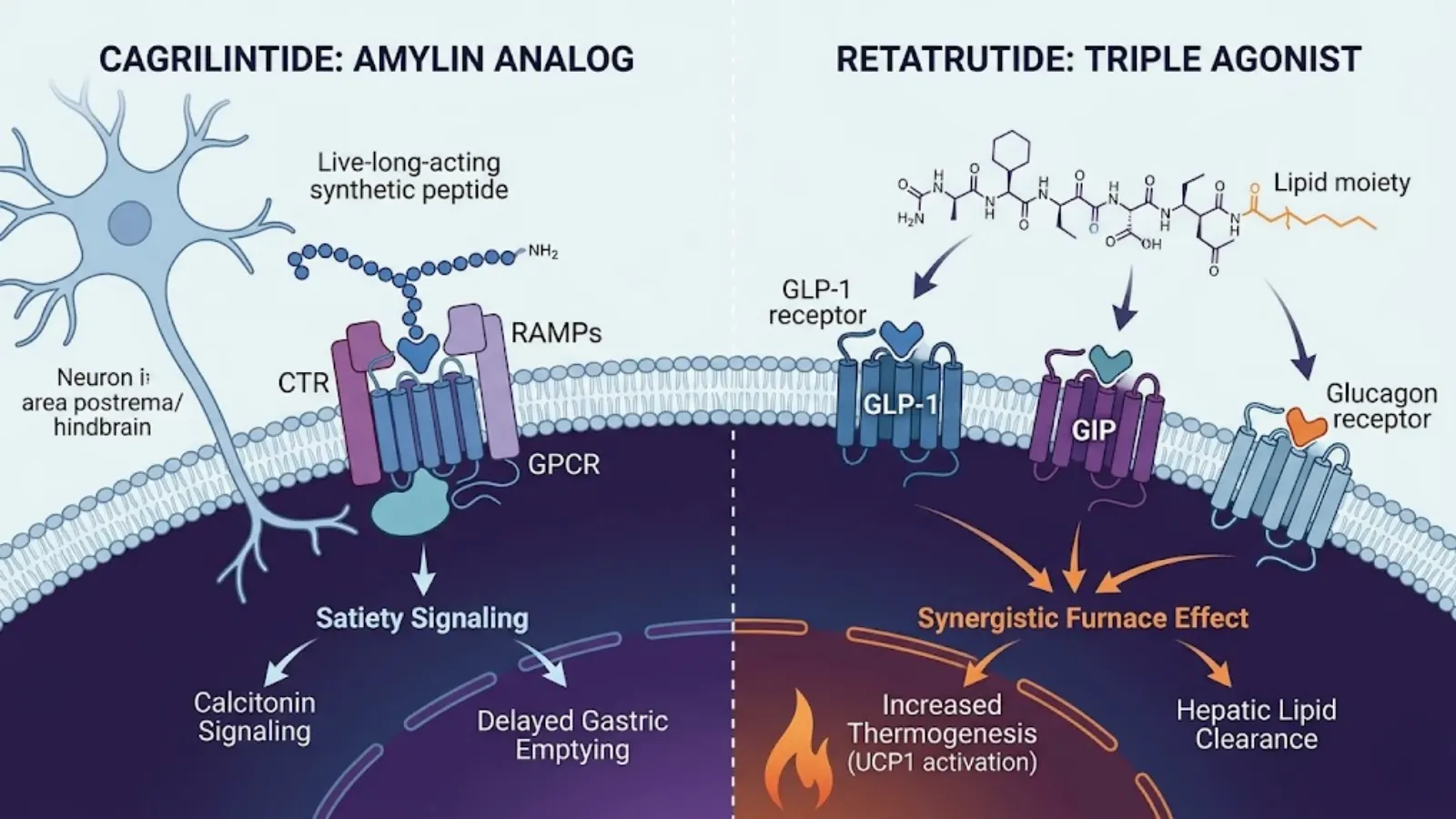
Figure 1: Conceptual molecular mechanism comparing the receptor targeting of Cagrilintide in the hindbrain (Satiety Signaling) versus Retatrutide’s synergistic GLP-1, GIP, and Glucagon pathways.
Retatrutide: The Power of Triple Agonism (GLP-1, GIP, Glucagon)
Retatrutide represents a paradigm shift in peptide engineering. It is a single molecule designed to act as an agonist at three distinct G-protein coupled receptors (GPCRs).
- GLP-1 (Glucagon-Like Peptide-1): Delays gastric emptying, stimulates glucose-dependent insulin release, and promotes satiety via the hypothalamus.
- GIP (Glucose-Dependent Insulinotropic Polypeptide): Enhances the incretin effect, but more importantly, buffers the tolerability of the GLP-1 and glucagon activation. GIP is known to possess potent anti-emetic properties.
- Glucagon (GCG): This is the masterstroke of retatrutide. When glucagon receptor activation is precisely balanced with GLP-1 and GIP agonism, the glucagon pathway becomes a pure metabolic furnace. It directly increases resting energy expenditure (REE), forces the liver to rapidly clear intrahepatic triglycerides, and upregulates white adipose tissue lipolysis.
In short, while cagrilintide works by aggressively restricting the “calories in” side through profound satiety, retatrutide attacks both sides—suppressing appetite while actively driving up “calories out” through glucagon-mediated thermogenesis.
4. Pharmacokinetics, Half-Life, and Receptor Binding (B2B Focus)
For the B2B laboratory sector—wholesale distributors, compounding pharmacies, and synthesis labs—understanding the physical chemistry, receptor binding affinities, and steric properties of these molecules is critical for ensuring HPLC purity, proper lyophilization, and accurate downstream reconstitution.
Cagrilintide Molecular Stability and Binding Affinity
Cagrilintide (CAS 1415456-99-3) is heavily engineered to overcome the rapid proteolytic degradation that limits native amylin. To create cagrilintide, researchers made strategic amino acid substitutions to prevent fibrillation. Additionally, they attached a C20 fatty di-acid moiety via a hydrophilic spacer to the peptide backbone. This acylation allows the cagrilintide molecule to bind non-covalently but tightly to human serum albumin circulating in the bloodstream, acting as a slow-release reservoir.
- Receptor Affinity: High affinity for the AMY1, AMY2, and AMY3 receptor complexes.
- Half-Life: Approximately 7 to 8 days, perfectly optimized for once-weekly subcutaneous administration.
Retatrutide API Synthesis and Pharmacokinetics
Retatrutide (LY3437943) is an incredibly complex 39-amino-acid linear peptide backbone modified from the native GIP sequence. The synthesis of retatrutide API requires extraordinary precision due to the delicate balance required to achieve tri-agonism without excessive receptor desensitization.
Like cagrilintide, retatrutide is acylated with a C20 fatty di-acid moiety. However, its receptor binding profile is highly asymmetric:
- High GIP Potency: Optimized to maximize insulinotropic and anti-emetic buffering effects.
- Attenuated GLP-1 Potency: Roughly one-third the potency of endogenous GLP-1 to prevent debilitating gastrointestinal distress.
- Potent Glucagon Potency: Strongly activates the GCG receptor to drive energy expenditure.
Pharmacokinetic Comparison Table
| Metric | Cagrilintide | Retatrutide |
|---|---|---|
| Peptide Class | Long-acting Amylin Analog | Triple Agonist (GLP-1/GIP/GCG) |
| Amino Acid Length | Engineered 37-AA | Engineered 39-AA |
| Acylation Strategy | C20 fatty di-acid | C20 fatty di-acid |
| Target Receptors | Calcitonin/RAMP heterodimers | Class B1 GPCRs |
| Primary Action | Satiety, Delayed Gastric Emptying | Thermogenesis, Lipolysis, Satiety |
| Approximate Half-Life | ~7.5 Days | ~6 Days |
5. Clinical Trial Data and Efficacy Outcomes
As we parse the most recent clinical literature, the data validating both of these compounds has shattered previous expectations. The paradigm of what constitutes a “successful” obesity intervention has shifted from 10-15% total body weight loss (TBWL) to an astounding 25%+.
Cagrilintide and the CagriSema Readouts
In isolated monotherapy trials, cagrilintide demonstrated potent efficacy, consistently driving a dose-dependent reduction in body weight of approximately 10.8% to 12% over a 26-week period. The highly anticipated REDEFINE 4 phase 3 trials evaluating the fixed-dose combination “CagriSema” (2.4 mg cagrilintide + 2.4 mg semaglutide) read out with exceptional results. By utilizing two parallel mechanisms of appetite suppression, subjects achieved an average weight loss of 22-24% over 68 weeks.
Retatrutide’s Record-Breaking Trials
Retatrutide is currently the undisputed king of clinical efficacy regarding total absolute mass reduction and lipid clearance. In the TRIUMPH-4 trials, the highest titration arm (12 mg weekly) yielded an unprecedented 28.7% mean body weight reduction at 48 weeks.
Furthermore, the TRANSCEND-T2D-1 trial data illuminated retatrutide’s profound capability to resolve metabolic dysfunction. Subjects experienced up to a 2.0% reduction in HbA1c. Even more staggeringly, due to the direct action of the glucagon receptor on hepatic lipid metabolism, a sub-study utilizing MRI-PDFF showed that over 85% of patients on the 12 mg dose achieved a complete normalization of liver fat within just 24 weeks.
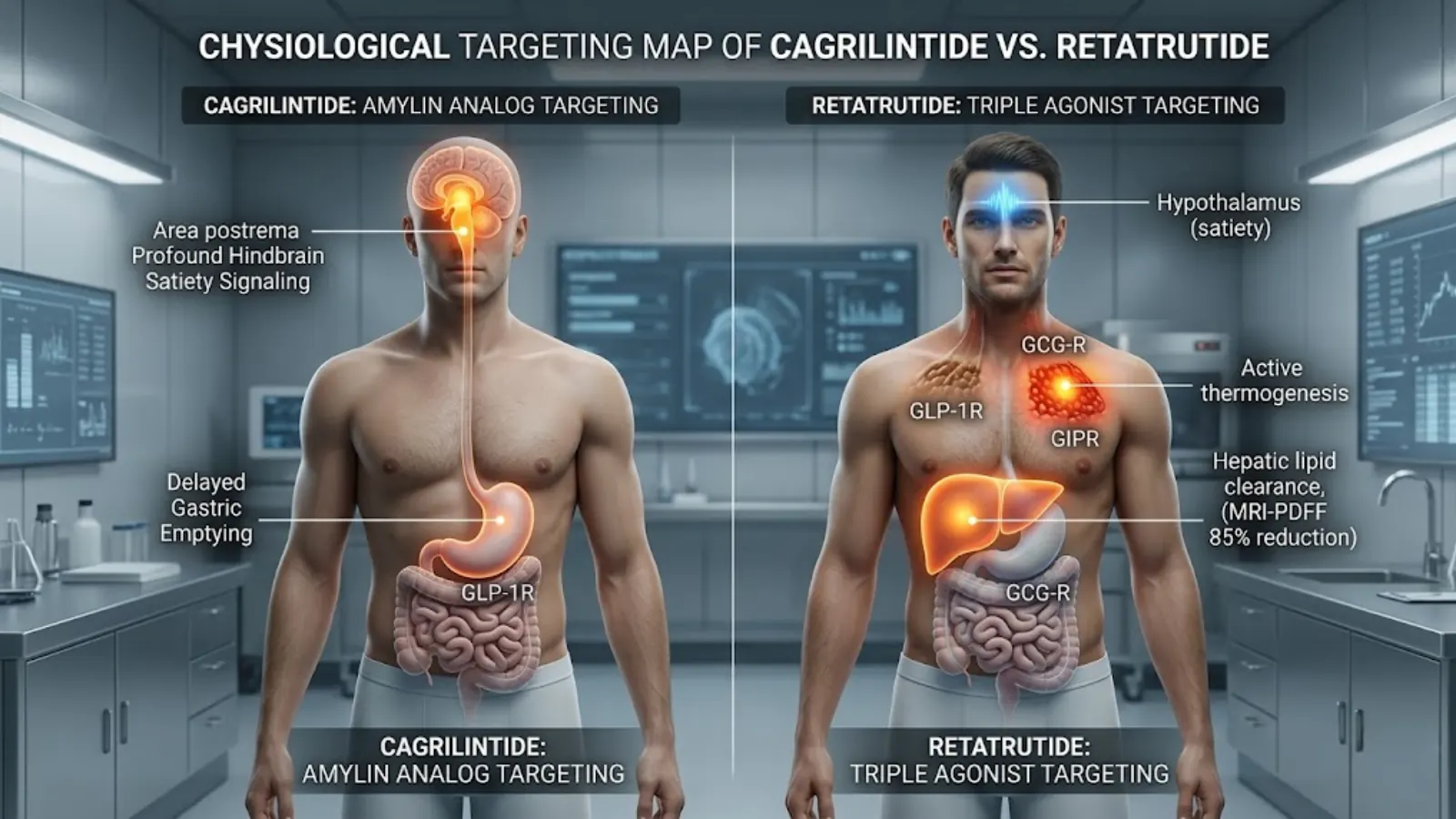
Figure 2: Clinical Data visual presenting comparative weight loss data derived from recent TRIUMPH and REDEFINE trials, highlighting Retatrutide’s peak efficacy vs. CagriSema.
Clinical Efficacy Summary Table
| Clinical Metric (Highest Dose) | Cagrilintide (Monotherapy) | CagriSema (Cagri + Sema) | Retatrutide (12mg Dose) |
|---|---|---|---|
| Mean Weight Loss | ~11-12% | ~22-24% | ~28.7% |
| Hepatic Fat Clearance | Moderate | High | Unprecedented (>85% resolution) |
| Primary Driver of Weight Loss | Decreased Energy Intake | Decreased Energy Intake | Decreased Intake + Increased REE |
| Effect on Resting Metabolic Rate | Neutral / Slight Decrease | Neutral / Slight Decrease | Elevated (Glucagon-mediated) |
6. Advanced Biohacking: Which Peptide is Superior for Fat Loss?
For the advanced biohacker or independent researcher attempting to optimize human body composition, the debate between cagrilintide vs retatrutide ultimately comes down to the subject’s specific metabolic bottlenecks.
Satiety vs. Resting Energy Expenditure
Cagrilintide is the ultimate weapon for controlling the “calories in” variable. By agonizing the amylin receptor in the area postrema, it essentially forces the subject into a state of acute caloric restriction. Biohackers report that cagrilintide provides a “heavier” feeling of restriction compared to standard GLP-1s, virtually eliminating food noise.
Retatrutide, however, is a biological anomaly because it attacks both sides of the thermodynamic equation simultaneously. Glucagon increases resting energy expenditure (REE) by upregulating uncoupling proteins (such as UCP1) within brown adipose tissue (BAT), essentially wasting calories as heat (thermogenesis). Furthermore, glucagon directly activates hormone-sensitive lipase (HSL) in white adipose tissue, aggressively liberating free fatty acids into the bloodstream for oxidation.
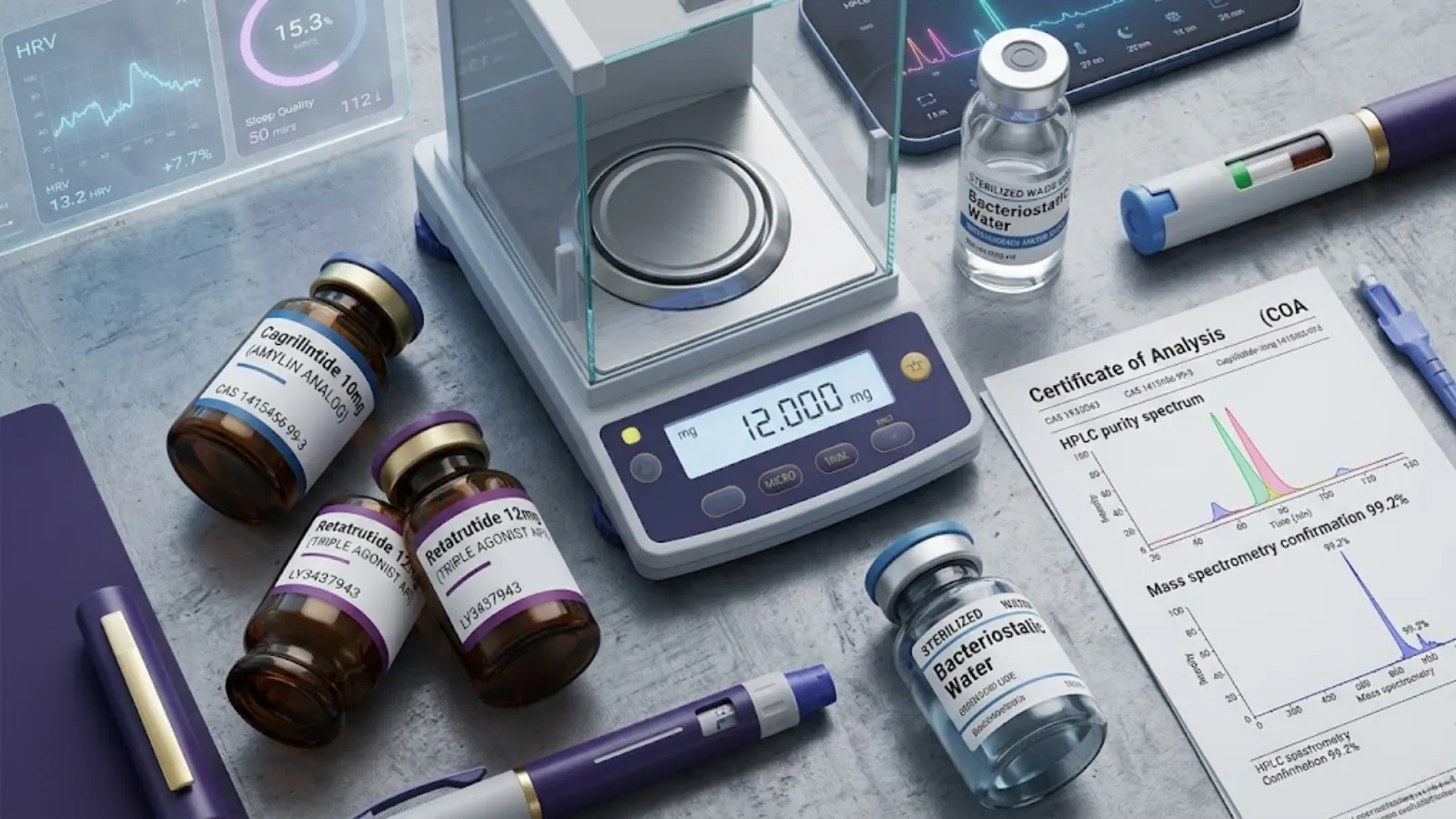
Figure 3: Physiological Targeting Map comparing localized hindbrain satiety signaling of Cagrilintide against the complex, diffuse activation across the liver and adipose tissue seen with Retatrutide.
Lean Tissue Preservation Strategies
When comparing cagrilintide vs retatrutide regarding muscle preservation, the clinical strategies diverge:
- Cagrilintide: Because amylin profoundly slows gastric emptying, it creates a slow, steady trickle of amino acids into the bloodstream from ingested dietary protein. This prolonged “drip-feed” can be highly anti-catabolic.
- Retatrutide: The profound fat-burning capability of retatrutide comes with a heightened risk of catabolism if the subject is not careful. Advanced protocols utilizing retatrutide strictly mandate high-protein diets and heavy, load-bearing resistance training to signal the preservation of skeletal muscle tissue while the tri-agonist liquidates adipose stores.
7. Protocols: Subcutaneous Titration and Peptide Stacking
Disclaimer: The following protocols reflect observational data from clinical trials and independent research methodologies. They are not medical instructions.
The CagriSema Concept: Stacking Cagrilintide with GLP-1s
In advanced biohacking circles, cagrilintide is rarely used as a monotherapy. Instead, researchers rely on the “CagriSema” concept—stacking cagrilintide with a high-affinity GLP-1/GIP agonist like semaglutide or tirzepatide.
The logic behind this stack is rooted in non-competing pharmacology. Because cagrilintide targets the calcitonin/RAMP heterodimer receptors and bypasses the GLP-1 receptor completely, you can run both compounds simultaneously without causing competitive inhibition at the receptor sites. Researchers typically titrate a base GLP-1 to a comfortable maintenance dose and then introduce a low, independent dose of cagrilintide to stack the hindbrain satiety signal.
Retatrutide Dosing and Titration Schedules
Retatrutide requires a rigorous and disciplined titration schedule. Because it activates three distinct neurological and metabolic pathways, introducing too high a dose too quickly will almost certainly result in severe emesis, rapid heart rate, and gastrointestinal paralysis.
| Escalation Phase | Weekly Subcutaneous Dose | Duration | Clinical Objective |
|---|---|---|---|
| Initiation | 2.0 mg | 4 Weeks | Acclimate GI tract, assess GIP tolerability. |
| Step 1 | 4.0 mg | 4 Weeks | Begin inducing moderate lipolysis and REE elevation. |
| Step 2 | 6.0 mg or 9.0 mg | 4 Weeks | Therapeutic fat-loss zone for the majority of subjects. |
| Maintenance | 9.0 mg to 12.0 mg | Ongoing | Maximum hepatic fat clearance and total mass reduction. |
8. B2B Sourcing: Wholesale API, HPLC Purity, and Lab Handling
For laboratory managers, compounding pharmacies, and B2B wholesale buyers, procuring next-generation peptides requires stringent quality control. The grey market for research chemicals is fraught with under-dosed vials, impurities, and cleaved peptide chains.
Verifying Third-Party HPLC Testing and CAS Numbers
When procuring cagrilintide (CAS 1415456-99-3) or retatrutide API (LY3437943), it is imperative to demand independent, third-party analytical testing.
- HPLC (High-Performance Liquid Chromatography): Verifies the absolute purity of the compound. For laboratory-grade research, an HPLC purity of ≥99.0% is the gold standard.
- Mass Spectrometry (MS): Verifies identity, ensuring the molecular weight matches the theoretical weight of the engineered peptide.
- Net Peptide Content: Advanced buyers must understand the difference between gross weight and net peptide depending on the counter-ion used during synthesis.

Figure 4: A sterile lab setup illustrating B2B sourcing requirements, featuring API vials, analytical scaling, and Certificate of Analysis (COA) purity spectra.
Reconstitution and Lyophilization Best Practices
Both cagrilintide and retatrutide are shipped as lyophilized (freeze-dried) powders.
The powder must be reconstituted strictly with Bacteriostatic Water to maintain sterility for multi-dose vial use. Once reconstituted, the peptide chains become susceptible to hydrolytic degradation and bacterial contamination. They must be stored in a strictly monitored cold chain environment (2°C to 8°C). Under ideal refrigeration, reconstituted retatrutide and cagrilintide will remain chemically stable for roughly 28 to 30 days.
9. Safety Profiles, Tachyphylaxis, and GI Side Effects
While the efficacy data surrounding the cagrilintide vs retatrutide debate is overwhelmingly positive, clinical candor requires an honest assessment of their distinct safety profiles and physiological toll.
Managing Gastrointestinal Distress
With cagrilintide, the profound delay in gastric emptying can lead to severe bloating, acid reflux, and in extreme cases of overeating, sudden emesis. Retatrutide faces a different challenge. While its GIP component acts as a central anti-emetic to help buffer the nausea, the sheer metabolic load of the tri-agonist can be overwhelming. In the TRIUMPH trials, approximately 16% to 18% of subjects in the highest titration arms discontinued the trial due to adverse GI events.
Heart Rate Elevation and Glucagon Sensitivity
A critical safety differentiator for retatrutide is its cardiovascular profile. Glucagon receptors in the myocardium exert both chronotropic (increased heart rate) and inotropic (increased force of contraction) effects.
Clinical data shows that retatrutide induces a dose-dependent, transient increase in resting heart rate, typically elevating the baseline by 5 to 10 beats per minute (BPM). Subjects utilizing retatrutide are highly encouraged to use biometric wearables to track overnight resting heart rate and Heart Rate Variability (HRV).
10. Frequently Asked Questions
What is the main difference between cagrilintide vs retatrutide?
The main difference lies in their mechanism of action. Cagrilintide is an amylin analog that drives weight loss almost exclusively by signaling extreme satiety and delaying gastric emptying. Retatrutide is a triple-hormone agonist (GLP-1, GIP, Glucagon) that not only suppresses appetite but also actively increases resting metabolic rate and forces the liver to burn fat through the glucagon pathway.
Can you stack retatrutide with an amylin analog like cagrilintide?
Biochemically, yes. Because they operate on completely non-overlapping receptor networks (calcitonin/RAMP for cagrilintide vs. GLP-1/GIP/Glucagon for retatrutide), they do not competitively inhibit one another. However, in practice, the combined gastrointestinal suppression of both compounds would be profoundly intense and would require extreme caution, micro-dosing, and medical supervision.
Which peptide yields higher resting energy expenditure?
Retatrutide yields significantly higher resting energy expenditure. While cagrilintide relies on caloric deficit through appetite suppression, the glucagon component of retatrutide actively upregulates thermogenesis in brown adipose tissue, directly increasing the amount of calories burned at rest.
When will retatrutide and cagrilintide be FDA approved?
Based on current Phase 3 trial timelines, Novo Nordisk’s CagriSema (containing cagrilintide) and Eli Lilly’s retatrutide are expected to seek FDA approval and potentially hit the commercial pharmacy market in late 2026 or mid-2027, pending final regulatory reviews.
Does retatrutide burn more fat than tirzepatide?
Yes. Tirzepatide is a dual-agonist (GLP-1/GIP) that averages 20-22% total body weight loss. Retatrutide is a tri-agonist that adds the glucagon receptor to the equation, yielding nearly 29% total body weight loss in severe obesity trials, making it significantly more powerful for lipid clearance.
11. Key Takeaways
- Distinct Pathways: The core difference between cagrilintide vs retatrutide is mechanism; cagrilintide restricts energy intake via amylin-induced satiety, while retatrutide restricts intake and increases energy expenditure via a tri-agonist (GLP-1/GIP/GCG) design.
- The Glucagon Furnace: Retatrutide’s unique addition of the glucagon receptor makes it superior for rapid hepatic fat clearance, resting metabolic rate elevation, and breaking stubborn biohacking plateaus.
- Synergistic Stacking: Cagrilintide is rarely used alone; it is most effective when stacked alongside a GLP-1 or GIP agonist (the “CagriSema” concept) to target multiple satiety centers simultaneously without compounding receptor tolerance.
- Quality Control is Vital: For B2B wholesale and advanced laboratory research, verifying purity via third-party HPLC and mass spectrometry is non-negotiable to ensure the chemical stability and safety of these highly complex, engineered peptide chains.
- Lean Mass Awareness: Both compounds require aggressive nutritional intervention (high protein, resistance training) to prevent skeletal muscle catabolism during periods of profound, drug-induced fat oxidation.