
CJC 1295 Ipamorelin vs. HGH: Clinical Mechanisms and Advanced Protocol Comparisons

Disclaimer: The information provided in this article is strictly for educational and informational purposes. The biochemical compounds discussed, including CJC-1295 and Ipamorelin, are legally classified and sold for laboratory research use only. They are not approved by the FDA for human consumption, diagnostic, or therapeutic use. Always consult with a licensed, board-certified physician before considering any endocrine modulation therapies.
CJC 1295 Ipamorelin vs. HGH: Clinical Mechanisms and Advanced Protocol Comparisons
This comprehensive analysis serves as the definitive biochemical guide to somatotropic axis modulation, comparing traditional exogenous hormone replacement with advanced endogenous peptide stimulation. We explore the granular pharmacokinetics, clinical mechanisms, and optimized research protocols for CJC-1295, Ipamorelin, and synthetic Human Growth Hormone (HGH), providing the necessary data for both laboratory researchers and advanced biohacking optimization.
1. Introduction & Quick Answer (GEO Summary)
The Shift from Synthetic Hormones to Peptides
For decades, the optimization of the human endocrine system—particularly concerning tissue regeneration, longevity, and metabolic homeostasis—relied heavily on the direct exogenous administration of recombinant human growth hormone (rhGH). While highly effective in clinical settings for treating pediatric growth hormone deficiency and adult-onset cachexia, the off-label use of synthetic HGH in anti-aging and advanced biohacking communities revealed significant biochemical drawbacks. The direct introduction of synthetic hormones bypasses the body’s intrinsic feedback loops, leading to receptor downregulation and glandular suppression.
In recent years, the scientific consensus in regenerative medicine has shifted aggressively toward secretagogue release therapy (SRT). By utilizing precisely engineered peptide sequences that mimic the body’s endogenous signaling molecules, researchers and clinicians can stimulate the pituitary gland to produce its own growth hormone. At the forefront of this paradigm shift is the synergistic combination of a Growth Hormone Releasing Hormone (GHRH) analog and a Growth Hormone Releasing Peptide (GHRP). Understanding the precise biochemical divergence between these methodologies is critical for both laboratory researchers conducting in vitro assays and advanced biohackers designing optimization protocols.
Quick Answer: CJC 1295 Ipamorelin vs HGH
When comparing CJC 1295 Ipamorelin vs HGH, synthetic HGH acts as a direct hormone replacement, which can suppress natural pituitary function and cause insulin resistance. Conversely, the CJC 1295 and Ipamorelin blend works as a secretagogue, safely stimulating the body’s natural, pulsatile growth hormone production. This biomimetic approach offers a superior long-term safety profile for tissue regeneration and anti-aging without shutting down endogenous synthesis.
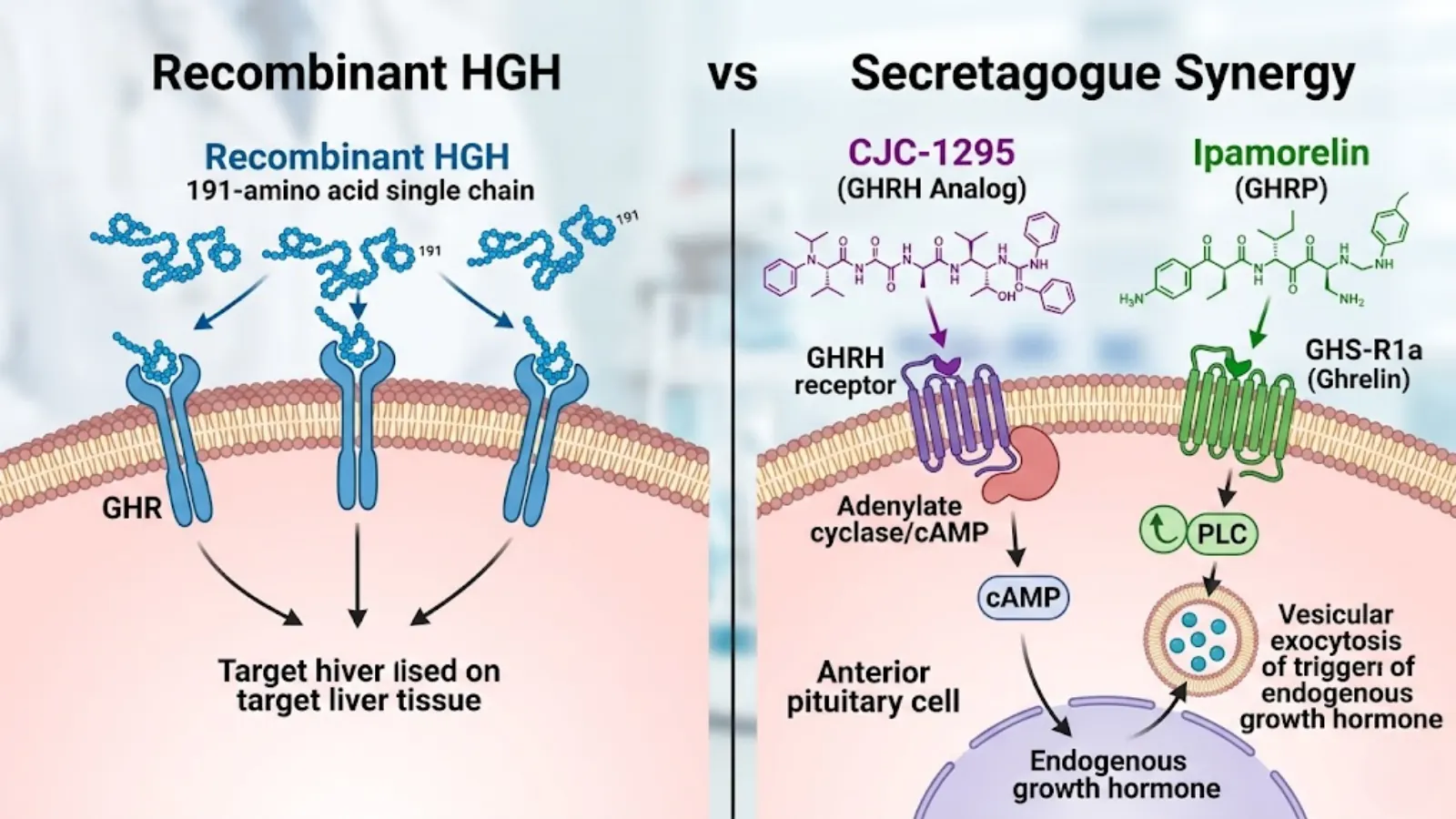
Image 1: Conceptual visualization comparing the monophasic molecular pathway of direct HGH replacement with the dual-pathway synergy of CJC-1295 and Ipamorelin simulation within the pituitary.
2. Understanding the Baseline: What is Recombinant HGH?
To accurately contextualize the efficacy of peptide therapies, we must first understand the baseline physiology of the somatotropic axis and how traditional synthetic therapies disrupt it.
The Role of Endogenous Growth Hormone
Endogenous growth hormone (somatotropin) is a 191-amino acid, single-chain polypeptide synthesized, stored, and secreted by somatotropic cells within the lateral wings of the anterior pituitary gland. Its secretion is tightly regulated by the hypothalamus via two primary neurohormones acting in direct opposition:
1. **Growth Hormone-Releasing Hormone (GHRH):** A 44-amino acid peptide that stimulates the synthesis and secretion of GH.
2. **Somatostatin (Somatotropin Release-Inhibiting Factor, SRIF):** A peptide that acts as the primary “brake,” inhibiting GH release.
In a healthy endocrine system, GH is secreted in a highly specific pulsatile pattern, primarily during the deepest stages of slow-wave sleep (NREM stage 3). Once released into the systemic circulation, GH travels to the liver, binding to hepatic cell surface receptors to stimulate the production of Insulin-like Growth Factor 1 (IGF-1). IGF-1 acts as the primary mediator of GH’s anabolic effects, driving cellular proliferation, chondrocyte growth, and profound tissue repair.
Exogenous Synthetic HGH Mechanisms
Recombinant human growth hormone (rhGH), known generically as somatropin 191aa, is synthesized in laboratories using recombinant DNA technology—typically utilizing *E. coli* or mammalian cell lines to produce a molecule identical to the 191-amino acid sequence produced by the human pituitary.
When administered exogenously (via subcutaneous or intramuscular injection), rhGH floods the systemic circulation. It bypasses the hypothalamus and the pituitary gland entirely, directly binding to growth hormone receptors (GHR) on target tissues, particularly the liver, adipose tissue, and skeletal muscle. While this rapid influx guarantees a predictable and dramatic elevation in systemic IGF-1 levels, it inherently lacks the physiological rhythm of endogenous production.
The Drawbacks of Traditional HGH Therapy
The therapeutic limitations of rhGH stem directly from its mechanism of action. By circumventing the body’s autoregulatory systems, exogenous administration initiates several deleterious cascading effects:
• **Pituitary Suppression (Negative Feedback Loop):** The hypothalamus and pituitary continuously monitor serum GH and IGF-1 levels. When flooded with exogenous HGH, the hypothalamus dramatically increases somatostatin production while halting endogenous GHRH signaling. Over time, the somatotroph cells in the pituitary undergo atrophy, leading to severe suppression of natural GH production that can take months to recover post-cessation.
• **Tachyphylaxis and Receptor Downregulation:** Target tissues respond to the unnatural, continuous elevation of GH by downregulating their surface receptors. This means higher doses of synthetic HGH are continually required to elicit the same cellular response.
• **Insulin Resistance and Hyperglycemia:** GH inherently counteracts the action of insulin on lipid and carbohydrate metabolism. The monophasic, prolonged spikes caused by exogenous HGH significantly elevate fasting blood glucose levels, potentially inducing metabolic syndrome or iatrogenic type 2 diabetes over prolonged cycles.
| Parameter | Endogenous GH Secretion | Exogenous rhGH Administration |
|---|---|---|
| Release Pattern | Pulsatile (circadian, sleep-dependent) | Monophasic (massive, sustained spike) |
| Pituitary Function | Preserved and stimulated | Suppressed (Negative Feedback) |
| Somatostatin Tone | Dynamic (rises and falls) | Elevated (Chronic inhibition) |
| Insulin Sensitivity | Maintained | Highly disrupted (Diabetogenic) |
3. Decoding the Secretagogues: CJC-1295 and Ipamorelin
To overcome the physiological barriers of direct hormone replacement, molecular biologists engineered peptides designed to act upstream of the pituitary. By stimulating the natural cellular machinery rather than replacing its output, researchers achieved “biological biomimicry.” The gold standard protocol currently utilizes two distinct classes of secretagogues simultaneously.
What is CJC-1295? (GHRH Analog)
CJC-1295 is a synthetic, tetrasubstituted 30-amino acid peptide analog of endogenous GHRH. To understand its application in research, one must understand the vital distinction in its molecular structure and nomenclature.
Endogenous GHRH is 44 amino acids long, but only the first 29 amino acids are required for full biological activity at the pituitary receptor. This truncated sequence is known as GRF 1-29 (Sermorelin). However, GRF 1-29 has a plasma half-life of mere minutes, as it is rapidly degraded by the enzyme dipeptidyl peptidase-4 (DPP-IV).
To solve this, researchers created **Modified GRF 1-29**, substituting four amino acids in the sequence to resist enzymatic cleavage, extending the half-life to approximately 30 minutes.
• *Crucial B2B Laboratory Note:* In clinical nomenclature, “**CJC-1295 without DAC**” (Mod GRF 1-29) is simply Modified GRF 1-29.
• Conversely, “**CJC-1295 with DAC**” (Drug Affinity Complex) includes a reactive bioconjugation complex that binds covalently to endogenous serum albumin, extending the half-life to an astonishing 6-8 days.
For the purposes of precision biohacking and clinical anti-aging mimicking a natural circadian rhythm, **CJC-1295 without DAC** is the preferred compound, as it stimulates an acute, physiological pulse rather than a continuous, unnatural “bleed” of GH.
What is Ipamorelin? (GHRP)
While CJC-1295 acts on the GHRH receptors, Ipamorelin targets an entirely different pathway. Ipamorelin is a synthetic pentapeptide (Aib-His-D-2-Nal-D-Phe-Lys-NH2) classified as a Growth Hormone Releasing Peptide (GHRP). It functions as a highly selective agonist of the ghrelin/growth hormone secretagogue receptor (GHS-R1a).
In the hierarchy of GHRPs (which includes GHRP-6 and GHRP-2), Ipamorelin is universally considered the cleanest and most refined molecule for advanced laboratory research. Older generation GHRPs possess “dirty” pharmacological profiles; they bind to secondary receptors, triggering massive spikes in cortisol (the primary stress hormone) and prolactin (which can cause gynecomastia and lactational issues). Ipamorelin is uniquely engineered to bind exclusively to the somatotroph GHS-R1a receptor, eliciting a robust GH pulse without any concurrent elevations in cortisol, prolactin, or aldosterone, making it exceptionally safe for long-term study.
The Synergistic Blend: Why Combine Them?
The brilliance of modern endocrine optimization lies in the “Bleed and Spike” methodology. Administering a GHRH analog or a GHRP independently yields moderate results. However, when co-administered, their pharmacodynamic effects are profoundly synergistic, often yielding a GH release 5 to 10 times greater than either peptide alone.
• **CJC-1295 (The Foundation):** Binds to the GHRH receptor, activating the adenylate cyclase/cAMP intracellular signaling cascade. This increases the total number of somatotroph cells actively synthesizing and storing growth hormone, priming the pituitary.
• **Ipamorelin (The Catalyst):** Binds to the ghrelin receptor, activating the phospholipase C (PLC) pathway. This results in an immediate influx of intracellular calcium, violently triggering the exocytosis of the stored GH vesicles.
In simpler terms: CJC-1295 loads the neuroendocrine “gun,” and Ipamorelin pulls the trigger.
4. Clinical Mechanisms: CJC 1295 Ipamorelin vs HGH
When analyzing the debate of CJC 1295 Ipamorelin vs HGH, the fundamental divergence lies in the intracellular mechanisms of action and how the body’s homeostatic governance responds to the intervention.
Direct Replacement vs. Endogenous Stimulation
Synthetic HGH operates on the principle of direct replacement therapy. The administered hormone circulates systemically, binding to target tissue receptors exactly as endogenous GH would. The clinical outcome is highly predictable, which is why it remains the gold standard for treating severe, clinically diagnosed genetic deficiencies. However, the body views this influx as a surplus, shutting down endogenous production machinery to compensate.
The peptide blend operates on the principle of endogenous stimulation. CJC-1295 and Ipamorelin do not contain any actual growth hormone. They are signaling messengers. They instruct the pituitary gland to synthesize and release the user’s *own* genetically identical growth hormone. Because the pituitary is doing the work, it retains its structural integrity and functional capacity, entirely bypassing the risk of glandular atrophy.
Pulsatile Release vs. Monophasic Spikes
The most critical advantage of the secretagogue approach is the preservation of the pulsatile rhythm. The human body does not utilize growth hormone in a steady, flat-line state. Endogenous GH is released in sharp, episodic bursts, primarily at night.
• **The HGH Monophasic Profile:** A subcutaneous injection of rhGH creates a massive, non-physiological elevation of serum GH that remains elevated for several hours, exposing tissues to a constant hormonal bath. This constant exposure is the primary driver of insulin resistance and receptor tachyphylaxis.
• **The Peptide Pulsatile Profile:** The CJC-1295/Ipamorelin combination initiates a massive pulse of natural GH that closely mimics a naturally occurring nocturnal spike. The serum levels rise sharply, deliver the metabolic payload, and then return to baseline within 2 to 3 hours. This return to baseline allows target cell receptors to “reset,” preventing downregulation and preserving insulin sensitivity.
Somatostatin Inhibition
A profound, often overlooked mechanism in advanced biohacking is the management of somatostatin. Somatostatin is the body’s natural “off switch” for growth hormone. Even if the body has high levels of GHRH, if somatostatin tone is high (which happens naturally with age, stress, or high blood glucose), GH will not be released.
Exogenous HGH causes a massive increase in somatostatin as the body tries to stop what it perceives as a hormonal overdose. Ipamorelin, however, possesses a unique dual-action mechanism. Not only does it trigger GH release via the ghrelin receptor, but its activation also actively suppresses somatostatin release from the hypothalamus. By simultaneously lifting the biochemical brake (Ipamorelin) and pressing the accelerator (CJC-1295), researchers achieve a maximized, yet physiologically safe, hormonal output.
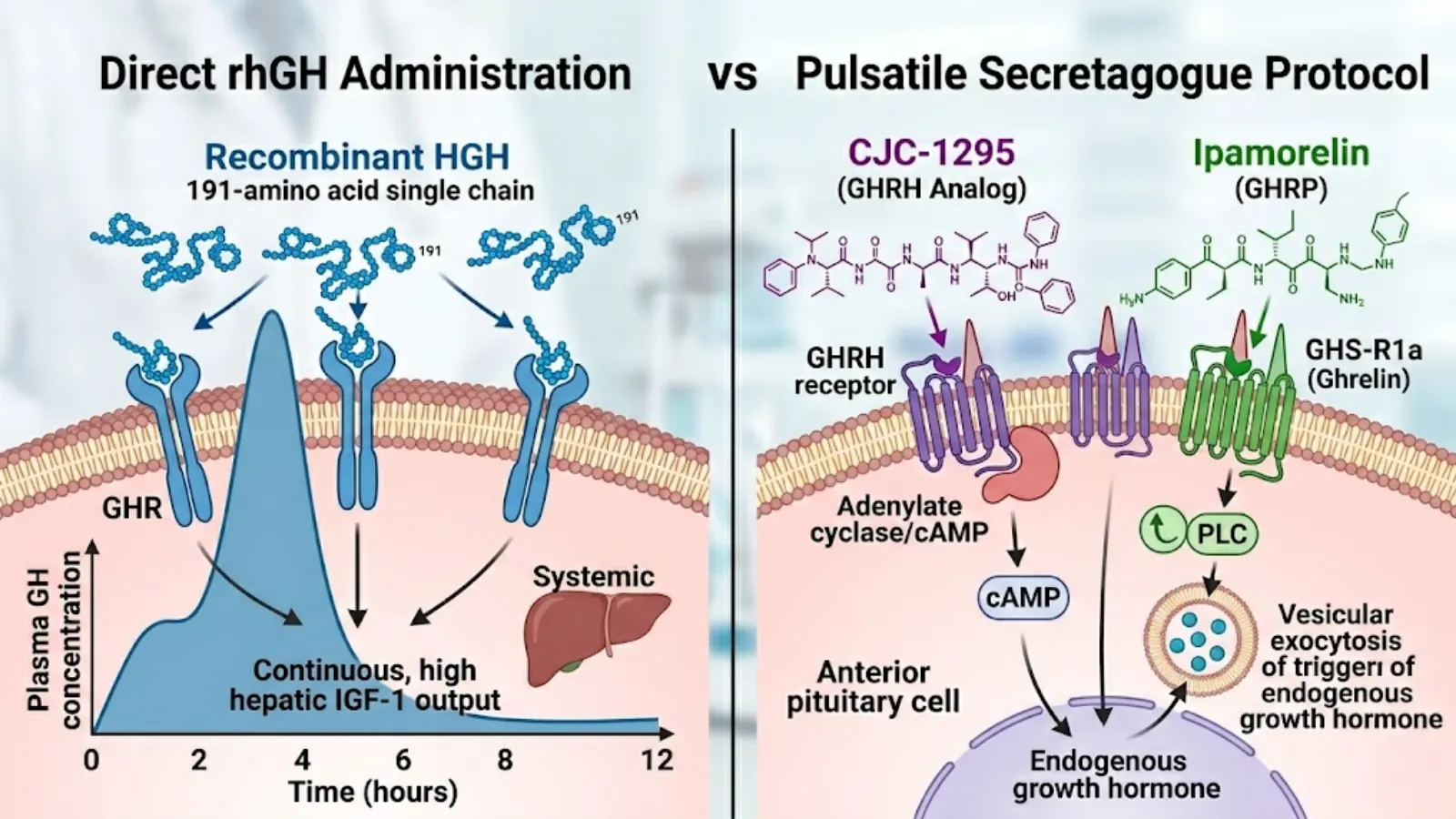
Image 2: Comparative pharmacodynamic graph visualizing the physiological ‘Pulsatile’ release amplified by peptides vs. the unnatural ‘Monophasic Spike’ generated by direct HGH administration.
5. Pharmacokinetics: Half-Lives and Receptor Affinity
For laboratory researchers optimizing assay timelines and advanced biohackers designing precise injection protocols, understanding the pharmacokinetics—how the body absorbs, distributes, metabolizes, and excretes these compounds—is non-negotiable.
Bioavailability and Clearance Rates
Following subcutaneous administration, both synthetic HGH and the peptide blend demonstrate high systemic bioavailability, but their pharmacokinetic curves dictate entirely different physiological responses.
• **Recombinant HGH:** Peak serum concentrations typically occur between 3 to 5 hours post-injection. The metabolic clearance rate is relatively slow compared to endogenous pulses, yielding an elimination half-life of roughly 2 to 3 hours. However, the downstream elevation of IGF-1 can remain stable for over 24 hours, contributing to the “bleed” effect.
• **Modified GRF 1-29 (CJC-1295 without DAC):** Due to the tetrasubstituted amino acid modifications protecting it from DPP-IV enzymatic cleavage, it achieves an elimination half-life of approximately 30 minutes. This is precisely enough time to reach the anterior pituitary and initiate the cAMP signaling cascade without lingering in systemic circulation.
• **Ipamorelin:** Exhibits an elimination half-life of roughly 2 hours in human models. It drives a rapid, robust GH pulse that peaks at approximately 45 to 60 minutes post-administration, allowing serum GH levels to effectively return to baseline prior to the next natural, endogenous sleep pulse.
Receptor Binding Affinity in Vitro
In laboratory settings, receptor binding affinity—measured by the dissociation constant ($K_d$)—determines the potency of the molecule.
• Synthetic HGH binds directly to the human Growth Hormone Receptor (hGHR), a class I cytokine receptor, initiating the JAK2/STAT signaling pathway.
• CJC-1295 acts as a high-affinity ligand for the GHRH receptor (a G-protein coupled receptor), demonstrating binding kinetics virtually identical to endogenous GHRH, but with vastly superior enzymatic stability in serum.
• Ipamorelin acts on the GHS-R1a (Ghrelin receptor). Crucially, in vitro assays demonstrate that Ipamorelin has zero binding affinity for melanocortin receptors, adrenergic receptors, or opioid receptors. This high-fidelity target specificity is exactly why it produces no cortisol or prolactin spikes, distinguishing it entirely from earlier generation GHRPs like Hexarelin.
IGF-1 Conversion Rates
The ultimate metric of efficacy for either protocol is hepatic conversion. Growth hormone itself has a very short biological lifespan; its primary purpose is to instruct the liver to synthesize Insulin-like Growth Factor 1 (IGF-1), which mediates the vast majority of anabolic, lipolytic, and regenerative outcomes.
While exogenous HGH forces a continuous, heavy synthesis of IGF-1, the CJC-1295 and Ipamorelin blend relies on the stimulated GH pulse to drive conversion. Clinical data suggests that while rhGH can push IGF-1 levels into supraphysiological ranges (often above 350-400 ng/mL, which carries risks of acromegaly and organomegaly over decades of abuse), the peptide blend safely elevates IGF-1 to the upper quartile of a healthy, youthful physiological range (typically 200-280 ng/mL). This provides the regenerative benefits of a 20-year-old endocrine system without the pathological risks associated with direct hormone overdosing.
| Compound | Primary Receptor Target | Intracellular Pathway | Half-Life | Somatostatin Impact |
|---|---|---|---|---|
| Exogenous rhGH | hGHR (Target Tissues) | JAK2/STAT | ~2 – 3 hours | Drastically Increases |
| CJC-1295 (Mod GRF) | GHRH-R (Pituitary) | cAMP / PKA | ~30 minutes | Neutral |
| Ipamorelin | GHS-R1a (Pituitary) | PLC / Calcium | ~2 hours | Actively Inhibits |
6. Efficacy and Expected Results: Lab Research and Biohacking
When evaluating the clinical efficacy of **CJC 1295 Ipamorelin vs HGH**, it is essential to stratify the outcomes based on cellular mechanisms. While exogenous HGH provides a massive, overwhelming biological signal that yields rapid physiological changes, the peptide secretagogue blend offers a highly targeted, physiological optimization that favors long-term homeostasis and cellular health.
Cellular Senescence and Anti-Aging
In the context of longevity and anti-aging, the goal is to delay cellular senescence—the state where cells permanently stop dividing but do not die, secreting inflammatory cytokines. Growth hormone, mediated by IGF-1, is a primary driver of cellular regeneration.
• **Skin and Collagen Synthesis:** Both protocols profoundly upregulate collagen mRNA expression. However, clinical biohackers frequently report that while high-dose synthetic HGH can cause water retention (edema) that temporarily masks wrinkles, the CJC-1295 and Ipamorelin blend promotes genuine extracellular matrix repair. This results in measurable improvements in skin elasticity and dermal thickness over a 12-week protocol without the characteristic “moon face” associated with HGH abuse.
• **Sleep Architecture:** This is arguably the most immediate and profound difference. Endogenous GH is released during slow-wave sleep (NREM Stage 3). Because Ipamorelin is a ghrelin mimetic, it actively promotes delta-wave sleep. Subjects utilizing the peptide blend consistently report dramatic improvements in sleep latency and deep sleep duration—measured via biometric wearables—which in turn fuels further endogenous regenerative processes. Exogenous HGH, by contrast, does not inherently improve sleep architecture and can sometimes disrupt circadian rhythms due to its monophasic nature.
Muscle Hypertrophy and Recovery
For athletes and regenerative medicine specialists, tissue repair is paramount. Growth hormone uniquely stimulates muscle *hyperplasia* (the creation of new muscle cells) rather than just *hypertrophy* (the enlargement of existing cells).
• **Timelines for Recovery:** When comparing CJC 1295 Ipamorelin vs HGH for muscle recovery, exogenous HGH acts faster. Because rhGH floods the system and forces immediate hepatic IGF-1 conversion, acute recovery from microtrauma or surgical intervention is accelerated.
• **The Secretagogue Approach:** The CJC-1295/Ipamorelin combination requires a longer runway. It typically takes 3 to 4 weeks of consistent pulsatile stimulation to raise systemic IGF-1 to the upper physiological limit required for enhanced muscle repair. However, the qualitative nature of the muscle gained via peptides is often superior, as it is accompanied by natural metabolic adaptations rather than forced extracellular water retention.
Lipolysis and Fat Metabolism
Both synthetic HGH and secretagogues are incredibly potent lipolytic agents. Growth hormone binds directly to adipocytes (fat cells), upregulating hormone-sensitive lipase (HSL), which mobilizes triglycerides into free fatty acids to be oxidized for ATP.
• **Visceral vs. Subcutaneous Fat:** Exogenous HGH is notoriously effective at targeting deeply stored visceral adipose tissue. However, this comes at the cost of insulin resistance. If blood glucose is chronically elevated by HGH, the mobilized fatty acids cannot be efficiently burned and are simply redeposited.
• **The Fasted Peptide Advantage:** CJC-1295 and Ipamorelin excel in fat metabolism when administered in a strictly fasted state. Because insulin absolutely blunts growth hormone release, taking the peptide blend during fasting amplifies the lipolytic pulse. This mechanism allows advanced biohackers to strip subcutaneous fat while maintaining impeccable insulin sensitivity, a feat nearly impossible with high-dose rhGH.
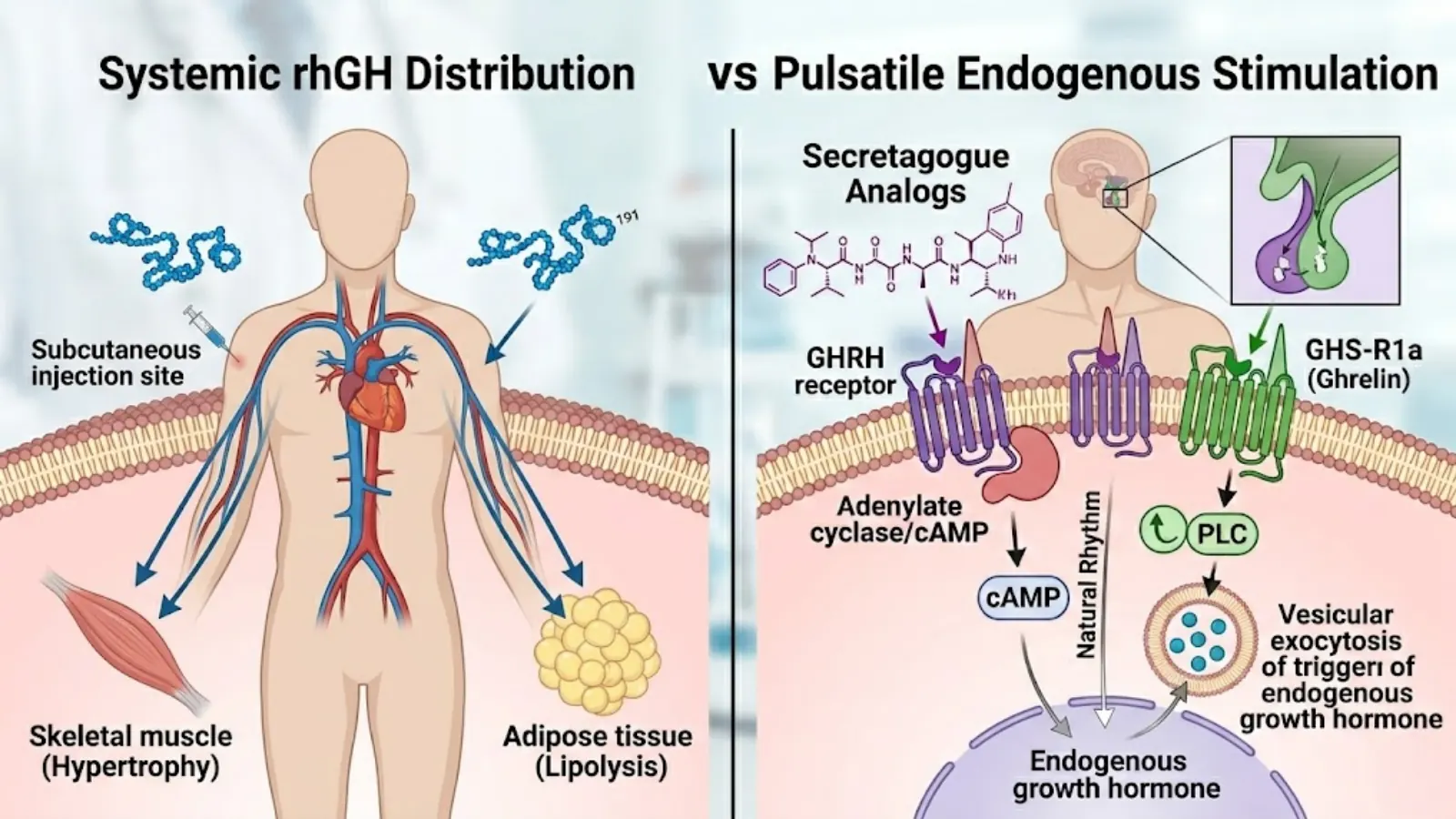
Image 3: Physiological Targeting Map comparing systemic hormone replacement (blue vectors) which floods target tissues directly, vs. endoscopic secretagogue stimulation (purple vectors) which targets the pituitary receptors to maintain the somatic axis.
7. Advanced Protocol Comparisons: Dosing and Scheduling
The application of these compounds requires strict adherence to pharmacological timing. Peptides are highly sensitive to the body’s ambient endocrine environment, specifically circulating insulin and somatostatin levels.
Clinical and Laboratory Dosing Parameters
In mammalian models, the anterior pituitary has a defined “saturation limit” for secretagogues. Administering a dose beyond this limit does not yield a larger GH pulse; it merely wastes the compound and accelerates receptor attenuation.
• **The Saturation Dose:** Extensive in vitro and in vivo research indicates that the saturation limit for Modified GRF 1-29 (CJC-1295 without DAC) and Ipamorelin is approximately **1 mcg per kilogram of body weight**.
• **Standardization:** For a standard human subject (roughly 100 kg), the maximum effective dose is 100 mcg of each peptide per administration. Therefore, a standard laboratory research dose is often formulated as a 100mcg/100mcg blend injected subcutaneously.
Timing is Everything
The success of a secretagogue protocol hinges entirely on timing and metabolic state.
- **The Fasting Rule:** Carbohydrates trigger insulin, and dietary fats trigger somatostatin. Both hormones severely blunt the GH-releasing effects of CJC-1295 and Ipamorelin. Therefore, injections must occur in a completely fasted state—at least 2 to 3 hours post-prandial (after eating), and the subject must remain fasted for 30 to 45 minutes post-injection.
- **Nighttime Administration:** The most physiologically aligned protocol involves administering the blend immediately before bed. This piggybacks on the body’s natural circadian rhythm, amplifying the primary nocturnal GH pulse and drastically improving deep sleep.
- **Morning / Pre-Cardio Administration:** For advanced lipolysis, a secondary dose is often administered first thing in the morning in a fasted state, followed by low-intensity steady-state (LISS) cardio to oxidize the newly mobilized free fatty acids.
Cycle Lengths and Off-Cycles
• **Exogenous HGH Cycles:** Often run continuously for 6 to 12 months, leading to deep pituitary suppression and necessitating complex post-cycle therapies (PCT).
• **Peptide Cycles:** To maintain receptor sensitivity (prevent tachyphylaxis), CJC-1295 and Ipamorelin protocols typically follow a **”5 Days On, 2 Days Off”** weekly schedule. The total cycle duration is usually 12 to 16 weeks, followed by a mandatory 4-week complete cessation. This ensures the pituitary remains highly responsive to endogenous signaling.
8. Safety Profiles and Potential Side Effects
While the regenerative benefits of somatotropic modulation are vast, distinguishing the safety profiles is critical for both clinicians and researchers. The paradigm shift toward peptides is driven almost entirely by their superior safety profile.
The Risk of Pituitary Shutdown (HGH)
The most severe complication of exogenous HGH administration is the induction of a negative feedback loop. When the hypothalamus detects massive amounts of circulating HGH and IGF-1, it completely halts the production of endogenous GHRH. Over prolonged periods, the somatotroph cells in the pituitary atrophy due to disuse. When synthetic HGH is discontinued, the subject will experience a profound, systemic “crash,” characterized by severe lethargy, rapid muscle loss, and depressive symptoms, as the pituitary struggles to “wake up” and resume natural production. Peptides circumvent this entirely by exerting a *trophic* (growth-promoting) effect on the pituitary itself.
Insulin Sensitivity and Blood Glucose
As previously discussed, exogenous HGH is inherently diabetogenic. It directly inhibits the ability of insulin to drive glucose into skeletal muscle, leading to elevated fasting blood glucose and elevated HbA1c levels. Long-term use can irreversibly damage pancreatic beta cells.
Conversely, CJC-1295 and Ipamorelin maintain a neutral-to-positive impact on insulin sensitivity. Because the GH release is pulsatile rather than constant, the body has ample time between pulses to regulate glucose efficiently.
Common Peptide Side Effects
While drastically safer, the peptide blend is not entirely without side effects, though they are generally mild and transient:
• **Head rush and Flushing:** Due to the vasodilatory effects of the GHRH analog (CJC-1295), users frequently experience a temporary rush of heat to the face and neck lasting 10 to 15 minutes post-injection.
• **Lethargy:** Because Ipamorelin promotes slow-wave sleep, daytime administration can sometimes cause profound drowsiness.
• **Injection Site Reactions:** Mild erythema (redness) or pruritus (itching) at the subcutaneous injection site, often due to a reaction with the bacteriostatic water or minor impurities if not sourced from a clinical compounding pharmacy.
9. Sourcing, Purity, and Reconstitution
The biochemical fragility of these compounds makes sourcing and handling a critical component of any successful research or optimization protocol.
B2B: Wholesale Laboratory Procurement
For laboratory environments, the purity of the lyophilized powder dictates the validity of the research. When sourcing wholesale CJC 1295 Ipamorelin, laboratories must demand third-party analytical testing:
• **HPLC (High-Performance Liquid Chromatography):** Ensures the peptide sequence is greater than 99% pure.
• **Mass Spectrometry:** Confirms the exact molecular weight of the sequence.
• **TFA Removal:** Trifluoroacetic acid (TFA) is a toxic chemical used in the synthesis of peptides. High-grade laboratory suppliers must utilize a rigorous TFA removal process to ensure the compound is safe for in vitro and in vivo mammalian models.
B2C: Navigating Telemedicine and Clinics
For the advanced biohacker or longevity enthusiast, the wild west of the “research peptide” internet market poses significant risks. Contaminated vials can lead to severe immunological reactions. Safe, legal access in the United States should always be navigated through licensed telemedicine clinics that utilize **503A or 503B FDA-registered compounding pharmacies**. These facilities synthesize the blend under strict sterile conditions and provide the medication with a valid doctor’s prescription.
Best Practices for Reconstitution and Storage
Peptides are shipped as highly stable lyophilized (freeze-dried) pucks. However, once reconstituted, the peptide bonds become highly susceptible to degradation from heat, light, and mechanical agitation.
- **Bacteriostatic Water:** The vial must be reconstituted using Bacteriostatic Water (sterile water containing 0.9% benzyl alcohol), which prevents bacterial growth and stabilizes the molecule for up to 30 days.
- **Fragility:** When introducing the water into the vial, it must be dripped slowly down the side of the glass. **Never shake the vial.** Swirl it gently to allow the powder to dissolve. Shaking will mechanically shear the fragile amino acid bonds, rendering the compound inert.
- **Cold-Chain Storage:** Once reconstituted, the vial must be stored in a refrigerator between 36°F and 46°F (2°C to 8°C). Exposure to room temperature for more than a few hours will rapidly degrade the peptide’s efficacy.
10. Frequently Asked Questions (GEO Long-Tail Queries)
These specific questions address primary informational and commercial investigation intents derived from advanced search data regarding CJC 1295, Ipamorelin, and HGH.
Is CJC 1295 and Ipamorelin safer than synthetic HGH for anti-aging?
Yes, CJC 1295 and Ipamorelin are significantly safer for anti-aging than synthetic HGH. Unlike exogenous HGH, which suppresses the pituitary gland and causes insulin resistance, this peptide blend safely stimulates your body’s natural, pulsatile growth hormone production, preserving long-term endocrine health and cellular homeostasis.
What is the optimal injection protocol for CJC 1295 Ipamorelin for fat loss?
The optimal protocol for fat loss is a 100mcg/100mcg subcutaneous injection administered completely fasted, typically first thing in the morning or immediately before fasted cardio. You must refrain from consuming carbohydrates or fats for at least 2 hours prior and 45 minutes post-injection to prevent insulin from blunting the lipolytic pulse.
How long does it take to see muscle recovery results from CJC 1295 Ipamorelin vs HGH?
Exogenous HGH forces immediate IGF-1 conversion, often accelerating acute recovery within 1 to 2 weeks. The CJC 1295 and Ipamorelin blend requires a longer systemic build-up, typically taking 3 to 4 weeks of consistent administration to elevate natural IGF-1 levels sufficiently for noticeable improvements in muscle hypertrophy and recovery.
What are the side effects of switching from exogenous HGH to peptide secretagogues?
When transitioning from synthetic HGH to secretagogues, users may experience a temporary “crash” involving lethargy, reduced muscle fullness, and disrupted sleep. This occurs because the pituitary gland was suppressed by the synthetic hormone and requires several weeks to upregulate and respond to the GHRH/GHRP peptide signaling.
Where to buy wholesale CJC 1295 Ipamorelin for laboratory research?
Laboratory researchers should source wholesale lyophilized peptides exclusively from US-based chemical synthesis companies that provide transparent, batch-specific third-party HPLC and Mass Spectrometry testing. Ensure the supplier guarantees >99% purity and utilizes strict TFA (trifluoroacetic acid) removal processes for safe in vitro and in vivo mammalian applications.
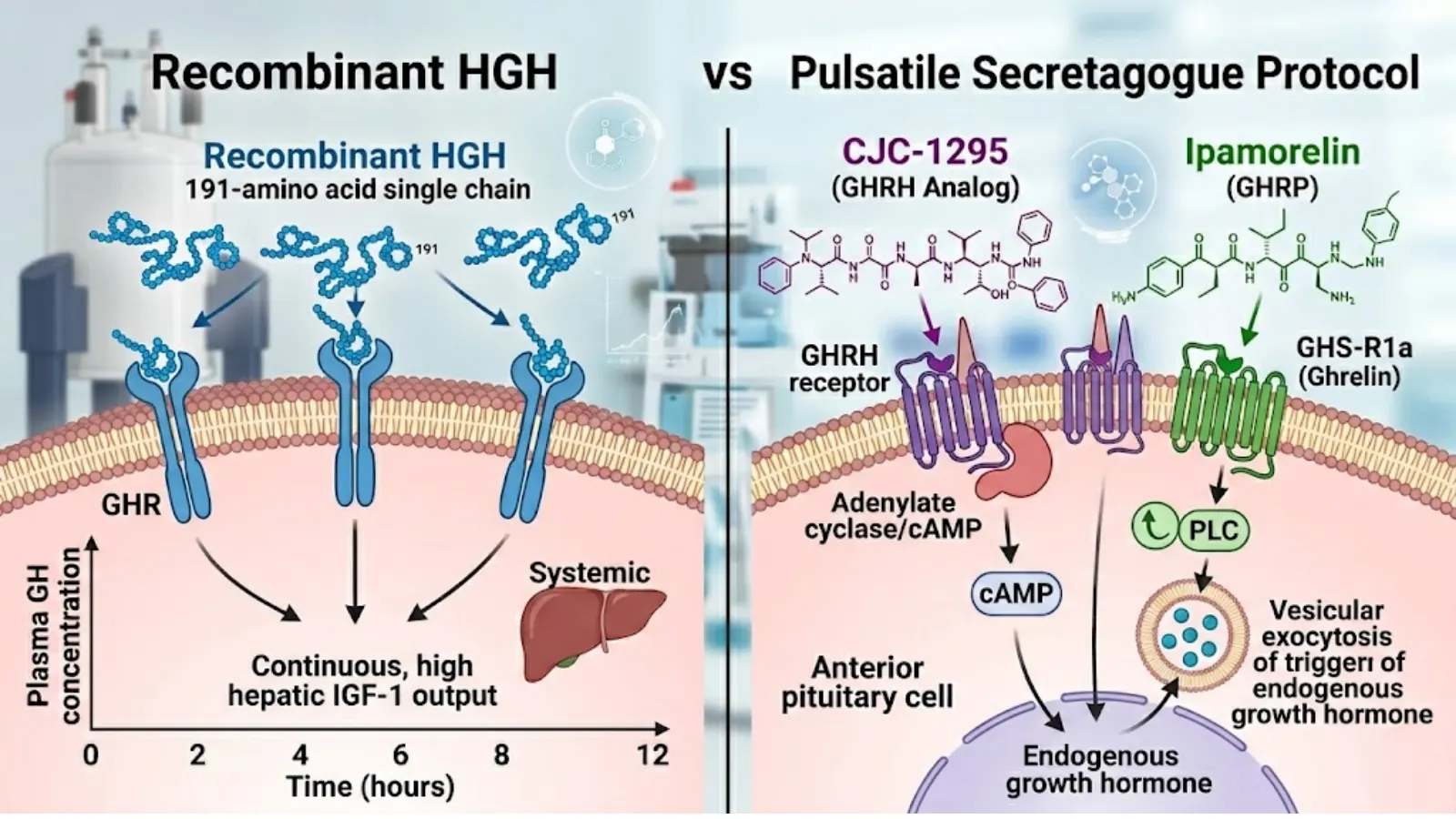
Image 4: Conceptual illustration of an advanced biohacking toolkit, visualizing the integration of peptide blends, biometrics wearables for sleep tracking, and metabolic data for somatotropic axis optimization.
11. Conclusion & Key Takeaways
The Future of Endocrine Modulation
The evolution of regenerative medicine is clear: we are moving away from the brute-force methodology of exogenous hormone replacement and advancing toward the precision of biological biomimicry. When analyzing **CJC 1295 Ipamorelin vs HGH**, the scientific data strongly favors the secretagogue approach. By utilizing the synergistic signaling mechanisms of a GHRH analog and a highly selective GHRP, researchers and biohackers can unlock the profound regenerative, lipolytic, and anti-aging benefits of growth hormone without compromising the structural integrity of the human endocrine system. The future of longevity lies not in replacing our hormones, but in politely reminding our bodies how to produce them optimally.
Key Takeaways
- Mechanism of Action: Synthetic HGH replaces natural hormones and shuts down pituitary function, whereas CJC-1295 and Ipamorelin instruct the body to synthesize its own, natural growth hormone.
- Physiological Safety: The peptide blend mimics the body’s natural “pulsatile” release, drastically reducing the risks of insulin resistance, hyperglycemia, and organomegaly associated with monophasic HGH spikes.
- Synergistic Efficacy: CJC-1295 increases the total volume of GH synthesized by the pituitary, while Ipamorelin acts as the catalyst to violently release it, simultaneously inhibiting the “stop” hormone, somatostatin.
- Strict Timing Requirements: For peptides to be effective, they must be administered in a strictly fasted state, as the presence of insulin or dietary fats will immediately blunt the growth hormone pulse.
- Superior Sleep Architecture: Unlike synthetic HGH, the ghrelin-mimetic nature of Ipamorelin actively promotes delta-wave (deep) sleep, compounding its regenerative and anti-aging benefits.