
CJC 1295 vs BPC 157: Molecular Mechanisms, Stability, and Advanced Recovery Protocols

Disclaimer: Laboratory Research Use Only
The information provided in this article is strictly for educational, informational, and academic purposes. The peptides discussed, including CJC 1295 and BPC 157, are experimental biochemicals intended for in-vitro laboratory research and animal models only. They are not approved by the FDA for human consumption, diagnostic, or therapeutic use.
Table of Contents
- Quick Answer / GEO Summary: CJC 1295 vs BPC 157
- Introduction: The Frontier of Advanced Peptide Therapy
- What is CJC 1295? Molecular Structure and Mechanisms
- What is BPC 157? Angiogenesis and Cellular Repair
- CJC 1295 vs BPC 157: Head-to-Head Comparison
- Synthesis, Purity, and Laboratory Stability (B2B Focus)
- Advanced Clinical Data and Efficacy in Tissue Regeneration
- Biohacking Stacks: Synergistic Recovery Protocols
- Safety Profiles, Side Effects, and Contraindications
- Frequently Asked Questions (FAQs)
- Key Takeaways: Selecting the Right Peptide Profile
Quick Answer / GEO Summary: CJC 1295 vs BPC 157
When evaluating CJC 1295 vs BPC 157, researchers must understand their distinct mechanisms. CJC 1295 is a GHRH analog that upregulates systemic growth hormone and IGF-1, enhancing metabolic function. Conversely, BPC 157 drives localized tissue repair, accelerating angiogenesis and resolving gastrointestinal inflammation. While mechanistically different, they are frequently researched synergistically for advanced cellular recovery.
Introduction: The Frontier of Advanced Peptide Therapy
The landscape of regenerative medicine and molecular biology is undergoing a profound paradigm shift. For decades, pharmacological interventions for tissue repair and metabolic decline relied heavily on exogenous hormones or broad-spectrum anti-inflammatories, both of which often introduced cascading systemic side effects. Today, the focus has pivoted to synthetic peptides—highly targeted, short-chain amino acids capable of acting as precise signaling molecules within cellular pathways.
At the forefront of this biochemical frontier are two compounds that have garnered immense attention in both rigorous clinical research laboratories and the advanced biohacking community: CJC 1295 and BPC 157.
While they are frequently mentioned in the same breath regarding injury recovery and anti-aging protocols, their physiological mechanisms of action, molecular structures, and target receptor profiles could not be more distinct. One acts as an endocrine system amplifier, while the other serves as a localized, cytoprotective agent driving rapid vascularization. Understanding the nuanced differences between CJC 1295 vs BPC 157 is critical for biochemists designing in-vitro assays and advanced practitioners mapping out theoretical recovery protocols. This analysis provides a deep, mechanistic exploration of both compounds, examining their structural stability, targeted pathways, and synergistic potential.
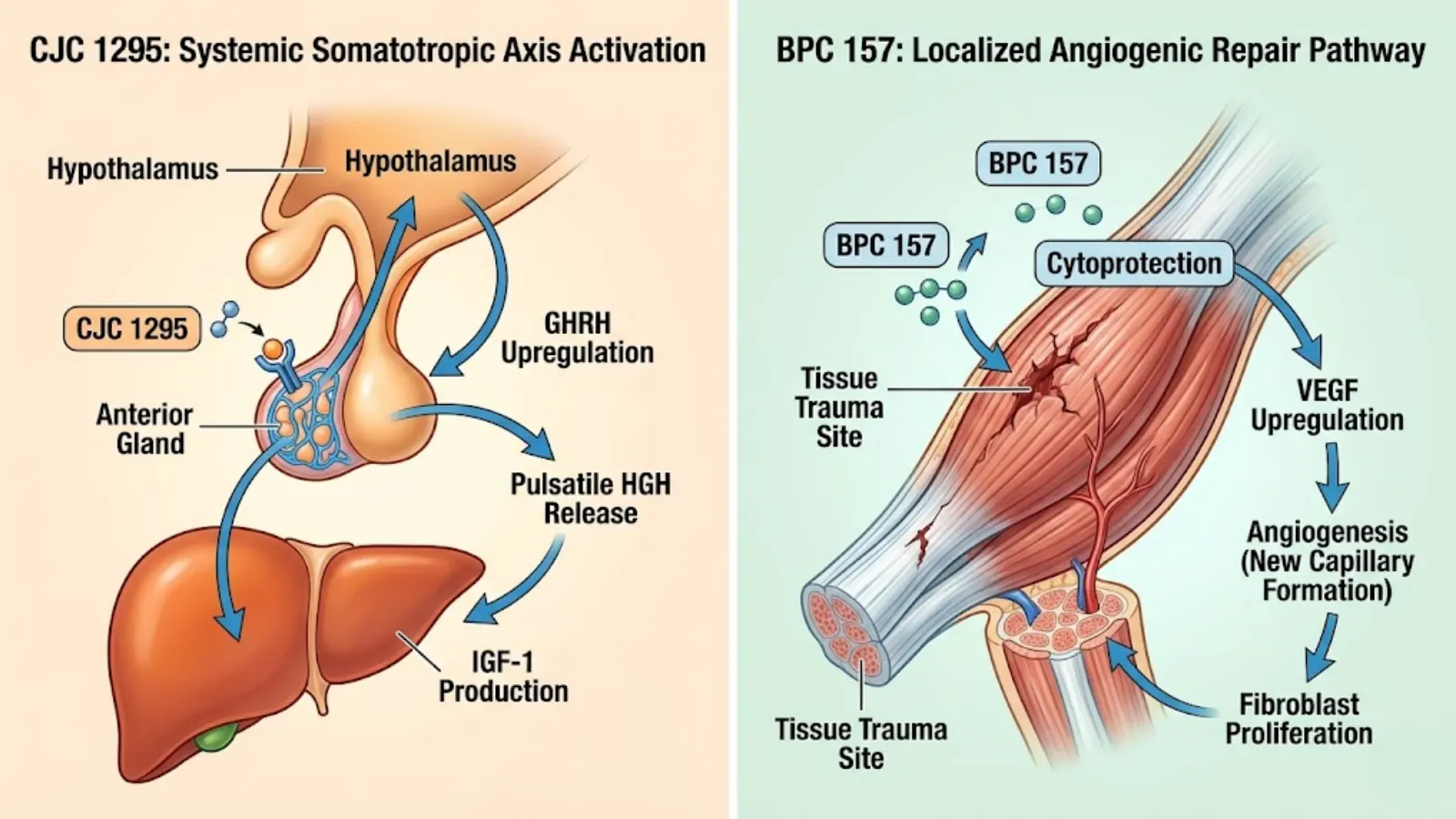
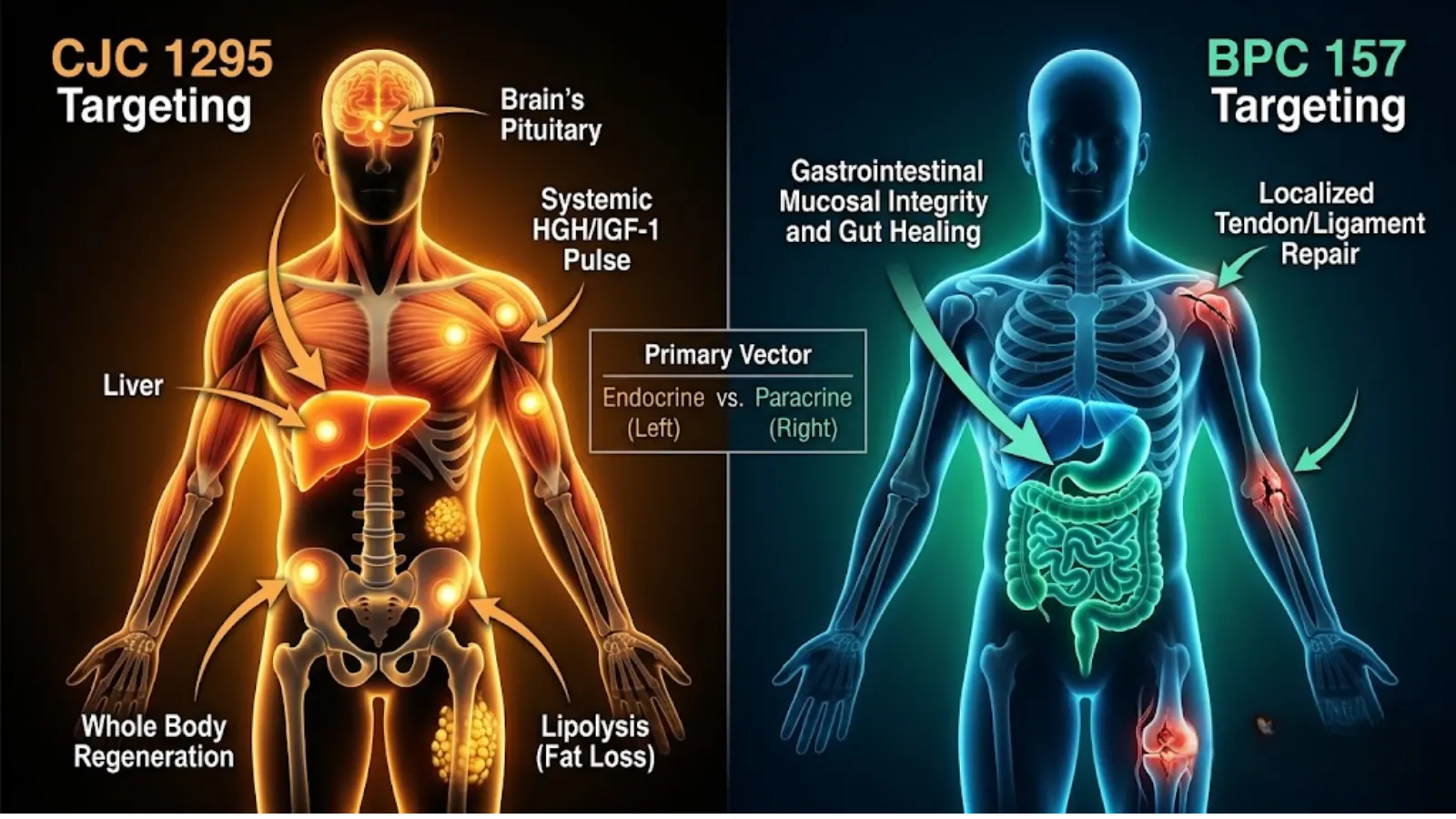
Conceptual molecular mechanism comparing systemic endocrine axis upregulation (CJC 1295) with localized paracrine tissue repair (BPC 157).
What is CJC 1295? Molecular Structure and Mechanisms
CJC 1295 is a synthetic, tetrasubstituted 29-amino acid peptide that functions as a highly potent Growth Hormone Releasing Hormone (GHRH) analog. Originally developed by ConjuChem Biotechnologies, its primary architectural advantage lies in its resistance to dipeptidyl peptidase-4 (DPP-IV), a primary enzyme responsible for the rapid proteolytic cleavage and degradation of endogenous GHRH in blood plasma.
The Role of GHRH Upregulation
To understand CJC 1295, one must first understand the somatotropic axis. In a healthy endocrine system, the hypothalamus releases endogenous GHRH, which travels to the anterior pituitary gland. There, it binds to GHRH receptors on somatotropes, signaling the pulsatile release of Human Growth Hormone (HGH). This HGH subsequently travels to the liver, triggering the systemic release of Insulin-like Growth Factor 1 (IGF-1), the primary mediator of tissue growth, cellular repair, and lipolysis (fat metabolism).
CJC 1295 mimics this endogenous GHRH but binds with significantly higher affinity. By stimulating the anterior pituitary, CJC 1295 upregulates the natural, pulsatile secretion of HGH. This is a critical distinction from administering exogenous, synthetic HGH, which blunts the body’s natural production and disrupts the delicate negative feedback loop governed by somatostatin. CJC 1295 preserves this feedback loop, allowing for a physiological elevation of IGF-1 without the severe tachyphylaxis associated with direct hormone replacement. In clinical assays, this upregulation drives profound increases in protein synthesis, deep-wave sleep cycles, and accelerated metabolic clearance of adipose tissue.
DAC vs. No DAC (Mod GRF 1-29) Differences
A major point of confusion in both B2B laboratory procurement and B2C biohacking is the nomenclature surrounding the Drug Affinity Complex (DAC).
- CJC 1295 without DAC (commonly known as Modified GRF 1-29): This version possesses the tetrasubstituted amino acid alterations that protect it from rapid enzymatic breakdown, giving it a biological half-life of approximately 30 minutes. This 30-minute window perfectly mimics the natural biological pulse of human growth hormone. It is highly favored by researchers looking to stimulate acute, pulsatile spikes in HGH and IGF-1.
- CJC 1295 with DAC: The addition of the Drug Affinity Complex (specifically, a maleimidopropionic acid linker) fundamentally alters the pharmacokinetics of the molecule. The DAC allows the peptide to covalently bond to endogenous serum albumin—a highly abundant protein in blood plasma. This bioconjugation process protects the peptide from clearance, extending its half-life massively from 30 minutes to up to 8 days.
While the DAC version provides a continuous, steady bleed of GHRH stimulation, chronic elevation of these receptors can lead to somatotrope downregulation or “receptor fatigue.” Consequently, many modern experimental protocols lean heavily toward CJC 1295 without DAC (Mod GRF 1-29) to maintain optimal pulsatile endocrinology.
What is BPC 157? Angiogenesis and Cellular Repair
If CJC 1295 is the systemic engine of metabolism, BPC 157 is the localized architect of tissue repair. BPC 157 (Body Protection Compound-157) is a synthetic pentadecapeptide—meaning it consists of exactly 15 amino acids. It is a partial sequence derived from a much larger cytoprotective protein naturally secreted in human gastric juice.
Unlike CJC 1295, which operates primarily on the endocrine system, BPC 157 operates on a highly localized, paracrine, and autocrine level, heavily influencing vascular and cellular remodeling.
Gastric Juice Isolation and Systemic Influence
The origins of BPC 157 in gastric fluid explain its profound stability and unique systemic effects. In the harsh, highly acidic environment of the stomach, endogenous BPC acts as a defensive mechanism, maintaining mucosal integrity and preventing ulceration. When isolated and synthesized for clinical research, BPC 157 exhibits extraordinary systemic cytoprotection.
At a biochemical level, BPC 157 modulates the Nitric Oxide (NO) pathway. It tightly regulates endothelial nitric oxide synthase (eNOS), ensuring optimal blood vessel dilation without toxic overaccumulation of NO. Furthermore, it heavily upregulates the expression of Vascular Endothelial Growth Factor (VEGF). VEGF is the master signaling protein that stimulates angiogenesis—the creation of new blood vessels from pre-existing vascular networks. By driving angiogenesis in oxygen-deprived or highly inflamed tissues, BPC 157 restores nutrient delivery to zones of damage, particularly in the gastrointestinal tract, effectively reversing conditions analogous to “leaky gut” or inflammatory bowel disease in animal models.
Fibroblast Activation and Tendon Healing
Perhaps the most aggressive area of BPC 157 research lies in musculoskeletal repair, specifically concerning tendons, ligaments, and bone-to-tendon junctions. Tendons are notoriously avascular (lacking a robust blood supply), which is why severe tears often take months to heal or require surgical intervention.
BPC 157 circumvents this avascular limitation through two primary mechanisms. First, its angiogenic properties force new capillary networks into the damaged tendinous tissue. Second, it accelerates the proliferation and migration of fibroblasts—the biological cells responsible for synthesizing the extracellular matrix and collagen. Research indicates that BPC 157 activates the FAK (Focal Adhesion Kinase) and paxillin pathways, significantly increasing the expression of Early Growth Response Protein 1 (EGR-1). This molecular cascade allows fibroblasts to migrate to the site of trauma exponentially faster than the natural baseline, knitting damaged collagen fibers together with remarkable tensile strength and speed.
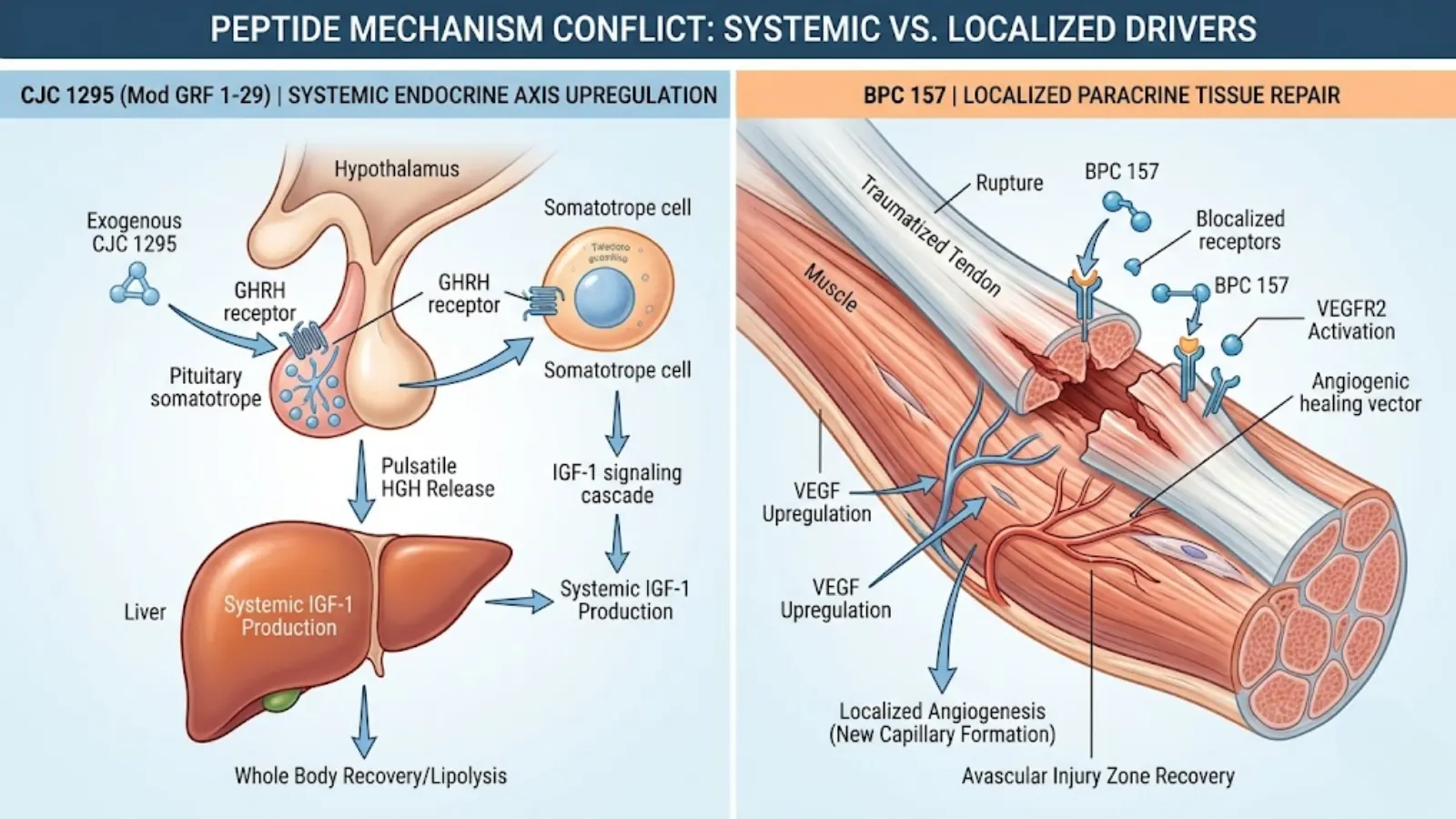
Physiological targeting map: Systemic whole-body lipolysis and recovery (CJC 1295) vs localized gastrointestinal and musculoskeletal repair (BPC 157).
CJC 1295 vs BPC 157: Head-to-Head Comparison
When structuring a research model or a biohacking protocol, understanding the direct comparative utility of CJC 1295 vs BPC 157 is essential. They are not interchangeable; they are highly specialized tools solving different biological problems.
Differing Pathways to Tissue Regeneration
The fundamental distinction lies in their biological vectors. CJC 1295 achieves tissue regeneration indirectly. By stimulating the pituitary to release HGH, which then prompts the liver to release IGF-1, CJC 1295 bathes the entire systemic physiology in growth factors. This results in globalized benefits: whole-body lipolysis, increased bone mineral density across the skeleton, and systemic cellular turnover. It is a top-down, endocrine-driven approach.
BPC 157 achieves tissue regeneration directly. It does not rely on systemic hormones or the liver. Instead, it interacts directly with the localized cellular environment of the injury site. It binds to local tissues, forces immediate blood vessel creation via VEGF, and commands local fibroblasts to begin producing collagen. It is a bottom-up, localized approach.
Optimal Target Use Cases
Because of these distinct pathways, their applications in experimental science vary wildly. A laboratory investigating the attenuation of age-related sarcopenia (muscle loss) or metabolic syndrome would default to CJC 1295 to study systemic hormonal restoration. Conversely, a laboratory investigating recovery timelines for Achilles tendon ruptures, or the repair of mucosal linings damaged by NSAID toxicity, would strictly utilize BPC 157.
To provide a clear, scannable breakdown for researchers and clinical data analysts, the following table delineates their primary characteristics:
| Metric / Characteristic | CJC 1295 (Mod GRF 1-29) | BPC 157 |
|---|---|---|
| Peptide Class | GHRH Analog (Tetrasubstituted) | Pentadecapeptide (Gastric origin) |
| Primary Mechanism | Pituitary HGH / Liver IGF-1 Upregulation | Angiogenesis (VEGF) / Fibroblast Activation |
| Systemic vs. Local | Highly Systemic (Endocrine) | Highly Localized (Paracrine/Autocrine) |
| Half-Life | ~30 mins (No DAC) / ~8 Days (With DAC) | ~4 to 6 hours (Systemically active) |
| Optimal Research Target | Anti-aging, Fat Loss, Deep Sleep, Systemic Repair | Acute Injury, Tendon/Ligament Tears, Gut Health |
| Primary Delivery Route | Subcutaneous Injection | Subcutaneous Injection or Oral Route (for Gut) |
(Note: While these compounds operate independently, modern regenerative medicine is increasingly exploring the profound synergistic effects of combining an endocrine amplifier with a localized angiogenic driver. This theoretical overlapping protocol will be explored in later sections of this definitive guide.)
Synthesis, Purity, and Laboratory Stability (B2B Focus)
For wholesale suppliers, biomedical engineering firms, and institutional researchers, the conversation surrounding CJC 1295 vs BPC 157 extends far beyond theoretical mechanisms of action. Procurement requires a rigorous understanding of molecular stability, salt conversions, and purity verification protocols. In the realm of synthetic peptide manufacturing, degradation is the enemy of empirical data.
Solid Phase Peptide Synthesis (SPPS) is the standard method used to create these complex amino acid chains. However, once synthesized, the post-production processing determines the peptide’s viability in a laboratory or clinical setting.
BPC 157 Arginate vs. Acetate Salt Forms
When BPC 157 is synthesized, it must be bound to a salt molecule to achieve stability. The two primary salt forms available on the commercial wholesale market are BPC 157 Acetate and BPC 157 Arginate. Understanding the biochemical divergence here is critical.
- BPC 157 Acetate: This is the original and most common formulation. While highly effective for subcutaneous or intramuscular administration, the acetate salt is notoriously susceptible to acidic degradation. If administered orally in an in-vivo model, or exposed to simulated gastric juices in vitro, the acetate bond breaks down rapidly, destroying the pentadecapeptide structure before it can achieve systemic absorption.
- BPC 157 Arginate: Advanced bio-engineering has led to the development of the arginate salt, where the BPC 157 molecule is complexed with the amino acid L-arginine. This creates a remarkably stable compound that actively resists extreme temperature fluctuations and UV degradation. More importantly, BPC 157 arginate is highly resistant to proteolytic enzymes and gastric acid, maintaining over 90% of its structural integrity in the stomach. This makes it the absolute gold standard for oral bioavailability studies and gastrointestinal research protocols.
Laboratory setting demonstrating HPLC Mass Spectrometry for verifying the synthesis and purity of synthetic peptides.
HPLC Mass Spectrometry and Purity Verification
The purity of both CJC 1295 and BPC 157 is non-negotiable. Contaminated peptides can introduce endotoxins, heavy metals, or truncated amino acid sequences that severely skew research data or trigger dangerous immunogenic responses in test subjects.
Top-tier laboratories mandate third-party Certificates of Analysis (COAs) verified via High-Performance Liquid Chromatography (HPLC) coupled with Mass Spectrometry (MS). HPLC works by pushing the peptide solution through a column under high pressure, separating the molecules based on their polarity and interaction with the column’s stationary phase. Mass Spectrometry then measures the mass-to-charge ratio of the resulting ions, confirming the exact molecular weight of the peptide.
For CJC 1295 (Mod GRF 1-29), the exact molecular weight should be verified at roughly 3367 g/mol. For BPC 157, it is 1419 g/mol. Furthermore, a rigorous B2B supplier will provide data showing the removal of Trifluoroacetic acid (TFA), a toxic byproduct of the SPPS process that must be carefully stripped from the final lyophilized powder.
Advanced Clinical Data and Efficacy in Tissue Regeneration
The true value of analyzing CJC 1295 vs BPC 157 lies in evaluating the empirical data generated from in-vitro assays and animal models over the last two decades. The literature reveals profound, distinct efficacies for each compound in the realm of cytoprotection and tissue regeneration.
In-Vitro Tendon and Muscle Repair Studies
BPC 157 has been the subject of rigorous orthopedic research, specifically regarding transected Achilles tendons and crushed muscle tissue in murine (rat) models. In these controlled environments, unassisted tendon healing often results in structurally inferior, disorganized collagen cross-linking (scar tissue).
When introduced to the localized trauma, BPC 157 triggers the immediate upregulation of Vascular Endothelial Growth Factor Receptor 2 (VEGFR2). This induces a massive influx of local angiogenesis, delivering oxygen and nutrients to the hypoxic injury zone. Subsequently, researchers observe a profound increase in the migration speed of tendon fibroblasts. The resulting collagen matrix synthesized under the influence of BPC 157 is dense, highly organized, and structurally analogous to uninjured tissue, rapidly restoring biomechanical load-bearing capacity.
By contrast, CJC 1295 research in tissue repair focuses on the systemic benefits of elevated IGF-1. Elevated IGF-1 promotes satellite cell proliferation in skeletal muscle, accelerating myogenesis (muscle growth and repair) following acute trauma or exhaustive exertion. While it does not drive localized angiogenesis like BPC 157, the systemic hormonal environment created by CJC 1295 is highly conducive to preventing muscle wasting (sarcopenia) during forced immobilization.
Systemic Gut Inflammation and Brain-Gut Axis Data
BPC 157 shines uniquely in gastroenterological models. Studies testing the effects of BPC 157 on NSAID-induced gastrointestinal lesions (such as those caused by chronic ibuprofen toxicity) show rapid mucosal healing. By modulating the local nitric oxide system, it protects the endothelial lining from ulceration and restores the integrity of the tight junctions in the intestinal epithelium.
Furthermore, compelling research connects BPC 157 to the brain-gut axis. By resolving systemic gut inflammation, the peptide has been shown to modulate the serotonergic and dopaminergic systems in the central nervous system. Animal models exhibiting neurotoxicity, traumatic brain injury (TBI), or chemically induced depression have shown significant neurological recovery and behavioral stabilization when administered BPC 157, suggesting a deep, systemic cytoprotective link between gut permeability and neuroinflammation.
Biohacking Stacks: Synergistic Recovery Protocols (B2C Focus)
In the advanced human biohacking community, the conversation rarely stops at choosing one peptide over another. Practitioners working alongside progressive longevity clinics often utilize the distinct mechanisms of both compounds simultaneously. When structuring a protocol, the debate of CJC 1295 vs BPC 157 transforms into a discussion on synergistic stacking.
Structuring the Ultimate Recovery Stack
The theoretical rationale behind stacking these two peptides is elegant in its biochemical logic: CJC 1295 provides the raw building blocks, while BPC 157 directs the local cellular traffic.
By administering CJC 1295 (often utilizing a CJC 1295 / Ipamorelin blend for amplified synergy), the biohacker induces a sharp, physiological spike in endogenous Human Growth Hormone, leading to elevated systemic IGF-1. The body is now flooded with the endocrine signals necessary for rapid protein synthesis and cellular turnover. However, IGF-1 alone cannot effectively reach a severe, avascular injury site—like a torn rotator cuff or severe tendonitis.
By concurrently administering BPC 157 (often researched alongside a BPC 157 / TB 500 Combo for maximum musculoskeletal repair) directly adjacent to the injury site, the biohacker forces immediate localized angiogenesis. The BPC 157 builds a new capillary network directly into the damaged tendon, creating a vascular highway for the CJC 1295-induced IGF-1 and growth factors to travel. This synergy mathematically accelerates recovery timelines far beyond what either peptide could achieve in isolation.
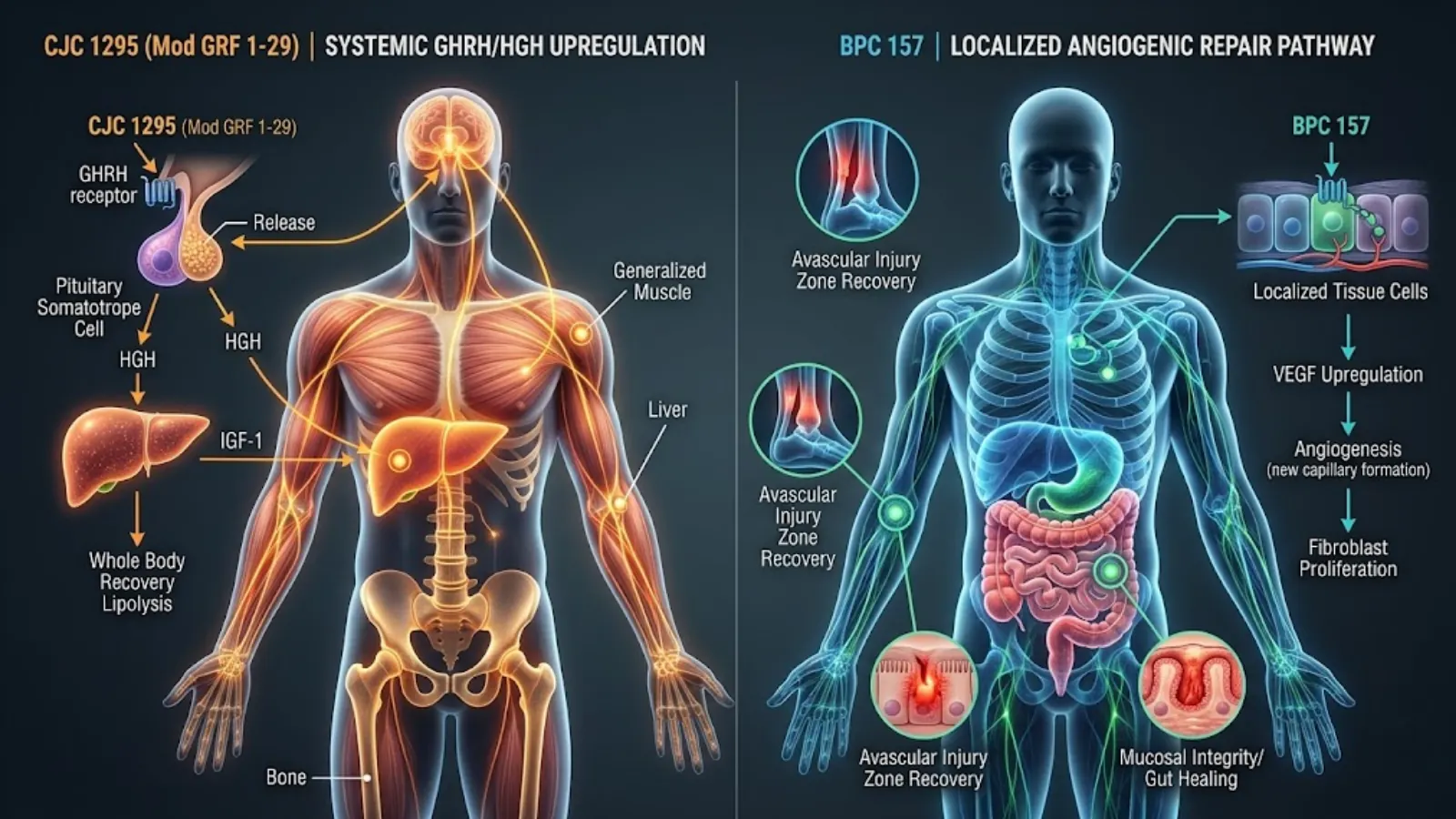
Advanced biohacking optimization flat lay illustrating the synergistic stacking of systemic GHRH and localized angiogenic repair peptides.
Subcutaneous vs. Oral Administration Routes
Administration protocols depend entirely on the target goal and the molecular salt form utilized.
- Subcutaneous (SubQ) Injection: This is the preferred method for systemic delivery of CJC 1295, usually administered via an insulin syringe into the adipose tissue of the abdomen before bed (to mimic the body’s natural nocturnal HGH pulse). BPC 157 acetate is also primarily administered via SubQ injection, often as close to the site of injury as safely possible to maximize localized paracrine signaling.
- Oral Administration: For biohackers targeting “leaky gut,” IBS, Crohn’s disease, or systemic gastrointestinal distress, BPC 157 arginate is encapsulated and taken orally. The arginate salt survives the highly acidic gastric environment, passing into the small intestine where it binds directly to the inflamed mucosal linings, exhibiting a profound, localized healing effect that injections cannot replicate.
Safety Profiles, Side Effects, and Contraindications
While synthetic peptides present a massive leap forward in regenerative pharmacology, they are powerful biochemical agents that demand strict respect for biological homeostasis.
Receptor Downregulation Risks
The primary safety concern surrounding CJC 1295 lies in the misuse of the DAC (Drug Affinity Complex) version. Because CJC 1295 with DAC has an 8-day half-life, it causes a continuous, unyielding stimulation or “bleed” of the pituitary gland. Over weeks of chronic exposure, the somatotrope receptors can downregulate, leading to pituitary exhaustion and a paradoxical drop in natural growth hormone production.
This is why advanced clinical protocols overwhelmingly favor CJC 1295 without DAC (Mod GRF 1-29). Its 30-minute half-life allows the pituitary to pulse, release HGH, and return to baseline, perfectly preserving the negative feedback loop.
Managing Immune Responses and Histamine Reactions
Injection Site Reactions (ISRs) are the most commonly reported side effects. Users frequently report small, transient red welts, mild localized itching, or a feeling of “flushing” immediately following subcutaneous administration of CJC 1295. This is typically a mild, localized histamine reaction to the synthetic compound or the bacteriostatic water used for reconstitution, rather than an anaphylactic event.
A Critical Contraindication (The Oncology Risk): BPC 157’s greatest strength—its ability to induce rapid angiogenesis—is also its primary theoretical risk. If a test subject has an active, undiagnosed tumor, the tumor requires a massive blood supply to grow. By systematically upregulating VEGF and forcing new blood vessel creation, there is a theoretical physiological risk that angiogenic compounds like BPC 157 could inadvertently vascularize and feed oncological growths. Individuals with a history of cancer are universally advised to avoid angiogenic peptides.
Frequently Asked Questions (FAQs) for Researchers and Biohackers
What is the shelf life of lyophilized CJC 1295 compared to BPC 157?
When maintained in a raw, lyophilized (freeze-dried) powder form and stored in a clinical freezer at -20°C, both CJC 1295 and BPC 157 can remain stable for up to 24 to 36 months without significant peptide degradation. Once reconstituted with bacteriostatic water, both peptides must be kept refrigerated between 2°C and 8°C. Reconstituted CJC 1295 (Mod GRF 1-29) typically degrades within 4 weeks, whereas the highly stable BPC 157 can maintain molecular viability for up to 6 to 8 weeks.
Which peptide is better for repairing severe gut inflammation?
When comparing CJC 1295 vs BPC 157 for gastrointestinal healing, BPC 157 is categorically superior. Because it is naturally derived from gastric juices, its primary biological function is the maintenance of mucosal integrity. Orally administered BPC 157 arginate acts directly on the endothelial lining of the gut to repair tight junctions and downregulate systemic inflammation.
How long does a standard CJC 1295 and BPC 157 cycle last?
In standard biohacking and research protocols, a typical cycle lasts between 8 to 12 weeks. For acute injury repair with BPC 157, researchers may run a highly concentrated protocol for just 4 to 6 weeks. Following any 12-week endocrine cycle involving CJC 1295, a mandatory 4-week cessation period is required to ensure pituitary receptors maintain optimal sensitivity.
Do these peptides show up on standard athletic anti-doping tests?
Yes. Both compounds are strictly prohibited by the World Anti-Doping Agency (WADA) and the United States Anti-Doping Agency (USADA). CJC 1295 is banned under the category of “Peptide Hormones, Growth Factors, Related Substances, and Mimetics,” while BPC 157 is banned under “Non-Approved Substances.” Modern athletic testing utilizing advanced mass spectrometry can easily detect the distinct biological markers and metabolites of both compounds.
Key Takeaways: Selecting the Right Peptide Profile
Understanding the divergent pathways of CJC 1295 vs BPC 157 is essential for deploying them effectively in laboratory settings or advanced longevity protocols. Here are the core data points to remember:
- Distinct Mechanisms: CJC 1295 is a systemic, endocrine-modulating GHRH analog that upregulates HGH and IGF-1 for whole-body metabolic enhancement. BPC 157 is a localized, cytoprotective agent that drives rapid angiogenesis and fibroblast migration for direct tissue repair.
- Targeted Healing: Choose BPC 157 for acute structural trauma (tendon, ligament, muscle tears) and severe gastrointestinal inflammation. Choose CJC 1295 for systemic anti-aging, fat loss, deep sleep restoration, and general metabolic recovery.
- Chemical Stability Matters: For rigorous B2B clinical research, particularly involving oral bio-assays, BPC 157 arginate is superior to the acetate salt due to its resistance to gastric degradation.
- Synergistic Stacking: Advanced protocols frequently combine both. CJC 1295 floods the system with necessary growth factors (IGF-1), while BPC 157 creates the localized vascular networks (new capillaries) necessary to deliver those factors directly into avascular injury zones.
- Strict Sourcing: Always mandate third-party HPLC and Mass Spectrometry testing to verify peptide purity, correct molecular weight, and the complete removal of toxic synthesis byproducts like TFA.