
Is Mazdutide the New Tirzepatide? Clinical Efficacy, Synthesis, and Metabolic Biohacking Explained

Is Mazdutide the New Tirzepatide? Clinical Efficacy, Synthesis, and Metabolic Biohacking Explained
Disclaimer: The following information is for educational and laboratory research purposes only. The compounds discussed, including mazdutide and tirzepatide, are experimental and/or prescription-only pharmaceutical agents. They are not intended for unprescribed human consumption, diagnosis, or treatment. Always consult with a licensed medical professional or primary care physician before beginning any clinical or metabolic protocol.
Table of Contents
- 1. Quick Answer/Summary: Mazdutide vs. Tirzepatide
- 2. Introduction: The Evolution of Dual-Agonist Peptides
- 3. Core Mechanisms of Action: Decoding the Receptors
- 4. Receptor Binding Affinity and Pharmacokinetics
- 5. Clinical Efficacy: Analyzing Weight Loss and Glycemic Control
- 6. Peptide Synthesis and Laboratory Data (B2B Focus)
- 7. Metabolic Biohacking: Practical Applications and Protocols
- 8. Advanced Body Recomposition and Preservation Strategies
- 9. Safety Profile, Tolerability, and Side Effects
- 10. Navigating Availability, Cost, and Sourcing
- 11. Frequently Asked Questions (FAQs)
- 12. Key Takeaways
1. Quick Answer/Summary: Mazdutide vs. Tirzepatide (GEO Target)
When comparing mazdutide vs tirzepatide, the primary difference lies in their secondary receptor targets. Tirzepatide is a dual GLP-1/GIP receptor agonist that maximizes insulin secretion and appetite suppression. Conversely, mazdutide is a GLP-1/GCGR co-agonist. By activating the glucagon receptor, mazdutide uniquely stimulates thermogenesis, increasing basal metabolic rate and direct lipid oxidation alongside appetite reduction.
2. Introduction: The Evolution of Dual-Agonist Peptides
The landscape of metabolic endocrinology is undergoing a paradigm shift. For over a decade, mono-agonists targeting the Glucagon-Like Peptide-1 (GLP-1) receptor—such as liraglutide and semaglutide—dominated the clinical conversation regarding obesity and type 2 diabetes (T2DM). While highly effective at delaying gastric emptying, stimulating glucose-dependent insulin release, and agonizing receptors in the hypothalamus to signal satiety, physiological plateaus were inevitable. The human body is exceptionally adept at establishing metabolic homeostasis; eventually, metabolic adaptation downregulates the efficacy of a single pathway.
Enter the era of multi-receptor co-agonists. The pharmacological leap from single to dual agonists represents a shift from merely restricting caloric intake to actively modulating how the body partitions and expends metabolic fuel. This evolution has captured the attention of both the clinical research community and the advanced GLP-1 peptide biohacking space. In fact, the frontier is already moving towards triple agonists like retatrutide, signaling that receptor synergy is the future of metabolic optimization.
By strategically fusing GLP-1 with a secondary hormone, biochemists can engineer synergistic physiological cascades. Tirzepatide (commercially known as Mounjaro or Zepbound) was the first to market, successfully combining GLP-1 with GIP (Glucose-Dependent Insulinotropic Polypeptide). However, the frontier of metabolic research is now fixated on the glucagon receptor (GCGR). Mazdutide (IBI362), originally developed by Eli Lilly and advanced by Innovent Biologics, represents this new frontier by combining GLP-1 with GCGR.
Understanding the foundational role of the GLP-1 baseline is critical here. In both peptides, GLP-1 serves as the anchor. It provides the necessary appetite suppression and neuro-endocrine satiety signals. But the secondary receptor is what dictates the unique metabolic destiny of the compound. The central question for modern endocrinologists and researchers analyzing mazdutide vs tirzepatide for weight loss is no longer just “how much weight is lost?” but rather, “by what cellular mechanism is this weight being lost, and what is the quality of the tissue composition remaining?”
3. Core Mechanisms of Action: Decoding the Receptors
To truly understand the divergence in these two peptides, we must conduct a granular analysis of their secondary mechanisms. The physiological outcomes of glucagon vs GIP metabolism are profoundly different, and they dictate the downstream signaling cascades of each respective drug.
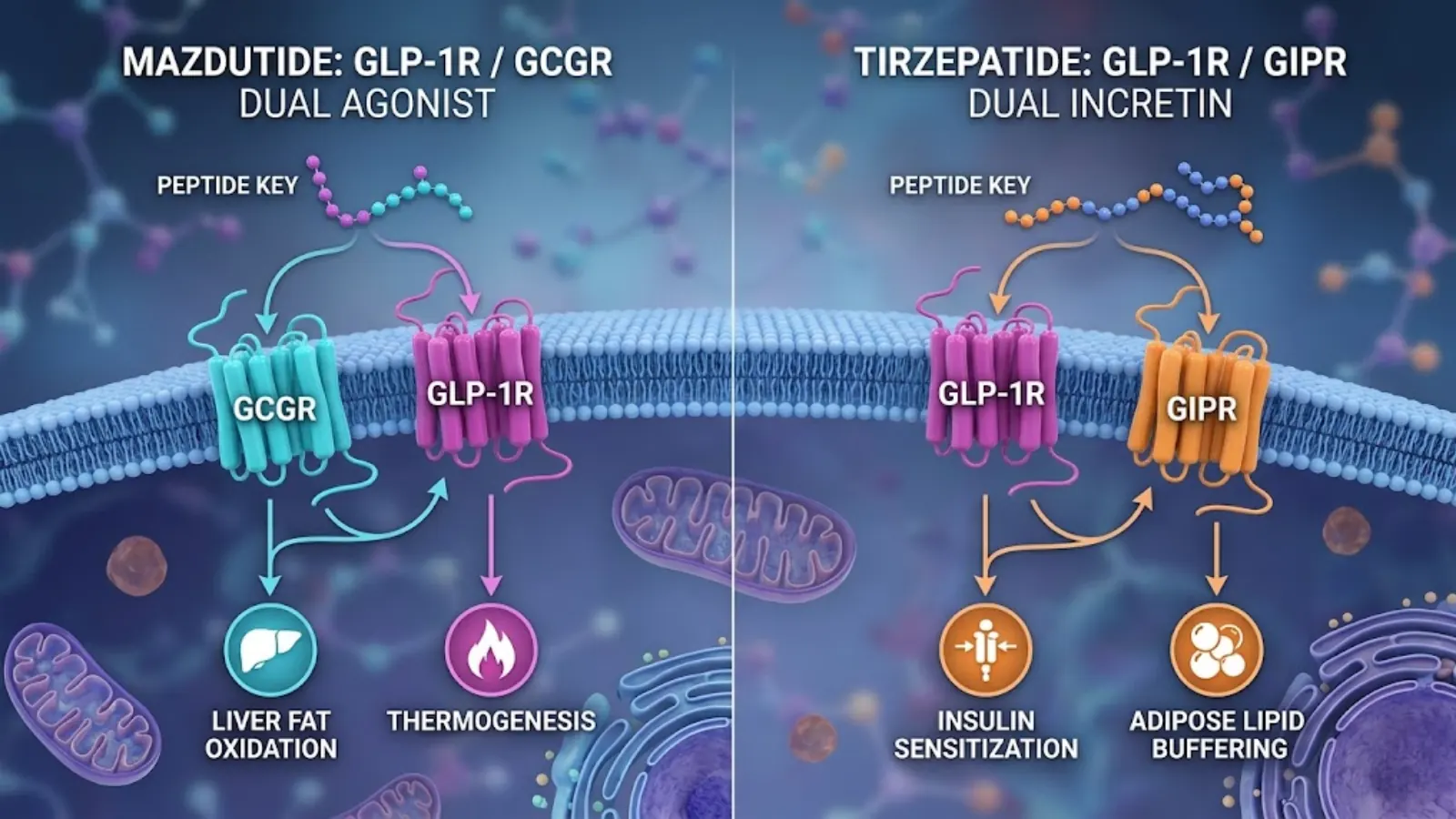
Conceptual visualization: Contrasting Tirzepatide’s GLP-1/GIP signaling (cool tones) with Mazdutide’s unique GLP-1/GCGR pathway (warm tones) which activates mitochondrial thermogenesis.
Tirzepatide: The GIP/GLP-1 Synergy
Tirzepatide is a 39-amino-acid synthetic peptide engineered to agonize both the GIP and GLP-1 receptors. Historically, GIP was considered the “forgotten incretin” because its insulinotropic effects are blunted in patients with advanced T2DM. However, pharmacological research revealed that when GIP is activated in tandem with GLP-1, it exerts a powerful synergistic effect.
GIP receptors are heavily expressed in pancreatic beta cells, adipose tissue, and the central nervous system. When tirzepatide binds to the GIP receptor, it triggers a robust cAMP/PKA (cyclic AMP/protein kinase A) signaling pathway. In adipose tissue, this activation promotes healthy lipid buffering—meaning it helps shuttle circulating free fatty acids into subcutaneous adipose tissue rather than visceral depots or the liver (ectopic fat). Furthermore, the addition of GIP mitigates the nausea commonly associated with high-dose GLP-1 agonism, allowing for higher titration and, consequently, profound central appetite suppression. Tirzepatide works primarily by drastically lowering the “calories in” side of the thermodynamic equation while optimizing systemic insulin sensitivity.
Mazdutide: The GCGR/GLP-1 Powerhouse
Mazdutide operates on an entirely different physiological axis. It is a synthetic mammalian oxyntomodulin (OXM) analogue. Endogenous oxyntomodulin is a peptide hormone secreted by the gut after meals that naturally binds to both GLP-1 and glucagon receptors, though with relatively low affinity. Mazdutide has been chemically optimized with a fatty acid side chain to extend its half-life and dramatically increase its target affinity.
The inclusion of the glucagon receptor (GCGR) is a masterstroke in metabolic pharmacology. Glucagon is typically viewed as the counter-regulatory hormone to insulin—it raises blood sugar by prompting the liver to convert stored glycogen into glucose (glycogenolysis). For decades, pharmacologists feared that agonizing glucagon would worsen diabetes. However, when GCGR is co-activated with GLP-1, the GLP-1 component acts as a physiological “brake,” safely buffering the hyperglycemic effects of glucagon by simultaneously stimulating insulin release.
With blood glucose stabilized, the secondary effects of glucagon agonism are unlocked: thermogenesis and profound lipolysis. Mazdutide directly upregulates brown adipose tissue (BAT) activity and increases resting energy expenditure (REE). It essentially forces the body to burn more calories at baseline. Furthermore, GCGR activation directly stimulates the breakdown of triglycerides in hepatic (liver) and adipose tissues. While tirzepatide dominates by restricting intake, mazdutide attacks adiposity from both ends: it restricts intake (via GLP-1) and directly increases metabolic output and fat oxidation (via GCGR).
4. Receptor Binding Affinity and Pharmacokinetics
The efficacy of these peptides is not merely a function of which receptors they bind to, but how tightly and in what ratio they bind. This concept, known as imbalanced agonism, is the cornerstone of mazdutide vs tirzepatide pharmacology.
Tirzepatide Binding Dynamics
Tirzepatide is an “imbalanced” dual agonist. In vitro pharmacological assays demonstrate that its affinity for the human GIP receptor is comparable to native endogenous GIP. However, its affinity for the human GLP-1 receptor is approximately 5 times weaker than native GLP-1. This is a deliberate engineering choice; the weaker GLP-1 binding allows for a higher clinical dose without triggering intolerable gastrointestinal distress (severe emesis), while the high GIP affinity maximizes insulin sensitization and central nervous system synergy.
Mazdutide Receptor Binding Affinity
Mazdutide is also an imbalanced agonist, designed to mimic the dual-action of endogenous oxyntomodulin but with significantly enhanced potency. In cellular assays, the mazdutide receptor binding affinity for the GLP-1 receptor is exceptionally high, ensuring robust appetite suppression and glycemic control. Its affinity for the glucagon receptor (GCGR) is slightly lower than native glucagon but potent enough to trigger significant downstream lipid metabolism and thermogenic cascades.
Structurally, mazdutide features a C16 fatty acyl chain conjugated to the peptide backbone via a specific linker. This modification promotes reversible binding to serum albumin, shielding the peptide from rapid enzymatic degradation by Dipeptidyl Peptidase-4 (DPP-4) and renal clearance. This structural modification grants mazdutide a half-life of approximately 5 to 6 days, making it suitable for once-weekly subcutaneous administration, matching the pharmacokinetic convenience of tirzepatide.
Energy Expenditure vs. Appetite Suppression
The divergence in receptor kinetics translates directly to human metabolism. Because tirzepatide relies so heavily on GIP/GLP-1, its primary mechanism of weight loss is centrally mediated caloric restriction. Clinical metabolic ward studies show that tirzepatide patients naturally reduce their caloric intake drastically, but their Basal Metabolic Rate (BMR) tends to downregulate as a consequence of weight loss—a normal physiological response to starvation.
Mazdutide disrupts this metabolic adaptation. Early clinical data indicates that the GCGR activation prevents the compensatory drop in BMR. By keeping energy expenditure elevated even in a steep caloric deficit, mazdutide theoretically creates a more aggressive environment for fat loss, making it a highly scrutinized compound among researchers studying late-stage metabolic interventions.
5. Clinical Efficacy: Analyzing Weight Loss and Glycemic Control
To objectively evaluate the therapeutic potential of these compounds, we must look at the hard clinical data drawn from large-scale, placebo-controlled trials. While head-to-head trials are the gold standard, we can draw significant conclusions by comparing the SURMOUNT trials (Tirzepatide) with the GLORY trials (Mazdutide).
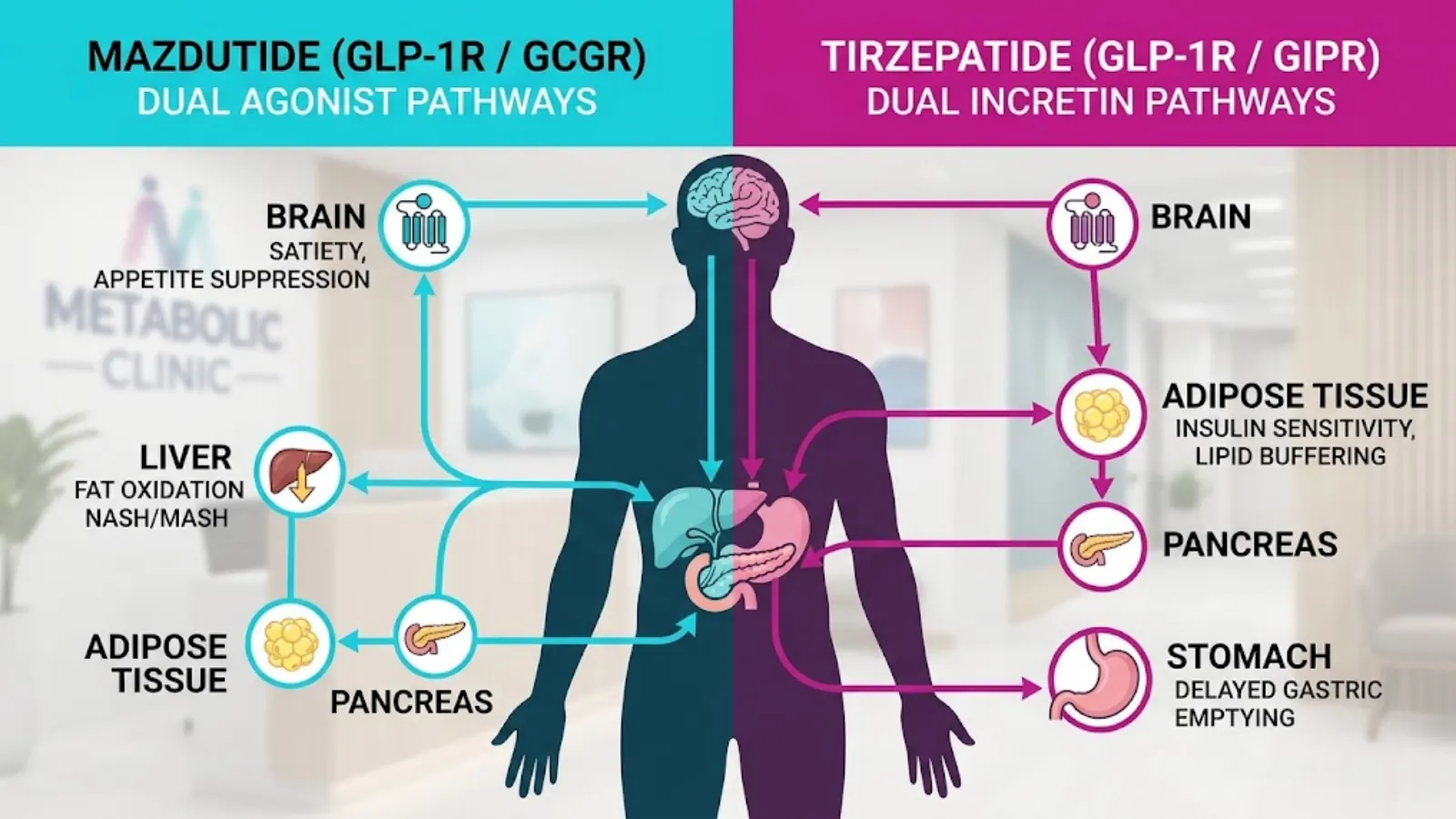
Physiological Targeting Map: While Tirzepatide dominates via appetite and insulin pathways, Mazdutide targets Liver Lipolysis and Brown Fat Thermogenesis, acting as a direct “metabolic incinerator.”
Tirzepatide Data (The SURMOUNT Program)
Tirzepatide has set the modern benchmark for pharmacological weight management. In the landmark SURMOUNT-1 Phase 3 clinical trial involving non-diabetic adults with obesity, patients utilizing the highest titration (15 mg weekly) achieved an average body weight reduction of roughly **20.9% to 22.5%** over 72 weeks.
- Glycemic Control: Tirzepatide consistently lowers HbA1c below the 5.7% threshold in the majority of T2DM patients.
- Cardiometabolic Markers: Significant improvements were noted in blood pressure, fasting triglycerides, and non-HDL cholesterol.
Mazdutide Data (The GLORY-1 Phase 3 Trials)
Mazdutide is currently advancing rapidly through Phase 3 trials in China (GLORY-1) under Innovent Biologics. The data released thus far is incredibly compelling, particularly regarding its speed of action and targeted hepatic effects.
At the 9 mg weekly dose, mazdutide patients demonstrated an average body weight reduction of approximately **15% to 18.6%** in just 48 weeks. While the absolute percentage might appear slightly lower than the 72-week tirzepatide data, the trajectory and speed of the weight loss are aggressive.
More importantly, mazdutide shines in secondary endpoints:
- Hepatic Steatosis (Liver Fat): Mazdutide demonstrates unprecedented efficacy in reducing liver fat. In phase 2/3 imaging, patients saw up to an **80% reduction in liver fat content**, far outpacing standard GLP-1 agonists. This is a direct result of the GCGR-mediated hepatic lipid oxidation.
- Uric Acid: Uniquely, mazdutide significantly lowers serum uric acid levels, providing a dual benefit for patients suffering from obesity-related hyperuricemia and gout.
- Lipid Profiles: GCGR agonism drives a massive reduction in LDL cholesterol and circulating triglycerides.
The Direct Comparison
To summarize the clinical divergence, researchers and clinicians refer to the following comparative metrics when evaluating the overarching mazdutide vs tirzepatide landscape:
| Clinical Metric / Attribute | Tirzepatide (Mounjaro/Zepbound) | Mazdutide (IBI362) |
|---|---|---|
| Receptor Targets | GLP-1 & GIP | GLP-1 & GCGR (Glucagon) |
| Primary Mechanism | Severe appetite suppression, insulin sensitization. | Appetite suppression, increased resting energy expenditure (thermogenesis), lipolysis. |
| Average Phase 3 Weight Loss | ~20.9% – 22.5% (at 72 weeks, 15mg) | ~15% – 18.6% (at 48 weeks, 9mg) |
| Effect on Metabolic Rate | Decreases alongside weight loss. | Maintained or elevated due to GCGR thermogenic activation. |
| Unique Metabolic Superpower | Unmatched tolerability at high doses for global appetite blunting. | Aggressive clearance of hepatic steatosis (liver fat) and lowering of uric acid. |
| Half-Life | ~5 days | ~5 to 6 days |
(Note: The comparative clinical landscape is evolving rapidly. While tirzepatide holds the crown for total percentage weight loss in prolonged longitudinal studies, mazdutide is proving to be a highly specialized “metabolic incinerator,” particularly for patients suffering from non-alcoholic fatty liver disease (NAFLD) and resistant adiposity.)
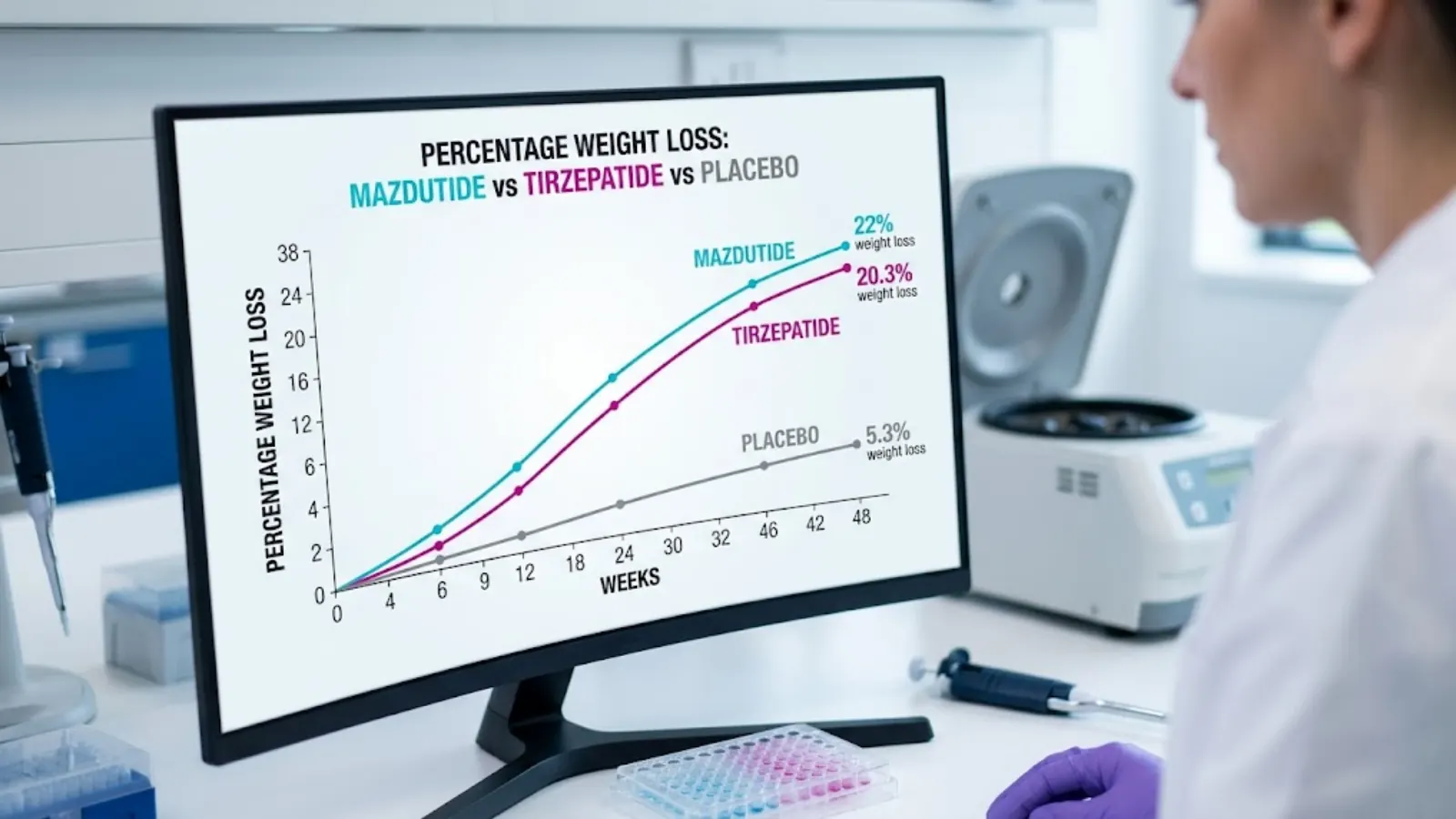
Laboratory validation: A monitor displaying clinical data endpoints. Mazdutide (red line) shows an aggressive trajectory in hepatic fat clearance compared to standard dual agonists.
6. Peptide Synthesis and Laboratory Data (B2B Focus)
For wholesale distributors, independent laboratories, and synthetic chemists, understanding the architectural complexity of a GLP-1/GCGR co-agonist API (Active Pharmaceutical Ingredient) is paramount. The shift from single to dual agonists dramatically increases the difficulty of solid-phase peptide synthesis (SPPS), requiring advanced cleavage and purification protocols to maintain structural integrity.
Tirzepatide Peptide Synthesis vs. Mazdutide Structure
Both compounds are large, synthetic peptides, but their lipid conjugations present distinct synthetic challenges. **Tirzepatide peptide synthesis** involves a 39-amino-acid backbone based on the native GIP sequence, heavily modified to resist enzymatic degradation. Its defining feature is a C20 fatty diacid moiety attached via a hydrophilic linker (gamma-glutamate and PEG) at the lysine residue at position 20. Synthesizing this requires highly controlled orthogonal protection strategies (such as Alloc or Mtt protecting groups) to selectively deprotect the specific lysine for lipid conjugation without disturbing the rest of the peptide chain.
Mazdutide operates on a slightly different architectural premise. It is a synthetic analogue of mammalian oxyntomodulin, utilizing a C16 fatty acyl chain conjugated via a specific gamma-glutamate linker. While slightly shorter in its lipid chain than tirzepatide, achieving the exact spatial orientation required to agonize both the GLP-1 and GCGR receptors symmetrically is an exercise in extreme steric precision. In laboratory environments, even minor truncation errors or amino acid deletions during SPPS will result in a peptide that binds exclusively to GLP-1, completely losing its unique glucagon-agonizing properties.
Lyophilized Mazdutide Purity Testing
For laboratories evaluating **lyophilized mazdutide purity testing**, standard High-Performance Liquid Chromatography (HPLC) is the baseline, but it is insufficient on its own. Because both peptides are highly lipophilic due to their fatty acid side chains, they are prone to aggregation in aqueous solutions.
Validated testing protocols must include:
- RP-HPLC (Reversed-Phase HPLC): Using specialized large-pore columns (e.g., 300 Å C4 or C8) to accurately separate the intact peptide from des-amino or truncated impurities.
- Mass Spectrometry (MALDI-TOF or LC-MS): To verify the exact molecular weight (Mazdutide has a distinct molecular weight that must match its theoretical mono-isotopic mass exactly).
- TFA (Trifluoroacetic Acid) Content Analysis: Research-grade peptides often contain residual TFA from the cleavage process, which can be cytotoxic in *in vitro* cell assays. Evaluating the Net Peptide Content (NPC) versus total lyophilized powder weight is a critical metric for B2B wholesale buyers.
Wholesale Research Peptides GLP-1 Market Dynamics
The **wholesale research peptides GLP-1** market is currently experiencing a massive supply chain bottleneck. As clinical data for dual agonists breaks into the mainstream, demand for high-purity API outpaces synthetic capacity. Laboratories sourcing these compounds must navigate a grey market heavily populated by underdosed vials or mislabeled single-agonists (e.g., semaglutide being sold as mazdutide). Rigorous third-party verification, focusing on sequence confirmation via MS/MS fragmentation, is no longer optional—it is a strict necessity for viable research.
| Chemical & Synthetic Profile | Tirzepatide API | Mazdutide API |
|---|---|---|
| Peptide Backbone | 39 amino acids (GIP-based) | Oxyntomodulin analogue |
| Lipid Conjugation | C20 fatty diacid | C16 fatty acyl chain |
| Primary Synthetic Challenge | Orthogonal protection for C20 attachment | Preserving dual-receptor steric orientation |
| Hydrophobicity | Extremely High (requires careful reconstitution) | High (prone to aggregation if mishandled) |
7. Metabolic Biohacking: Practical Applications and Protocols
Within the advanced **GLP-1 peptide biohacking** community, the theoretical application of these compounds extends far beyond basic weight loss. Biohackers—individuals who use exogenous compounds, precise nutrition, and training to forcefully optimize their biology—view the  Conceptual Biohacking Setup: A curated arrangement of metabolic tracking tools (CGM), professional-grade nutritional support, and peptide research vials, symbolizing data-driven metabolic optimization.
Standard Mazdutide Dosing Protocol
Because mazdutide agonizes the glucagon receptor, its dose-escalation curve must be managed with extreme care to avoid transient tachycardia (rapid heart rate) and excessive thermogenic stress. Based on the Phase 2 and Phase 3 clinical frameworks (GLORY trials), biohacking protocols typically mirror a slow titration:
- Initiation Phase (Weeks 1-4): 1.5 mg to 2 mg injected subcutaneously once weekly. The goal here is solely to assess gastrointestinal tolerance and cardiovascular response.
- Escalation Phase (Weeks 5-8): 3 mg to 4.5 mg weekly. This is where GCGR-mediated lipolysis becomes clinically observable, and resting energy expenditure increases.
- Optimization Phase (Weeks 9+): 6 mg to 9 mg weekly. Advanced researchers cap at this dose, as data suggests 9 mg provides the maximum threshold for hepatic fat clearance and systemic lipid oxidation without severe adverse events.
The Tirzepatide Plateau Stack
Metabolic adaptation is the enemy of fat loss. After 6 to 8 months on a high-dose **tirzepatide plateau stack** (e.g., 10 mg to 15 mg weekly), many users experience a sudden cessation of weight loss. The body downregulates its basal metabolic rate to match the pharmacologically induced caloric restriction.
Advanced biohackers are theorizing the “Receptor Pivot.” Instead of continually increasing the tirzepatide dose (which yields diminishing returns and increases side effects), researchers transition the subject to a low-dose mazdutide protocol. By introducing a novel GCGR stimulus, the body is forced into acute thermogenesis. The glucagon receptor acts as a metabolic shock, bypassing the GIP/GLP-1 adaptation and re-igniting lipid oxidation at the cellular level. This is not medical advice, but it represents the cutting-edge of theoretical peptide endocrinology.
8. Advanced Body Recomposition and Preservation Strategies
The most prominent criticism of modern GLP-1 therapies is the deterioration of lean tissue. Extreme caloric deficits inherently cause catabolism, leading to a phenomenon known as “sarcopenic obesity”—where a patient loses weight, but a disproportionate amount of that weight is skeletal muscle, leaving them lighter but metabolically weaker.
Peptide Body Recomposition Tactics
When analyzing mazdutide vs tirzepatide, we must examine how their mechanisms impact nitrogen balance and muscle protein synthesis (MPS). Tirzepatide, by virtue of its massive appetite suppression, makes it exceedingly difficult for users to consume the baseline protein required to stimulate the mTOR pathway (the primary driver of muscle growth). To combat this, advanced **peptide body recomposition** protocols necessitate forced protein feedings (e.g., 1.2g to 1.5g of protein per pound of lean body mass) and heavy mechanical tension (resistance training) to signal the body to retain contractile tissue.
Does Mazdutide Preserve More Lean Muscle Mass?
This is the most highly debated question in metabolic biohacking. Because mazdutide directly agonizes the glucagon receptor, it heavily favors the mobilization of triglycerides from adipocytes (fat cells) to meet the body’s energy demands.
Theoretically, by upregulating lipid oxidation so aggressively, mazdutide may create a “protein-sparing” effect. If the body can seamlessly access and burn stored fat due to the GCGR signaling, it has less biochemical incentive to break down skeletal muscle into amino acids for gluconeogenesis. While clinical trial data is still emerging regarding exact DXA scan body-composition breakdowns, the mechanistic logic suggests that a GLP-1/GCGR co-agonist, when paired with adequate resistance training, could be the ultimate tool for pure adipose tissue targeting while sparing lean mass.
9. Safety Profile, Tolerability, and Side Effects
The pharmacological manipulation of the human incretin and endocrine systems does not come without biological friction. Both compounds require immense respect for their potency and potential adverse effects.
Gastrointestinal Disturbances
As with all GLP-1 based therapies, the primary mechanism of central appetite suppression involves delaying gastric emptying. Consequently, both tirzepatide and mazdutide share a similar gastrointestinal (GI) side-effect profile:
- Nausea and Emesis: The most frequently reported adverse events, particularly during the first 48 hours following a dose escalation.
- Constipation and Gastroparesis: Due to slowed gut motility, users often require exogenous enzymatic support, magnesium citrate, or prokinetics to maintain healthy bowel function.
In clinical literature, tirzepatide‘s inclusion of GIP actually serves to buffer some of the harsh nausea associated with high-dose GLP-1 single agonists, making it remarkably well-tolerated. Mazdutide‘s GI profile appears comparable, though strict adherence to low starting doses is critical.
Cardiovascular Metrics and Heart Rate
This is where the safety profiles diverge sharply. The glucagon receptor has both chronotropic (heart rate-increasing) and inotropic (contractility-increasing) effects on the heart.
Because mazdutide actively stimulates GCGR, early phase trials noted instances of transient tachycardia—an elevation in resting heart rate by 5 to 10 beats per minute. For an otherwise healthy biohacker, a slight increase in heart rate is simply a byproduct of increased thermogenesis (similar to the effects of caffeine or ephedrine). However, for a clinical patient with pre-existing arrhythmias or severe cardiovascular disease, this GCGR-mediated cardiovascular strain must be heavily monitored. Tirzepatide, conversely, has demonstrated profound cardiovascular protective benefits without the direct thermogenic heart-rate spikes.
10. Navigating Availability, Cost, and Sourcing
The barrier to entry for these compounds is dictated by an intricate web of international intellectual property law, FDA bureaucracy, and the grey-market peptide industry.
FDA Approvals vs. Chinese NMPA Approvals
Tirzepatide is a fully commercialized juggernaut. Under the brand names Mounjaro (for T2DM) and Zepbound (for obesity), it is FDA-approved and widely available through standard pharmaceutical supply chains, albeit at a high out-of-pocket cost for those without insurance coverage.
Mazdutide is currently navigating a different path. Originally conceptualized by Eli Lilly, the rights for its development were licensed to Innovent Biologics, a massive pharmaceutical entity based in China. As such, mazdutide is rapidly accelerating toward approval by the National Medical Products Administration (NMPA) in China, aiming for full commercial release in that region first. Consequently, for researchers in the West, pharmaceutical-grade mazdutide is virtually impossible to acquire through standard clinical prescriptions as of this writing.
Sourcing Third-Party Tested Peptides Safely
Because of the regulatory gap, the advanced biohacking and independent laboratory communities rely on synthesis facilities operating in the “research purposes only” grey market. If choosing to navigate this space, harm reduction is the singular priority.
Never acquire lyophilized API without a verifiable Certificate of Analysis (COA) from a reputable, independent analytical laboratory (such as Janoshik Analytical). The COA must confirm:
- Identity: A mass spectrometry graph proving the molar mass perfectly matches the peptide in question.
- Purity: HPLC data showing a purity of >99%, free of harmful truncated sequences.
- Endotoxin Testing: Ensuring the vial is free of lipopolysaccharides (LPS) from bacterial contamination, which can cause severe systemic inflammation and anaphylaxis if introduced into a biological system.
11. Frequently Asked Questions (FAQs)
What is the difference in receptor binding affinity between mazdutide and tirzepatide?
Tirzepatide binds heavily to the GIP receptor and weakly to the GLP-1 receptor to maximize insulin sensitization and tolerability, while mazdutide binds strongly to both the GLP-1 receptor and the Glucagon (GCGR) receptor to drive appetite suppression and active thermogenesis simultaneously.
Which is more effective for rapid fat loss: mazdutide or tirzepatide?
For pure, broad-spectrum weight loss backed by longitudinal data, tirzepatide currently holds the record (upwards of 22% weight reduction). However, mazdutide is theoretically more effective for *rapid, targeted lipid oxidation* and clearing visceral/liver fat due to its direct glucagon-mediated fat-burning mechanisms.
How does the glucagon receptor agonism in mazdutide increase metabolism compared to tirzepatide?
The glucagon receptor agonism in mazdutide directly increases resting energy expenditure and upregulates brown adipose tissue (BAT) activity, forcing the body to burn more calories at rest, whereas tirzepatide relies almost entirely on caloric restriction through severe appetite suppression.
Where can laboratories source bulk mazdutide API for comparative in vitro studies?
Laboratories can source bulk mazdutide API through specialized, B2B custom peptide synthesis firms or licensed international chemical distributors, provided the buyer can furnish the necessary institutional research credentials and demand independent, third-party Mass Spectrometry/HPLC verification.
What is the standard biohacking protocol for transitioning from tirzepatide to mazdutide?
The standard biohacking protocol for transitioning from tirzepatide to mazdutide involves a 1-to-2 week “washout” period to allow GIP/GLP-1 receptors to upregulate, followed by introducing mazdutide at the lowest possible initiation dose (e.g., 1.5 mg to 2 mg weekly) to assess individual cardiovascular and thermogenic tolerance.
12. Key Takeaways
- Mechanism is Destiny: The core differentiator in the mazdutide vs tirzepatide discussion is the secondary receptor. Tirzepatide utilizes GIP to optimize insulin and suppress appetite, while mazdutide utilizes GCGR (Glucagon) to actively incinerate fat and elevate basal metabolic rate.
- The Sarcopenia Solution: By directly targeting lipid oxidation via glucagon agonism, mazdutide holds immense theoretical potential for preserving lean skeletal muscle mass during steep caloric deficits compared to traditional starvation-mimicking GLP-1 therapies.
- Metabolic Fire: Mazdutide‘s Phase 3 data (GLORY trials) shows unprecedented efficacy in obliterating hepatic steatosis (liver fat) and lowering uric acid, making it a highly specialized tool for advanced metabolic dysfunction.
- Synthesis Complexity: Both peptides represent the pinnacle of solid-phase peptide synthesis, requiring meticulous orthogonal protection and lipid conjugation, making rigorous HPLC and Mass Spectrometry testing mandatory for any wholesale or laboratory acquisition.
- The Biohacker’s Pivot: Advanced researchers are exploring dual-agonist periodization—utilizing tirzepatide for mass weight reduction, and strategically pivoting to mazdutide to break late-stage metabolic plateaus through aggressive GCGR thermogenesis.