
2026 Comprehensive Scientific Review | Retatrutide vs. Tirzepatide: The Pinnacle of Metabolic Peptides

Laboratory Disclaimer: The biochemical mechanisms and clinical data discussed in this review are intended solely for educational and advanced research purposes. All peptides and synthesized compounds referenced herein are strictly designated for in-vitro, analytical, and laboratory research (Research Use Only). They are not intended for human consumption, therapeutic prescription, or medical diagnosis.
⏱️ Quick Answer
Tirzepatide is a stable dual-agonist (GLP-1/GIP) offering ~22.5% weight reduction, optimal for systematic fat loss and glycemic control. Retatrutide is a revolutionary tri-agonist (GLP-1/GIP/Glucagon) breaking the 24% barrier. Its glucagon activation aggressively oxidizes hepatic fat and elevates basal metabolic rate. Choose Tirzepatide for stability, or Retatrutide to shatter stubborn plateaus.
📋 Table of Contents
- 1. Advanced Receptor Pharmacology: The Glucagon Paradox
- 2. Clinical Efficacy & Pharmacokinetic Profiles
- 👉 Interactive Simulator: Clinical Weight Loss Projection
- 3. Deep Tissue Targeting: Hepatic Steatosis & Ectopic Fat
- 4. Bypassing Metabolic Adaptation (Adaptive Thermogenesis)
- 5. Safety Protocols & Chronotropic Adverse Effects
- 6. Receptor Washout & The Transition Protocol
- 7. Advanced Biohacking Stacks for System Optimization
- 8. Frequently Asked Questions (FAQ)
- 9. Scientific References
- 💡 Key Takeaways
1. Advanced Receptor Pharmacology: The Glucagon Paradox
To truly comprehend the evolutionary leap from first-generation incretins to modern multi-agonists, researchers must look beyond superficial appetite suppression. The distinction lies in the precise molecular engineering of receptor binding affinities and the half-life extension via fatty-acid acylation.
Tirzepatide (The Imbalanced Dual-Agonist)
Tirzepatide is technically classified as a “twincretin,” consisting of a 39-amino-acid peptide backbone. However, its receptor affinity is intentionally imbalanced. It binds to the GIP (Glucose-dependent insulinotropic polypeptide) receptor with an affinity comparable to native GIP, but its affinity for the GLP-1 receptor is roughly five times weaker than native GLP-1. This specific stoichiometric engineering reduces the severe gastrointestinal paralysis and nausea common in pure GLP-1s (like Semaglutide), while the potent GIP agonism drastically improves white adipose tissue (WAT) blood flow and lipid buffering capacity.
Retatrutide (The Synergistic Tri-Agonist & The Glucagon Paradox)
Retatrutide (LY3437943) introduces a radical third mechanism: Glucagon (GCG) receptor agonism. Historically, endocrinologists avoided stimulating glucagon in metabolic treatments because its primary biological function is to raise blood sugar by mobilizing liver glycogen—a dangerous prospect for insulin-resistant subjects.
However, Retatrutide leverages the “Glucagon Paradox.” The incredibly strong insulin-stimulating effects of its GLP-1 and GIP components completely neutralize the hyperglycemic risk of glucagon. What remains is glucagon’s profound lipolytic (fat-burning) and thermogenic benefits. By agonizing GCG, Retatrutide physically forces the mitochondria to increase energy expenditure, effectively burning calories from the inside out.
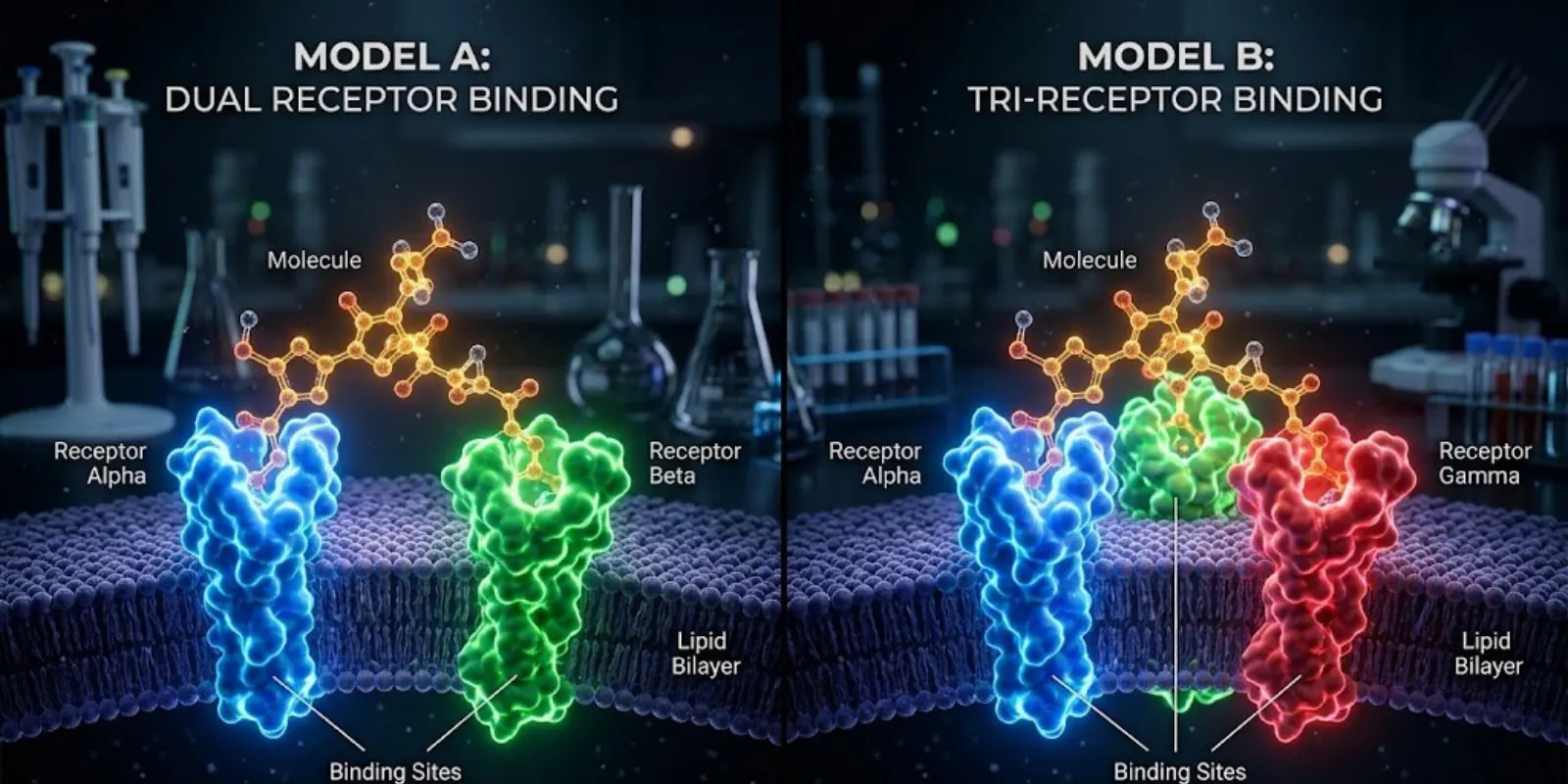
Figure 1: Receptor binding affinity models. Retatrutide’s integration of Glucagon (GCG) agonism introduces a novel thermogenic pathway absent in dual-incretins, forcing mitochondrial uncoupling.
2. Clinical Efficacy & Pharmacokinetic Profiles
Both molecules utilize a C20 fatty diacid moiety to bind strongly to serum albumin, protecting them from rapid degradation by the DPP-4 enzyme and achieving a half-life of roughly 5 to 6 days. This enables the once-weekly administration protocol standard in laboratory research. However, their long-term efficacy trajectories diverge significantly.
- Tirzepatide Data (The SURMOUNT Paradigm): Across the rigorous SURMOUNT-1 through SURMOUNT-4 clinical trial programs, Tirzepatide established the absolute benchmark for obesity pharmacotherapy. At the maximum tolerated dose (15mg), research subjects demonstrated an average body mass reduction of ~22.5% over a 72-week horizon. It offers high predictability and a well-mapped safety profile.
- Retatrutide Data (NEJM Phase 2 Breakthrough): Data published in the New England Journal of Medicine (NEJM) showcased Retatrutide’s unprecedented aggression against adipose tissue. In Phase 2 trials, subjects utilizing the 12mg dose achieved an extraordinary ~24.2% weight reduction in a mere 48 weeks. For female cohorts in the study, the reduction reached up to 28.5%. The trajectory curve indicates that Retatrutide achieves deeper lipolysis at an accelerated velocity.
📊 Clinical Weight Loss Projection Simulator
Adjust the parameters below to dynamically simulate the projected clinical outcomes based on Phase 2 & Phase 3 trial efficacy averages.
*Note: Projections are linear approximations derived from clinical endpoints. Individual metabolic responses in vivo will vary. Blue represents Tirzepatide; Red represents Retatrutide.
3. Deep Tissue Targeting: Hepatic Steatosis & Ectopic Fat
The most crucial physiological differentiator between dual and tri-agonists lies not in subcutaneous fat (the fat just beneath the skin), but in how these peptides handle ectopic fat—toxic fat stored inside internal organs.
While Tirzepatide provides excellent reductions in systemic adipose tissue and improves overall lipid panels (lowering triglycerides and LDL), Retatrutide operates on a fundamentally different level regarding organ health.
In liver-specific MRI substudies (measuring MASLD/NAFLD), Retatrutide administration resulted in an astonishing 86% normalization of hepatic fat (fatty liver) at 48 weeks. The glucagon receptor activation directly stimulates hepatic beta-oxidation, literally clearing lipid droplets out of the liver cells. For researchers investigating severe visceral adiposity and metabolic syndrome, Retatrutide clears deep organ fat via pathways that dual-agonists simply cannot access.
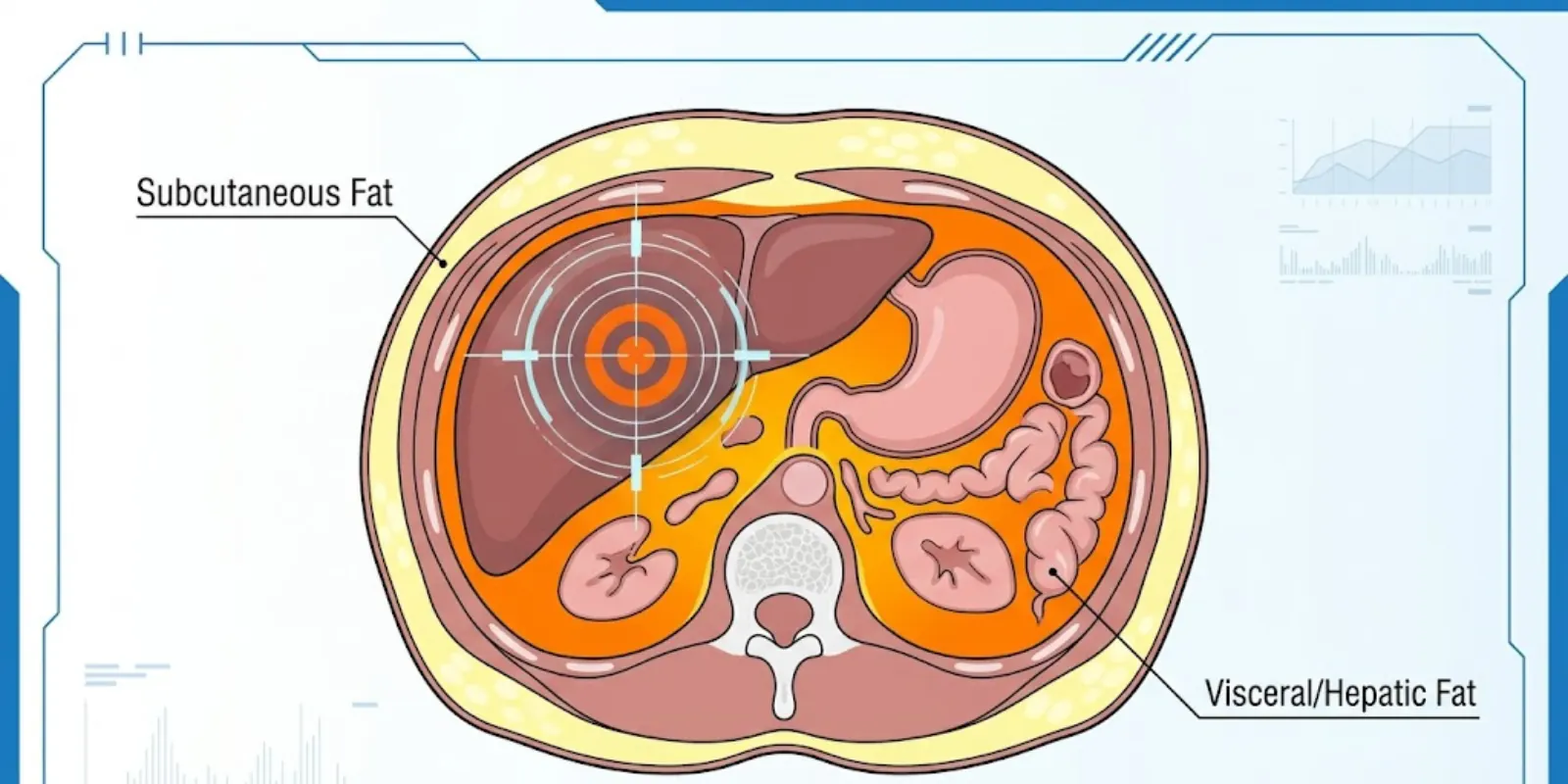
Figure 2: Cross-sectional lipid distribution. Tri-agonists demonstrate vastly superior efficacy in penetrating and clearing deep visceral adipose tissue and hepatic lipid droplets.
4. Bypassing Metabolic Adaptation (Adaptive Thermogenesis)
A universally documented issue with massive, rapid caloric deficits is metabolic adaptation. As body mass decreases, the central nervous system downregulates thyroid output and cellular energy production to prevent starvation. This causes the Basal Metabolic Rate (BMR) to plummet, resulting in frustrating weight loss plateaus and a highly catabolic environment that destroys lean muscle mass (sarcopenia).
The Tri-Agonist Advantage
Retatrutide bypasses this survival mechanism. By constantly agonizing the glucagon receptor, it sustains high mitochondrial energy expenditure even when caloric intake plummets. It effectively "hacks" the body's thermostat, refusing to let the BMR drop.
Mandatory Muscle Preservation Protocols
Because these compounds induce such aggressive lipolysis, protecting muscle protein synthesis (MPS) is paramount in any laboratory protocol. Advanced researchers frequently pair incretin mimetics with exogenous mitochondrial support:
- 5-Amino-1MQ: This molecule inhibits the NNMT enzyme. By doing so, it prevents the depletion of intracellular NAD+, ensuring muscle cells have the high-energy currency required to survive severe caloric restriction without undergoing atrophy.
- Injectable L-Carnitine: Administering L-Carnitine significantly enhances the CPT1 enzyme's ability to transport free fatty acids directly into the mitochondrial matrix for beta-oxidation. This ensures the body utilizes fat for fuel, strictly sparing muscle glycogen.
5. Safety Protocols & Chronotropic Adverse Effects
With increased molecular potency comes a more complex safety and tolerability profile. Researchers must carefully monitor subjects.
- Gastrointestinal (GI) Distress: Both compounds present dose-dependent GI symptoms (nausea, delayed gastric emptying, constipation). The GIP agonism in both molecules mitigates the extreme nausea seen in older GLP-1s, but aggressive titration will still cause distress.
- Chronotropic Cardiovascular Responses: This is a critical distinction. Because Retatrutide activates glucagon, it possesses a positive chronotropic effect. Clinical data indicates a transient but notable increase in resting heart rate (peaking around 5 to 7 beats per minute higher at 24 weeks before stabilizing). Researchers utilizing Retatrutide must employ strict micro-dosing protocols and monitor cardiovascular markers closely.
6. Receptor Washout & The Transition Protocol
Receptor down-regulation (tachyphylaxis) inevitably occurs when subjects remain on high doses of GLP-1/GIP compounds for extended periods. When a subject hits a hard plateau on Tirzepatide (often around the 10-14 month mark), transitioning to Retatrutide is the logical next step to introduce a novel metabolic stimulus.
Warning: A direct milligram-for-milligram swap is highly dangerous and will overwhelm the central nervous system. Best practices in clinical transitions dictate:
- The Washout: A minimum of 10 to 14 days completely off Tirzepatide to allow serum concentrations to drop and receptors to partially resensitize.
- The Re-Titration: Initiating Retatrutide strictly at its lowest baseline efficacious dose (typically 1mg to 2mg per week) to map cardiac and GI tolerability, before slowly titrating upward over an 8-week period.
7. Advanced Biohacking Stacks for System Optimization
For comprehensive metabolic restructuring, single-molecule research is often insufficient. Synergistic peptide stacking yields exponentially superior morphological outcomes by addressing the side effects of rapid fat loss.
- The Mitochondrial Overdrive Stack: Combining Retatrutide with MOTS-c. While Retatrutide forcefully drains adipose stores, MOTS-c directly targets the mitochondria to upregulate AMPK expression. This combination ensures high physical energy output, mitigating the severe lethargy commonly associated with a massive caloric deficit.
- The Skin Elasticity & Retraction Stack: Rapid reduction in body volume compromises skin integrity (often referred to as "Ozempic face" or loose abdominal skin). A protocol utilizing Tirzepatide alongside systemic GHK-Cu (Copper Peptides) drastically accelerates fibroblast activity, angiogenesis, and collagen synthesis, helping the skin retract naturally as fat disappears.
- The GH Axis Preservation Stack: To absolutely safeguard lean tissue mass, incorporating a Growth Hormone-Releasing Hormone (GHRH) analogue like CJC-1295 with DAC ensures a steady, prolonged pulse of endogenous growth hormone. This keeps the subject in an anabolic state, optimizing tissue repair despite the highly catabolic environment.
8. Frequently Asked Questions (FAQ)
Q: Can dual and tri-agonists be administered concurrently in a single protocol?
A: Emphatically no. Both Tirzepatide and Retatrutide compete for the exact same GLP-1 and GIP receptors. Concurrent administration leads to severe receptor over-saturation, hyper-suppression of gastric motility (high gastroparesis risk), and erratic glycemic fluctuations. Advanced metabolic stacks must utilize non-competing pathways, such as pairing an incretin with an enzyme inhibitor like 5-Amino-1MQ.
Q: Why does Retatrutide break weight loss plateaus that Tirzepatide cannot?
A: Plateaus on Tirzepatide typically occur when the subject's significantly reduced body mass lowers their Total Daily Energy Expenditure (TDEE) to match their suppressed caloric intake—creating an equilibrium. Retatrutide’s unique glucagon agonism forcefully alters the energy expenditure equation by increasing thermogenesis in the liver and activating brown adipose tissue (BAT), reigniting lipolysis without requiring further dangerous food restriction.
Q: What is the optimal reconstitution fluid for preserving molecular stability?
A: Lyophilized (freeze-dried) peptides must be reconstituted using Bacteriostatic Water (BAC Water) containing 0.9% benzyl alcohol. This ensures absolute sterility and molecular stability for 28-30 days when stored at strict temperatures between 2°C to 8°C. Utilizing sterile water without a preservative will lead to rapid peptide degradation and bacterial contamination.
9. Scientific References
- Jastreboff, A. M., Aronne, L. J., Ahmad, N. N., et al. (2022). "Tirzepatide Once Weekly for the Treatment of Obesity." The New England Journal of Medicine (SURMOUNT-1 Phase 3 Trial).
- Rosen, C. R., et al. (2023). "Retatrutide, a GIP, GLP-1 and glucagon receptor agonist, for people with obesity." The New England Journal of Medicine (Phase 2 Clinical Data).
- Gastaldelli, A., Cusi, K., et al. (2023). "Effect of tirzepatide versus insulin degludec on liver fat content and lipid metabolism in people with type 2 diabetes." The Lancet Diabetes & Endocrinology.
- Urva, S., Coskun, T., et al. (2022). "LY3437943, a novel triple glucagon, GIP, and GLP-1 receptor agonist for glycemic control and weight loss." Cell Metabolism.
💡 Key Takeaways
- Tirzepatide remains the premier, highly stabilized dual-agonist, providing exceptional glycemic control and significant (22%+) adipose reduction with a well-documented safety profile.
- Retatrutide represents the absolute bleeding edge of metabolic science; its tri-agonist architecture delivers unprecedented weight loss (~24.2% at 48 weeks) by actively preventing metabolic slowdown via glucagon agonism.
- Retatrutide is profoundly superior in addressing ectopic fat, specifically clearing hepatic steatosis (liver fat) and visceral adipose tissue at unmatched rates.
- To counteract the high catabolic nature of these rapid-reduction compounds and prevent sarcopenia, researchers must integrate complementary metabolic pathways, utilizing tools such as L-Carnitine, CJC-1295 with DAC, or MOTS-c.