
SS-31 vs. MOTS-c: The Definitive Guide to Mitochondrial Peptides for Research & Recovery

Table of Contents
- Quick Answer: The Core Differences
- Introduction: The Rise of Mitochondrial Peptides
- Understanding SS-31: The Structural Repair Agent
- Understanding MOTS-c: The Metabolic Mimetic
- Head-to-Head Mechanistic Comparison
- Laboratory Sourcing & Wholesale Standards
- Advanced Biohacking Protocols
- The Ultimate Synergy: Can You Stack SS-31 and MOTS-c?
- Safety Profiles and Side Effects
- Frequently Asked Questions (FAQs)
- Key Takeaways
Disclaimer: The following information is for educational and informational purposes only. The compounds discussed, including SS-31 and MOTS-c, are investigational peptides strictly intended for laboratory research and in vitro diagnostics. They are not approved by the FDA for human consumption, diagnosis, or treatment of any disease. Always consult a licensed medical professional before considering any biohacking or peptide protocols.
SS-31 vs. MOTS-c: The Definitive Guide to Mitochondrial Peptides for Research & Recovery
Quick Answer: The Core Differences Between SS-31 and MOTS-c
When analyzing ss-31 vs mots-c, the primary distinction lies in their functional targets. SS-31 (Elamipretide) acts as a structural repair agent, binding to cardiolipin on the inner mitochondrial membrane to prevent electron leakage and reduce oxidative stress. Conversely, MOTS-c functions as a metabolic regulator and exercise mimetic, activating the AMPK pathway to significantly enhance cellular energy output, insulin sensitivity, and systemic fat metabolism.
Introduction: The Rise of Mitochondrial Peptides in Research and Recovery
In both advanced clinical biochemistry and the vanguard of human biohacking, the mitochondrion is no longer viewed simply as the “powerhouse of the cell.” It is now understood to be the central hub of cellular signaling, metabolic flexibility, and apoptosis. When mitochondrial function declines—whether due to biological aging, chronic viral burdens, or environmental toxicity—the result is a systemic cascade of metabolic failure. This paradigm shift has driven researchers and advanced biohackers alike away from rudimentary stimulants and toward targeted mitochondrial therapeutics, specifically leading to the meteoric rise of mitochondrial peptides.
The Bioenergetic Bottleneck
To understand why these peptides are revolutionary, we must first examine the bioenergetic bottleneck. Human cells rely on the Electron Transport Chain (ETC), a series of four protein complexes located on the inner mitochondrial membrane (IMM). Under optimal conditions, electrons are passed down this chain to oxygen, creating a proton gradient that drives ATP synthase to produce adenosine triphosphate (ATP).
However, as cellular machinery ages or undergoes stress, the efficiency of the ETC breaks down. Electrons “leak” prematurely from Complex I and Complex III. Instead of generating energy, these rogue electrons interact with molecular oxygen to form superoxide radicals, driving a destructive process governed by ROS cascade damages local mitochondrial DNA (mtDNA) and vital membrane lipids, initiating a vicious cycle of energy depletion and cellular senescence. The modern bioenergetic bottleneck is not a lack of fuel (calories); it is an inability to safely and efficiently convert that fuel into ATP.
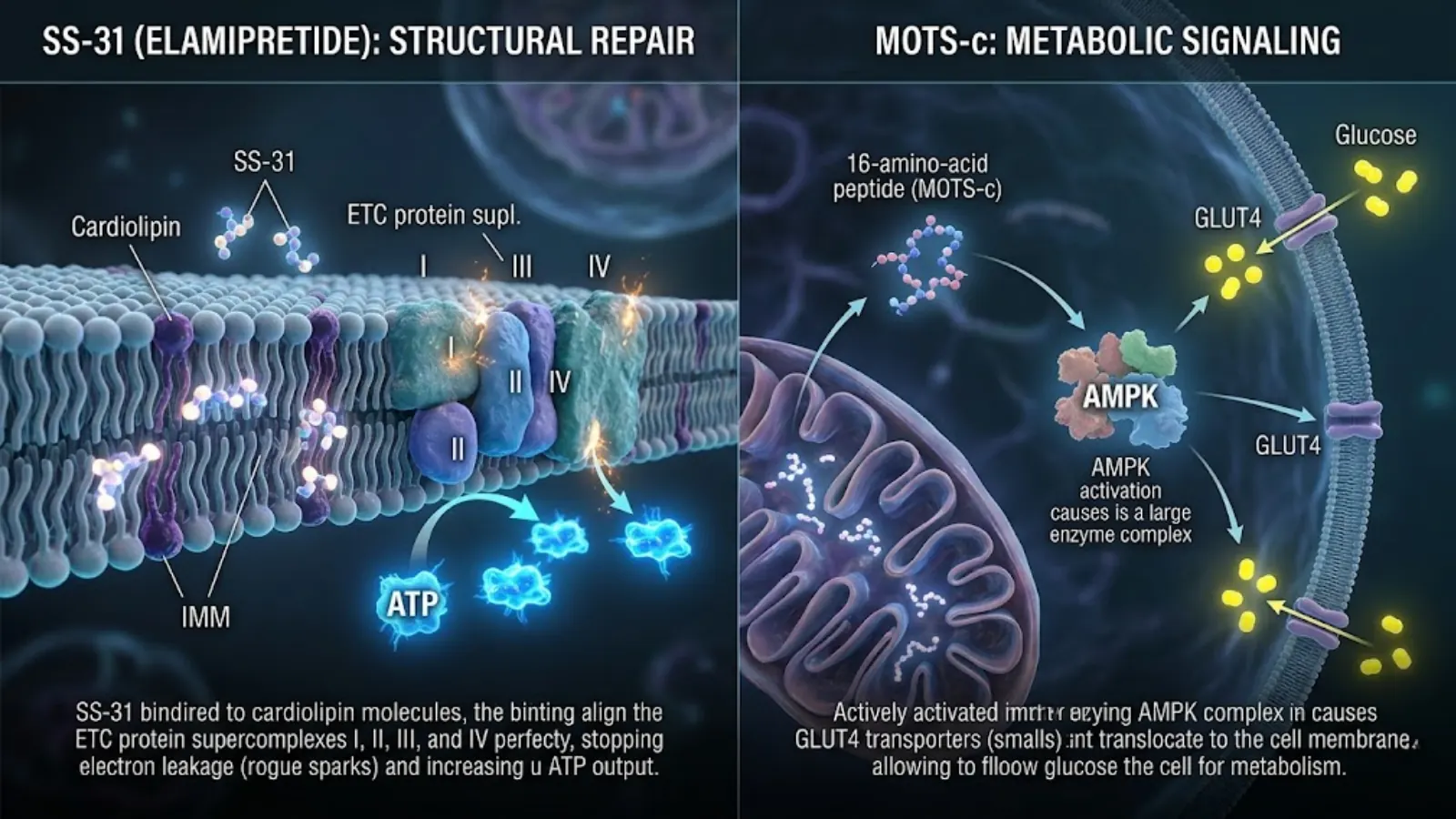
Image 1: Conceptual molecular mechanism illustrating the “Hardware vs. Software” distinction between SS-31 (structural repair) and MOTS-c (metabolic signaling).
Why Peptides are Replacing Traditional Interventions
Historically, researchers attempted to mitigate this oxidative stress using systemic antioxidants (like Vitamin C or Vitamin E). However, clinical data repeatedly showed these exogenous antioxidants failed to reach the inner mitochondrial membrane in meaningful concentrations. Furthermore, blunting all ROS signaling can actually impair the necessary hormetic adaptations required for cellular resilience.
Enter synthetic and mitochondrial-derived peptides (MDPs). Unlike small-molecule drugs or generic antioxidants, peptides like SS-31 and MOTS-c offer targeted, receptor-specific, and membrane-specific interactions. They do not merely flood the system; they act as precision signaling molecules that orchestrate cellular repair and metabolic shifts from the inside out.
Understanding SS-31 (Elamipretide): The Structural Repair Agent
SS-31, pharmacologically known as Elamipretide, is a synthetic tetrapeptide (D-Arg-2,6-dimethylTyr-Lys-Phe-NH2). Its design is a masterpiece of biochemical engineering. The alternating aromatic and basic amino acid residues allow SS-31 to easily penetrate the cell membrane, bypass the outer mitochondrial membrane, and selectively partition into the inner mitochondrial membrane (IMM) independent of the mitochondrial membrane potential.
Mechanism of Action: The Cardiolipin Connection
The clinical efficacy of SS-31 hinges entirely on its relationship with cardiolipin. Cardiolipin is a unique, dimeric phospholipid found almost exclusively in the IMM. It acts as the “glue” that holds the protein supercomplexes of the Electron Transport Chain together in a highly organized, efficient configuration.
During disease states, ischemia, or aging, cardiolipin undergoes pathological remodeling and lipid peroxidation. The lipid loses its structural integrity, causing the ETC supercomplexes to physically detach from one another. This structural decoupling is the primary cause of electron leakage.
SS-31 specifically targets and binds to cardiolipin through electrostatic and hydrophobic interactions. By binding to cardiolipin, SS-31 shields it from oxidative damage and physically stabilizes the curvature of the inner membrane. It effectively “restores the hardware” of the mitochondrion, forcing the ETC complexes back into tight, efficient alignment.
Halting the Free Radical Cascade
Because SS-31 fixes the structural integrity of the ETC, it stops ROS production at the source. It does not act as a traditional scavenger of existing free radicals; rather, it prevents them from being generated in the first place by ensuring electrons successfully reach Complex IV to safely form water. This optimized electron flow dramatically restores ATP production without a proportional increase in oxidative stress.
Primary Use Cases in Clinical Research
In the B2B research sector, SS-31 is heavily investigated for conditions characterized by severe, acute oxidative stress and mitochondrial uncoupling.
- Ischemia-Reperfusion Injury: When blood flow returns to tissue after a heart attack or stroke, the sudden influx of oxygen causes massive ROS generation. SS-31 has shown profound efficacy in preserving tissue viability during these events.
- Heart Failure: The heart is the most mitochondria-dense organ in the body. Elamipretide is actively studied for improving left ventricular function.
- Age-Related Macular Degeneration (AMD): Ocular tissue requires massive amounts of ATP. Protecting retinal mitochondrial networks with SS-31 is a primary vector of current biopharma research.
Understanding MOTS-c: The Metabolic “Exercise Mimetic”
While SS-31 is a synthetic peptide engineered to fix a structural lipid, MOTS-c (Mitochondrial Open Reading Frame of the 12S rRNA-c) is a naturally occurring mitochondrial-derived peptide. Encoded directly within the mitochondrial DNA itself, this 16-amino acid peptide acts as an endocrine hormone, communicating the metabolic status of the mitochondria to the nucleus of the cell—a process known as retrograde signaling.
Mechanism of Action: The AMPK Activator
If SS-31 repairs the physical hardware, MOTS-c acts as a software update for cellular metabolism. The primary mechanism of action for MOTS-c is the potent activation of AMP-activated protein kinase (AMPK). AMPK is the master energy sensor of the cell. When cellular energy (ATP) is depleted, AMP levels rise, triggering AMPK to shut down energy-consuming anabolic pathways and upregulate energy-producing catabolic pathways.
MOTS-c actively drives this AMPK signaling cascade. In doing so, it mimics the metabolic stress of intense physical exercise. By activating the AMPK/SIRT1 axis, MOTS-c stimulates the translocation of GLUT4 transporters to the cell surface, massively increasing glucose uptake into muscle tissue entirely independent of insulin. Furthermore, MOTS-c has been shown to translocate directly into the cellular nucleus during periods of metabolic stress to regulate the expression of genes involved in antioxidant response and glucose metabolism.
Enhancing Metabolic Flexibility
Advanced biohackers highly prize MOTS-c for its ability to restore metabolic flexibility—the body’s ability to efficiently switch between oxidizing carbohydrates and lipids based on availability. Through the folate-methionine cycle, MOTS-c increases the accumulation of endogenous AICAR (a known AMPK activator), which subsequently ramps up fatty acid oxidation. It forces the body to become highly efficient at clearing systemic glucose and burning stored adipose tissue for ATP generation.
Primary Use Cases in Clinical Research
Clinical and laboratory investigations into MOTS-c lean heavily toward metabolic syndrome and longevity.
- Insulin Resistance and Type 2 Diabetes: By facilitating insulin-independent glucose uptake, MOTS-c is a primary target for reversing insulin resistance in skeletal muscle.
- Obesity and Fat Loss: Animal models demonstrate that MOTS-c administration prevents high-fat diet-induced obesity by shifting the metabolic substrate preference toward fat oxidation.
- Sarcopenia and Physical Endurance: Research indicates MOTS-c levels decline significantly with age. Replenishing it has been shown to reverse age-related declines in muscle function and significantly boost treadmill running capacity in murine models.
SS-31 vs MOTS-c: Head-to-Head Mechanistic Comparison
For laboratory researchers establishing in vitro protocols and biohackers mapping out a recovery stack, understanding the nuance of ss-31 vs mots-c is critical. They are not interchangeable; they act on entirely different biochemical axes.
Molecular Weight and Synthesis Differences
The physical characteristics of these peptides dictate how they are synthesized, handled, and applied in research settings.
| Characteristic | SS-31 (Elamipretide) | MOTS-c |
|---|---|---|
| Origin | Synthetic rationally designed peptide | Endogenous mitochondrial-derived peptide (MDP) |
| Amino Acid Length | 4 (Tetrapeptide) | 16 |
| Sequence | D-Arg-Dmt-Lys-Phe-NH2 | MRWQEMGYIFYPRKLR |
| Molecular Target | Cardiolipin (Inner Mitochondrial Membrane) | AMPK pathway & Folate cycle |
| Primary Function | Structural stabilization, ETC efficiency, ROS reduction | Metabolic regulation, insulin sensitivity, fat oxidation |
| Cellular Localization | Remains strictly in the mitochondrion | Cytosol, Mitochondrion, and translocates to Nucleus |
In Vitro vs. In Vivo Targeting
In B2B laboratory environments, these peptides exhibit vastly different behaviors. In vitro, SS-31 demonstrates a remarkable ability to concentrate up to 5,000-fold specifically within the inner mitochondrial membrane. Because it requires no receptor activation, its action is highly predictable in isolated cellular assays measuring oxidative stress and respiration rates.
MOTS-c, conversely, operates as a signaling molecule. Its in vitro effects are heavily dependent on the presence of functional AMPK pathways and cellular stress states. In vivo, MOTS-c acts systemically as a “mitokine,” traveling through the bloodstream to affect distant tissues like skeletal muscle and the liver, actively altering the organism’s overarching metabolic phenotype.
Hardware vs. Software: A Functional Analogy
To crystallize the comparison, we must look at the bioenergetic system like a high-performance engine.
SS-31 represents the mechanical repair of the engine block. If the inner mitochondrial membrane is damaged, the engine is leaking oil and running hot (generating ROS). Pouring high-octane fuel into a broken engine will only cause more damage. SS-31 seals the leaks, rebuilds the membrane structure, and ensures the engine runs cleanly.
MOTS-c represents the engine control unit (ECU) tuning. It tells the body to run the engine harder, burn fuel more efficiently, and aggressively tap into the gas tank (adipose tissue and systemic glucose).
Therefore, when comparing ss-31 vs mots-c, it is not a matter of which peptide is universally “better,” but rather which bioenergetic deficit needs to be addressed first: profound mitochondrial damage requiring structural triage, or metabolic sluggishness requiring an energetic signaling overhaul.

Image 2: Professional laboratory setting where a researcher analyzes HPLC purity data, critical for B2B procurement of SS-31 and MOTS-c research compounds.
Laboratory Sourcing & Wholesale: Purity, Synthesis, and B2B Standards
For principal investigators, compounding pharmacists, and biopharma procurement officers, the transition from theoretical biochemistry to applied laboratory science requires rigorous quality control. The efficacy of both SS-31 and MOTS-c in vitro and in vivo is entirely dependent on the structural integrity and purity of the synthesized compound.
The Importance of HPLC Purity Analysis
When sourcing mitochondrial peptides wholesale, the gold standard for validation is High-Performance Liquid Chromatography (HPLC) coupled with Mass Spectrometry (MS). Laboratory researchers must demand a Certificate of Analysis (COA) demonstrating greater than 99% purity.
Why is this critical? During solid-phase peptide synthesis (SPPS), truncated peptide sequences (where an amino acid is missed) or deletion sequences can occur. In a highly specific receptor or membrane-binding environment, a truncated SS-31 molecule will fail to bind to cardiolipin, while a misfolded MOTS-c sequence will fail to activate AMPK. Furthermore, cheap synthesis often leaves behind high residual levels of Trifluoroacetic acid (TFA)—a toxic solvent used to cleave the peptide from the synthesis resin. High TFA salts can induce cellular toxicity in vitro, destroying the very mitochondrial networks the peptides are meant to protect.
Lyophilized Powder Handling and Reconstitution
Both SS-31 and MOTS-c are highly susceptible to enzymatic degradation and hydrolysis if mishandled. Reputable custom peptide synthesis facilities in the USA and abroad will ship these compounds as sterile, lyophilized (freeze-dried) powders under cold-chain protocols.
Upon arrival at the laboratory, these vials must be stored at or below -20°C. For reconstitution, standard protocols dictate the use of bacteriostatic water (containing 0.9% benzyl alcohol) to maintain sterility and prevent bacterial growth in the vial over multiple uses. Once reconstituted into a liquid state, the fragile peptide bonds—particularly the 16-amino-acid chain of MOTS-c—are subject to mechanical degradation. Vials should never be shaken vigorously; rather, the solvent should be gently swirled. Reconstituted peptides must be kept refrigerated at 2°C to 8°C and typically utilized within 21 to 28 days to ensure maximum bioactivity.
Identifying Reputable Custom Synthesis Suppliers
When evaluating the wholesale landscape for ss-31 vs mots-c, institutional buyers must look for red flags. Suppliers that refuse to provide batch-specific, third-party, isotopically verified COAs should be immediately disqualified. Additionally, laboratories should prioritize synthesis facilities that offer TFA-removal services (yielding acetate or chloride salts), which are significantly safer for in vivo cellular assays and long-term biohacking protocols.
Advanced Biohacking Protocols: Enhancing Cellular Energy & Recovery
In the advanced biohacking community, the theoretical data translated from animal models and B2B research is applied to optimize human performance, reverse biological age, and mitigate chronic fatigue. However, application requires a profound understanding of one’s baseline bioenergetic state.
Choosing the Right Peptide for Your Baseline
The most common mistake in mitochondrial biohacking is applying an energetic accelerator to a structurally broken engine.
- When to deploy SS-31: If the individual is suffering from severe Long-COVID fatigue, post-viral syndromes, mold toxicity (CIRS), or systemic chronic inflammation, the mitochondrial membrane is likely damaged. The inner membrane is leaking electrons and producing massive oxidative stress. Here, SS-31 is the mandatory starting point. It repairs the mitochondrial hardware, stabilizes the electron transport chain, and stops the ROS cascade.
- When to deploy MOTS-c: If the individual is fundamentally healthy but experiencing weight-loss plateaus, age-related metabolic sluggishness, or a lack of physical endurance, MOTS-c is the superior choice. It acts as an exercise mimetic, forcing the body to upregulate AMPK, clear glucose from the bloodstream, and oxidize fatty acids.
Standard Dosage Protocols for MOTS-c
Because MOTS-c acts as a potent metabolic signal, it is typically pulsed rather than micro-dosed daily. Advanced protocols often dictate a dosage of 5mg to 10mg per week, administered via subcutaneous injection.
The Pre-Workout Protocol: To maximize the synergistic activation of AMPK, many biohackers administer 5mg of MOTS-c roughly 30 to 45 minutes prior to high-intensity interval training (HIIT) or zone 2 cardiovascular work. This capitalizes on both the exogenous peptide signal and the endogenous exercise signal, flooding skeletal muscle with GLUT4 receptors for massive glucose uptake. Cycles typically run for 4 to 6 weeks, followed by an equal time off to prevent receptor downregulation.
Standard Dosage Protocols for SS-31
Because SS-31 focuses on the physical remodeling of cardiolipin and mitochondrial turnover (mitophagy), consistency is key. It requires a sustained presence to fix billions of damaged mitochondria systemically.
The Daily Micro-Dose Protocol: Standard biohacking literature suggests daily subcutaneous injections of 2mg to 4mg of SS-31. Because mitochondrial turnover in human tissue takes weeks, an effective SS-31 protocol requires a minimum of 4 to 6 weeks of daily administration to achieve total systemic membrane repair.
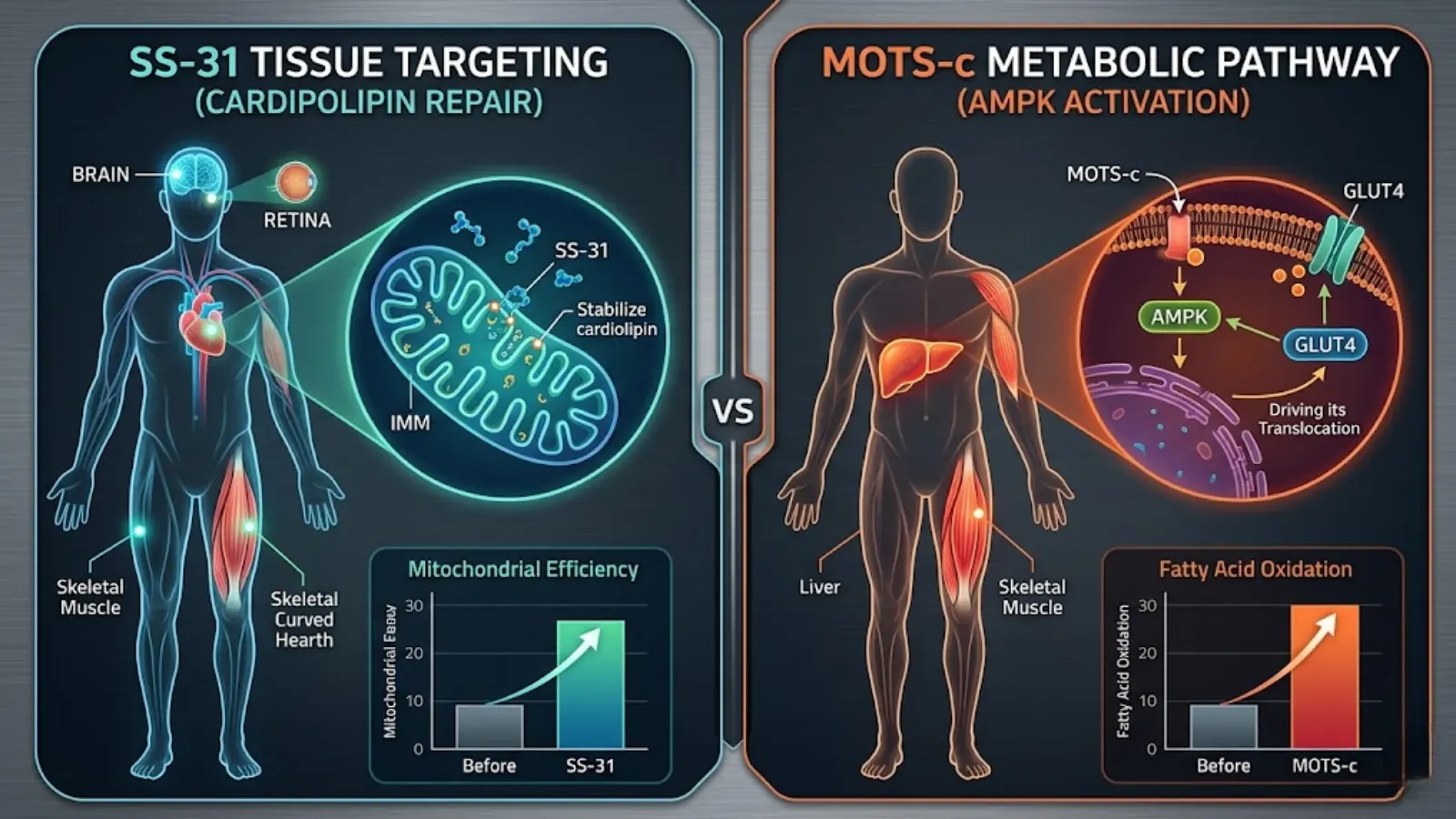
Image 3: Physiological Targeting Map comparing SS-31 tissue repair pathways (brain, heart, retina) with MOTS-c metabolic pathways (AMPK, skeletal muscle).
The Ultimate Synergy: Can You Stack SS-31 and MOTS-c?
The most frequently asked question among performance optimization clinics and biohackers is whether these two peptides can be combined. The answer is a resounding yes, but sequencing is the critical variable.
The “Fix and Push” Methodology
When designing a protocol for maximum cellular energy, you must respect the hierarchy of cellular needs. As established, MOTS-c drives AMPK, which demands the mitochondria ramp up ATP production to fuel metabolic shifts. If you force a damaged mitochondrion to produce more energy, you will simply increase electron leakage, spike reactive oxygen species, and accelerate cellular death.
Therefore, the ultimate stack is sequential: Fix the hardware first, then push the software.
Sequencing and Timing the Stack
A highly optimized, 10-week clinical-grade protocol generally looks like this:
- Phase 1: The Repair Phase (Weeks 1-4): Administer SS-31 daily (2-4mg). The sole goal here is to bind to cardiolipin, fix the ETC supercomplexes, and lower systemic oxidative stress. During this phase, strenuous exercise should be moderated to allow cellular repair.
- Phase 2: The Activation Phase (Weeks 5-10): Discontinue SS-31 and introduce MOTS-c (5-10mg weekly). Now that the mitochondrial membranes are structurally sound, the MOTS-c signal can safely force the mitochondria to burn fatty acids and glucose at maximum capacity without leaking destructive free radicals.
Supporting Supplements for Peptide Efficacy
Peptides do not operate in a vacuum. To maximize the ss-31 vs mots-c stack, the raw materials for energy production must be present:
- NAD+ Precursors (NMN or NR): The electron transport chain requires constant NAD+ reduction to NADH to carry electrons. Supplementing with NMN ensures the fuel supply is abundant.
- Coenzyme Q10 (Ubiquinol): CoQ10 is the physical shuttle that moves electrons from Complex I and II to Complex III. SS-31 fixes the tracks; CoQ10 is the train.
- Magnesium: Biologically active ATP is always bound to a magnesium ion (Mg-ATP). Without adequate intracellular magnesium, the energy produced by MOTS-c activation cannot be utilized by the cell.
Safety Profiles, Potential Side Effects, and Contraindications
While mitochondrial peptides have an exceptionally high safety profile compared to systemic pharmaceuticals, manipulating cellular bioenergetics carries specific risks and physiological adaptations.
Known Side Effects of SS-31
The most widely reported side effect of SS-31 is Injection Site Reaction (ISR). Due to its chemical structure, subcutaneous administration can cause localized erythema (redness), itching, or mild induration (hardening) that typically resolves within 24 hours.
Systemically, users often report profound lethargy or brain fog during the first 5 to 7 days of an SS-31 protocol. This is considered a biological adaptation—a “Herxheimer-like” reaction. As SS-31 initiates massive mitochondrial remodeling and the clearing out of senescent cells (mitophagy), the body’s energy demands shift toward repair rather than output. This fatigue generally gives way to profound, clean energy by week two.
Known Side Effects of MOTS-c
Because MOTS-c forcefully drives glucose out of the bloodstream and into skeletal muscle, the primary risk is hypoglycemia (low blood sugar). If a biohacker administers a high dose of MOTS-c in a deeply fasted state without subsequent nutritional support or immediate exercise, they may experience lightheadedness, cold sweats, or nausea.
Additionally, because MOTS-c is a 16-amino-acid peptide, it carries a slightly higher risk of immunogenicity (the body creating antibodies against the peptide) than the tiny SS-31 tetrapeptide. Therefore, cycling MOTS-c is imperative.
When to Avoid Mitochondrial Peptides
Manipulating the AMPK pathway and mitochondrial respiration is highly contraindicated for individuals with active oncology diagnoses. Cancer cells possess heavily mutated, hijacked metabolisms (the Warburg effect). Introducing signaling molecules that enhance glucose uptake, angiogenesis, or cellular survival pathways in the presence of unmanaged malignancies is incredibly dangerous. Furthermore, individuals with severe, unmedicated thyroid dysregulation should stabilize their endocrine system before pushing mitochondrial output.

Image 4: Advanced Biohacking flat lay conceptually illustrating a digital ‘Mitochondrial Optimization Suite’ involving SS-31, MOTS-c, and synergistic co-factors.
Frequently Asked Questions (FAQs)
How do SS-31 and MOTS-c differ in cellular targeting mechanisms in vitro?
In vitro, SS-31 acts physically and structurally, localizing directly to the inner mitochondrial membrane to bind with cardiolipin, stabilizing the electron transport chain independent of cellular receptors. MOTS-c acts systemically as a signaling hormone, binding to cellular receptors to activate the AMPK/SIRT1 pathway and migrating to the nucleus to alter metabolic gene transcription.
Should I take SS-31 or MOTS-c for chronic fatigue recovery?
For pathological chronic fatigue—such as post-viral syndromes, long-COVID, or heavy metal toxicity—SS-31 is the superior starting point. Chronic fatigue is largely driven by severe mitochondrial structural damage and electron leakage. SS-31 repairs this foundational membrane damage, whereas MOTS-c may overly stress an already broken system by demanding energy the cell cannot safely produce.
Where can laboratories purchase 99% pure wholesale SS-31?
Research laboratories should source SS-31 exclusively from USA-based or internationally vetted custom peptide synthesis companies that provide batch-specific High-Performance Liquid Chromatography (HPLC) and Mass Spectrometry (MS) documentation. Suppliers must guarantee >99% purity and offer TFA-removal processes to ensure the viability of in vitro cellular assays.
How do you properly stack SS-31 and MOTS-c for maximum cellular energy?
The optimal biohacking stack utilizes a sequential “fix then push” protocol. Run SS-31 daily (2-4mg) for 4 weeks to repair inner mitochondrial membranes and halt oxidative stress. Once the mitochondria are structurally optimized, discontinue SS-31 and begin a 6-week cycle of MOTS-c (pulsed at 5-10mg weekly) to ramp up metabolic output, AMPK activation, and fat oxidation.
What is the molecular weight difference between Elamipretide and MOTS-c?
Elamipretide (SS-31) is a very small synthetic tetrapeptide consisting of only four amino acids, giving it a low molecular weight of approximately 639.8 g/mol, which allows for rapid cellular penetration. MOTS-c is a significantly larger, naturally occurring 16-amino-acid peptide with a molecular weight of approximately 2174.6 g/mol, necessitating careful handling to avoid mechanical degradation during reconstitution.
Key Takeaways: Which Peptide is Right for Your Goals?
- For Structural Triage: SS-31 (Elamipretide) is the undisputed champion for repairing broken mitochondria. It binds to cardiolipin, stops reactive oxygen species (ROS) at their source, and restores the physical hardware of the cell.
- For Metabolic Enhancement: MOTS-c acts as a potent exercise mimetic. It is the ideal peptide for healthy individuals looking to break through weight loss plateaus, increase skeletal muscle glucose uptake, and drive fatty acid oxidation via AMPK activation.
- Purity is Paramount: Whether you are a B2B researcher or a B2C biohacker, sourcing >99% pure, third-party tested lyophilized peptides is non-negotiable. Degraded or TFA-contaminated compounds will destroy mitochondrial networks rather than heal them.
- The Golden Rule of Bioenergetics: Peptides are molecular amplifiers. They will not outwork poor sleep, chronic psychological stress, or a highly processed diet. Foundational health must be established before introducing advanced mitochondrial therapeutics.