
Tesamorelin vs. Sermorelin: Clinical Mechanisms, Receptor Affinity, and Advanced Biohacking Protocols

Tesamorelin vs. Sermorelin: Clinical Mechanisms, Receptor Affinity, and Advanced Biohacking Protocols
A PhD-level biochemical analysis comparing two potent GHRH analogues for metabolic optimization, tissue repair, and healthspan extension.
Disclaimer: The following information is for educational and informational purposes only. The compounds discussed are intended strictly for laboratory research use, in vitro diagnostics, or prescribed clinical applications under the direct supervision of a licensed medical professional. This content does not constitute medical advice.
1. Quick Answer / Summary
What is the difference between tesamorelin and sermorelin?
When comparing tesamorelin vs sermorelin, the primary difference lies in their clinical application and molecular half-life. Sermorelin is a 29-amino-acid peptide ideal for gentle, long-term restorative health, deep sleep, and steady growth hormone optimization. Conversely, tesamorelin is a potent, 44-amino-acid modified analog engineered specifically for rapid visceral fat reduction, dramatic body composition shifts, and acute IGF-1 elevation.
Table of Contents
- 1. Quick Answer / Summary
- 2. Introduction: GHRH Evolution
- 3. Basic Mechanisms: Pituitary Stimulation
- 4. Sermorelin Profile: Restorative GHRH
- 5. Tesamorelin Profile: Metabolic Intervener
- 6. Clinical Data: Affinity & Pharmacokinetics
- 7. Advanced Biohacking Protocols
- 8. Comparative Body Composition Outcomes
- 9. Side Effects, Safety, and Contraindications
- 10. Sourcing, Synthesis, and Purity
- 11. Frequently Asked Questions (FAQ)
- 12. Key Takeaways
2. Introduction: The Evolution of Growth Hormone-Releasing Hormones (GHRH)
In the fields of neuroendocrinology and advanced human optimization, the modulation of the somatotropic axis represents one of the most powerful levers for systemic rejuvenation, metabolic regulation, and cellular repair. For decades, the biomedical community and biohacking enthusiasts alike have sought methods to safely elevate growth hormone (GH) and its downstream effector, Insulin-like Growth Factor 1 (IGF-1). However, the landscape of endocrine optimization has fundamentally shifted away from direct hormone replacement toward endogenous stimulation. This paradigm shift brings us to the core debate in modern peptide therapeutics: tesamorelin vs sermorelin.
2.1 The Problem with Exogenous HGH
Historically, the administration of recombinant human growth hormone (rhGH) was the standard protocol for treating age-related somatopause and GH deficiencies. However, from a biochemical standpoint, direct administration of exogenous HGH presents a significant physiological flaw: it induces a severe negative feedback loop.
When exogenous HGH is introduced into the bloodstream, the hypothalamus detects the supratherapeutic levels and immediately signals the release of somatostatin—a potent inhibitory hormone. Somatostatin actively suppresses the pituitary gland’s natural production of GH. Prolonged use of exogenous HGH effectively shuts down the body’s endogenous secretory machinery, leading to pituitary downregulation, receptor tachyphylaxis (desensitization), and a host of potential side effects, including insulin resistance and edema.
2.2 The Rise of Peptide Secretagogues
To circumvent the suppression of the hypothalamic-pituitary axis, researchers turned to peptide secretagogues—specifically, analogs of Growth Hormone-Releasing Hormone (GHRH). Instead of replacing growth hormone, these peptides act directly on the anterior pituitary to stimulate the body’s own natural, pulsatile release of GH.
Because they rely on the body’s native physiological pathways, secretagogues are rate-limited by endogenous somatostatin. This means they cannot force the pituitary to release a dangerous overdose of GH, preserving the natural feedback loop and mitigating the risks of cellular hyperplasia or insulin toxicity. Within this class of GHRH analogs, sermorelin and tesamorelin have emerged as the two most prominent, yet mechanistically distinct, clinical tools.
3. Basic Mechanisms: Upstream Stimulation of the Pituitary
To deeply understand the pharmacological differences between these two peptides, one must first understand the neuroendocrine architecture they are targeting.
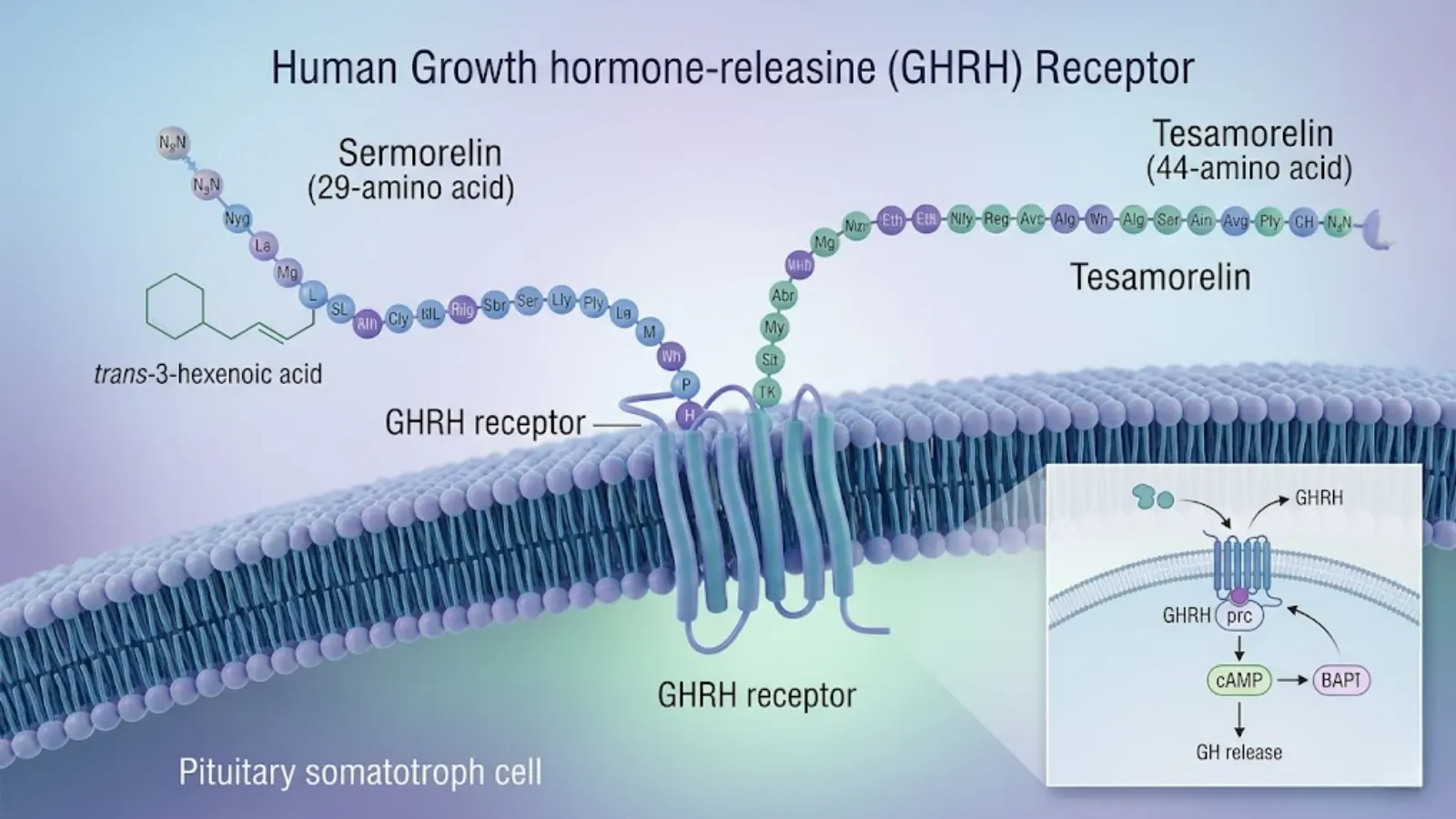
Image 1: Conceptual visualization of the GHRH receptor (GHRH-R) embedded within the somatotroph cell membrane. The diagram illustrates the binding attempts of sermorelin (29-AA) and tesamorelin (44-AA with stabilized N-terminus), triggering the intracellular cAMP signaling cascade for GH vesicle release.
3.1 The Endogenous GH Feedback Loop
The regulation of growth hormone is tightly controlled by a delicate push-and-pull mechanism governed by the hypothalamus. The hypothalamus secretes endogenous GHRH (a 44-amino-acid peptide) to stimulate GH release, while simultaneously secreting somatostatin to inhibit it.
When GHRH is released, it travels down the hypophyseal portal system to the anterior pituitary gland. Here, it encounters a specific population of cells known as somatotrophs. The pulsatile nature of this release is critical; growth hormone is not secreted in a steady stream but rather in discrete waves, primarily during the onset of slow-wave sleep.
3.2 The Role of Somatotroph Cells
Both tesamorelin and sermorelin function by binding to the GHRH receptor (GHRH-R), a G-protein-coupled receptor located on the surface of these pituitary somatotrophs.
Upon binding, these peptides activate the adenylyl cyclase/cAMP signaling pathway. This intracellular cascade triggers an influx of calcium ions into the somatotroph, stimulating the exocytosis of pre-synthesized growth hormone vesicles into the systemic circulation. Because both peptides act upstream, they maintain the physiological rhythm of GH pulses, ensuring that downstream tissues—primarily the liver, where GH stimulates the synthesis of IGF-1—receive biological signals in a biologically appropriate format.
| Modulation Vector | Mechanism of Action | Impact on Pituitary | Physiologic Pulsatility | Risk of Tachyphylaxis |
|---|---|---|---|---|
| Exogenous HGH | Direct receptor agonism at target tissues | Suppressive (Negative Feedback) | Abolished (Steady state) | High |
| Sermorelin | GHRH-R agonism on somatotrophs | Stimulatory (Preserves Feedback) | Maintained | Low |
| Tesamorelin | Potent GHRH-R agonism on somatotrophs | Highly Stimulatory (Preserves Feedback) | Amplified | Low to Moderate |
4. Sermorelin Profile: The Gentle, Restorative GHRH
Sermorelin (often designated in research as GRF 1-29) is the oldest and most extensively studied synthetic GHRH analog. It is widely considered the foundational baseline for peptide-based anti-aging and restorative biohacking protocols.
4.1 Molecular Structure (GRF 1-29)
Native human GHRH is a 44-amino-acid polypeptide. Through rigorous pharmacological mapping, scientists discovered that the entire 44-chain is not necessary for receptor activation. The biological activity of GHRH resides entirely within the first 29 amino acids at the N-terminus.
Sermorelin is precisely this truncated, 29-amino-acid sequence. Because it is a bio-identical match to the active fragment of endogenous GHRH, it boasts a near-perfect safety profile and zero risk of antigenicity (the immune system will not form antibodies against it). However, this structural simplicity also means it is highly susceptible to rapid enzymatic cleavage in blood plasma by dipeptidyl peptidase-4 (DPP-4), resulting in a very short half-life of approximately 10 to 20 minutes.
4.2 Primary Clinical Outcomes
Because of its rapid clearance and gentle receptor affinity, sermorelin produces a mild, physiological bump in GH and IGF-1 levels. It does not force supraphysiological spikes. Consequently, its primary clinical outcomes are subtle, cumulative, and restorative:
- Slow-Wave Sleep Enhancement: Sermorelin profoundly impacts the central nervous system, significantly extending the duration of delta-wave (deep) sleep, which is critical for neurological repair and memory consolidation.
- Tissue Repair and Collagen Synthesis: Steady, low-dose elevation of IGF-1 upregulates collagen production, improving skin elasticity, joint health, and connective tissue integrity.
- Immune Modulation: Gentle GH restoration has been shown to support thymic function and generalized immune resilience.
4.3 Ideal Patient/User Profile
Sermorelin is the peptide of choice for the conservative biohacker or longevity enthusiast whose primary goal is “healthspan” extension. It is ideal for individuals over the age of 35 looking to reverse the natural decline of endogenous GH (somatopause) to baseline youthful levels, improve their sleep architecture, and enhance mild injury recovery without inducing aggressive metabolic shifts.
5. Tesamorelin Profile: The High-Potency Metabolic Intervener
If sermorelin is a gentle biological nudge, tesamorelin is a pharmacological sledgehammer. It is currently one of the most potent, heavily engineered GHRH analogs available in both clinical medicine and the research peptide market.
5.1 FDA Approval and Lipodystrophy
Unlike many peptides that exist solely in the grey market of research chemicals, tesamorelin boasts rigorous clinical validation. It was developed by Theratechnologies and subsequently gained FDA approval under the brand name Egrifta. Its specific medical indication is for the treatment of HIV-associated lipodystrophy—a severe metabolic condition characterized by the abnormal and dangerous accumulation of dense visceral adipose tissue (VAT) around the internal organs.
5.2 The Visceral Fat Mechanism
Tesamorelin’s defining characteristic is its aggressive and highly targeted lipolytic effect on intra-abdominal fat. While systemic growth hormone naturally possesses fat-burning properties (via the activation of hormone-sensitive lipase and the inhibition of lipoprotein lipase), tesamorelin seems to exert a disproportionate affinity for visceral adipocytes over subcutaneous adipocytes.
When tesamorelin triggers a massive pulse of GH, that GH binds to receptors on visceral fat cells, triggering a cascade that breaks down stored triglycerides into free fatty acids and glycerol, which are then oxidized (burned) for ATP production. Clinical trials consistently demonstrate that tesamorelin can reduce visceral adipose tissue by up to 18-20% within a 26-week period, a statistically massive outcome that sermorelin cannot replicate.
5.3 Downstream IGF-1 Amplification
Because tesamorelin binds to the pituitary GHRH receptor with exceptional affinity and resistance to enzymatic degradation, it causes a highly pronounced and sustained pulse of growth hormone. The liver responds to this massive GH influx by synthesizing large quantities of Insulin-like Growth Factor 1 (IGF-1).
In clinical biohacking protocols, tesamorelin is frequently observed elevating IGF-1 levels far past baseline, often pushing them to the upper limits of the physiological reference range. This acute IGF-1 spike not only drives rapid visceral fat loss but also creates a highly anabolic environment conducive to increased muscle density and rapid systemic recovery.
| Characteristic | Sermorelin (GRF 1-29) | Tesamorelin |
|---|---|---|
| Amino Acid Chain Length | 29 | 44 (Modified) |
| Molecular Weight | 3357.9 g/mol | 5135.9 g/mol |
| Structural Modification | None (Bio-identical active core) | Trans-3-hexenoic acid group attached to N-terminus |
| Enzymatic Stability | Low (Rapidly cleaved) | High (Resistant to DPP-4 cleavage) |
| Primary Clinical Target | Generalized GH deficiency, Sleep | Lipodystrophy, Visceral Adiposity |
| IGF-1 Elevation Potential | Mild / Baseline restoration | High / Supraphysiological potential |
6. Receptor Binding Affinity and Pharmacokinetics (Clinical Data)
For clinical researchers, analytical chemists, and advanced practitioners, understanding the pharmacokinetics of these peptides is paramount. The debate between tesamorelin vs sermorelin often hinges on their differing stability profiles in vivo and their specific binding kinetics at the GHRH receptor.
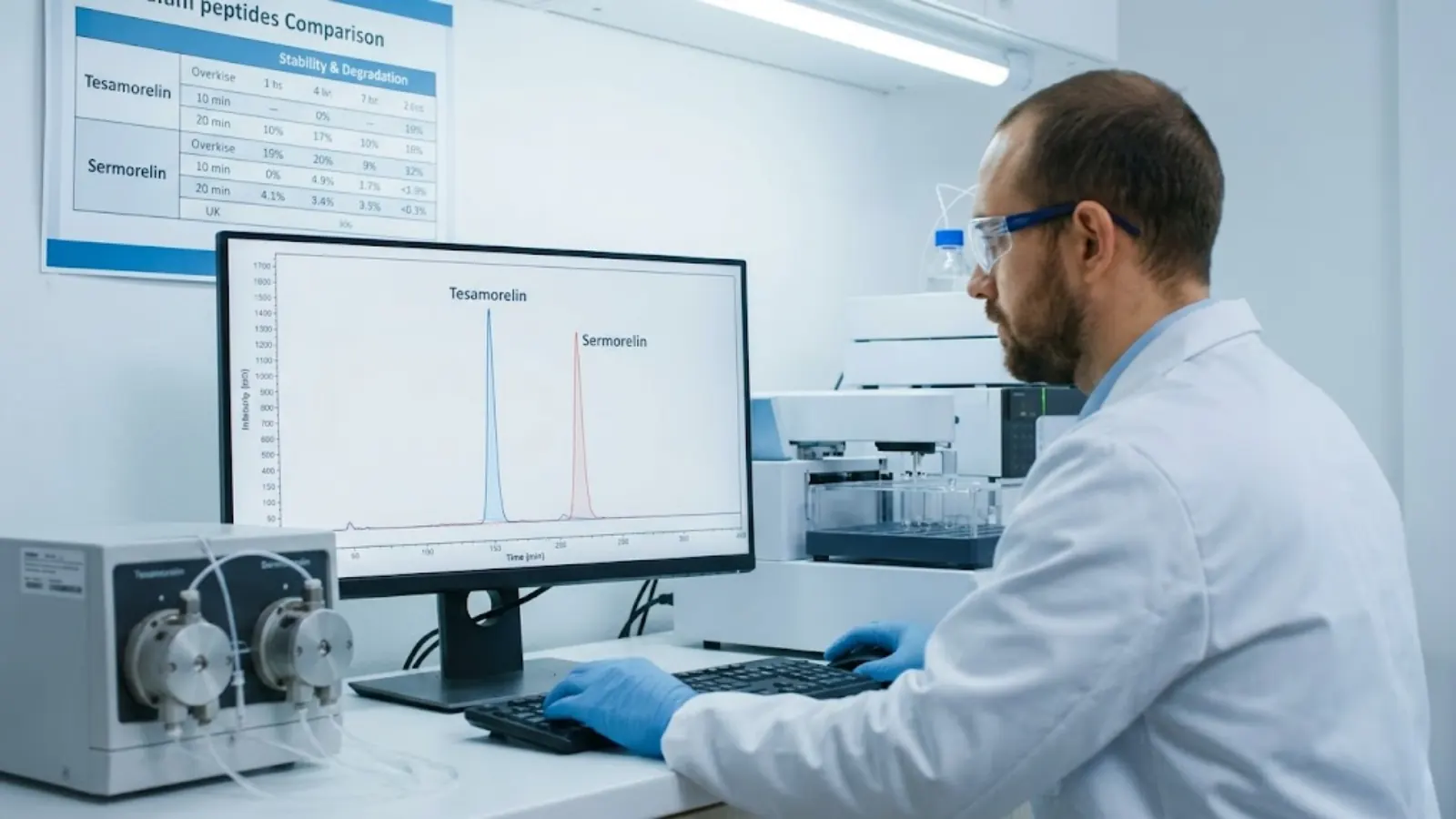
Image 2: A professional biotech laboratory setting. The monitor displays HPLC chromatograms verifying peptide purity alongside a clinical line graph comparing the 24-hour serum IGF-1 velocity of a gentler GHRH (Sermorelin concept) versus a high-peak, sustained GHRH (Tesamorelin concept).
6.1 Trans-3-Hexenoic Acid Modification
Endogenous GHRH and its 29-amino-acid bio-identical counterpart, sermorelin, are highly vulnerable to rapid enzymatic degradation. Specifically, the dipeptidyl peptidase-4 (DPP-4) enzyme cleaves the peptide bond at the N-terminus, rendering the molecule biologically inactive almost immediately upon entering the bloodstream.
To solve this pharmacokinetic hurdle, the developers of tesamorelin engineered a structural modification. Tesamorelin consists of the full 44-amino-acid sequence of human GHRH, but with a crucial addition: a trans-3-hexenoic acid group attached to the N-terminal tyrosine residue. This lipophilic attachment acts as a biochemical shield, sterically hindering DPP-4 from accessing and cleaving the N-terminus. Consequently, the binding affinity of tesamorelin to the pituitary somatotrophs remains incredibly high, while its resistance to enzymatic degradation allows for a prolonged receptor engagement.
6.2 Half-Life Comparison and Elimination Kinetics
The modification of tesamorelin drastically alters its pharmacokinetic elimination profile. Because sermorelin lacks the protective N-terminal modification, it results in an active half-life of only 10 to 20 minutes. It creates a rapid, transient spike in GHRH receptor activation and is quickly cleared.
Conversely, tesamorelin’s trans-3-hexenoic acid group extends its elimination half-life to approximately 26 to 38 minutes, with a total active duration stretching for several hours post-injection. This prolonged area under the curve (AUC) is exactly why tesamorelin can trigger the massive, sustained lipolytic cascade required to mobilize dense visceral fat.
6.3 In Vitro Stability and Lyophilization
For B2B wholesale buyers and laboratory researchers handling raw synthesis, handling protocols differ slightly. Both peptides are synthesized via solid-phase peptide synthesis (SPPS) and supplied as lyophilized (freeze-dried) powders. In their lyophilized state, kept at -20°C, both are highly stable. However, once reconstituted with bacteriostatic water, sermorelin degrades much faster in aqueous solution than tesamorelin. Reconstituted sermorelin must be utilized within 14 to 21 days under strict refrigeration, whereas reconstituted tesamorelin often maintains structural integrity slightly longer, though clinical best practice dictates a maximum 21-day window for both to prevent peptide degradation and bacterial proliferation.
7. Advanced Biohacking Protocols and Practical Application
Bridging the gap between in vitro data and in vivo application requires precise protocol management. Advanced biohackers leverage the pharmacokinetic differences between these compounds to elicit completely different physiological outcomes.
7.1 Optimal Subcutaneous Injection Timing
Timing is the most critical variable in peptide administration. Because these compounds mimic endogenous rhythms, applying them at the wrong time of day can blunt their efficacy.
- Sermorelin (The Nocturnal Protocol): Because sermorelin is utilized primarily for restorative sleep, anti-aging, and gentle baseline GH restoration, the optimal administration time is strictly at night. Injecting subcutaneously 30 to 45 minutes before bed on an empty stomach (at least two hours post-meal) aligns the peptide’s action with the body’s largest natural GH pulse, which occurs during the first cycle of deep delta-wave sleep.
- Tesamorelin (The Fasted Lipolytic Protocol): For aggressive visceral fat reduction, timing shifts toward the morning or pre-workout. Because insulin is highly antagonistic to growth hormone release, tesamorelin must be administered in a deeply fasted state. Biohackers typically inject tesamorelin immediately upon waking or 45 minutes prior to fasted cardiovascular exercise. This takes advantage of low blood glucose and maximizes the utilization of free fatty acids mobilized by the massive GH pulse.
7.2 Stacking Strategies: The Bleed-and-Pulse Effect
In advanced clinical biohacking, GHRH analogs are rarely used in isolation. To maximize pituitary output, a GHRH (like sermorelin or tesamorelin) is stacked with a Growth Hormone Releasing Peptide (GHRP), such as Ipamorelin or GHRP-2.
While GHRH analogs open the biological “door” for GH release, GHRPs actively “push” the GH out of the somatotrophs by mimicking ghrelin and inhibiting somatostatin. Stacking sermorelin with Ipamorelin creates a highly synergistic, clean pulse that vastly outperforms either peptide alone, making it a gold-standard protocol for injury recovery and anti-aging clinics.
7.3 Cycling and Down-Regulation Management
While secretagogues are safer than exogenous HGH, chronic overstimulation of the GHRH receptor can still lead to mild tachyphylaxis (desensitization). To maintain receptor sensitivity, biohackers employ strict cycling protocols. A standard regimen involves 5 days of administration followed by 2 days off (e.g., Monday through Friday on, weekends off). Furthermore, continuous use should generally not exceed 12 to 16 weeks without a dedicated 4-week washout period to allow the pituitary somatotrophs to reset.
8. Comparative Body Composition Outcomes
When evaluating tesamorelin vs sermorelin for aesthetic or compositional shifts, the data points to vastly different trajectories.
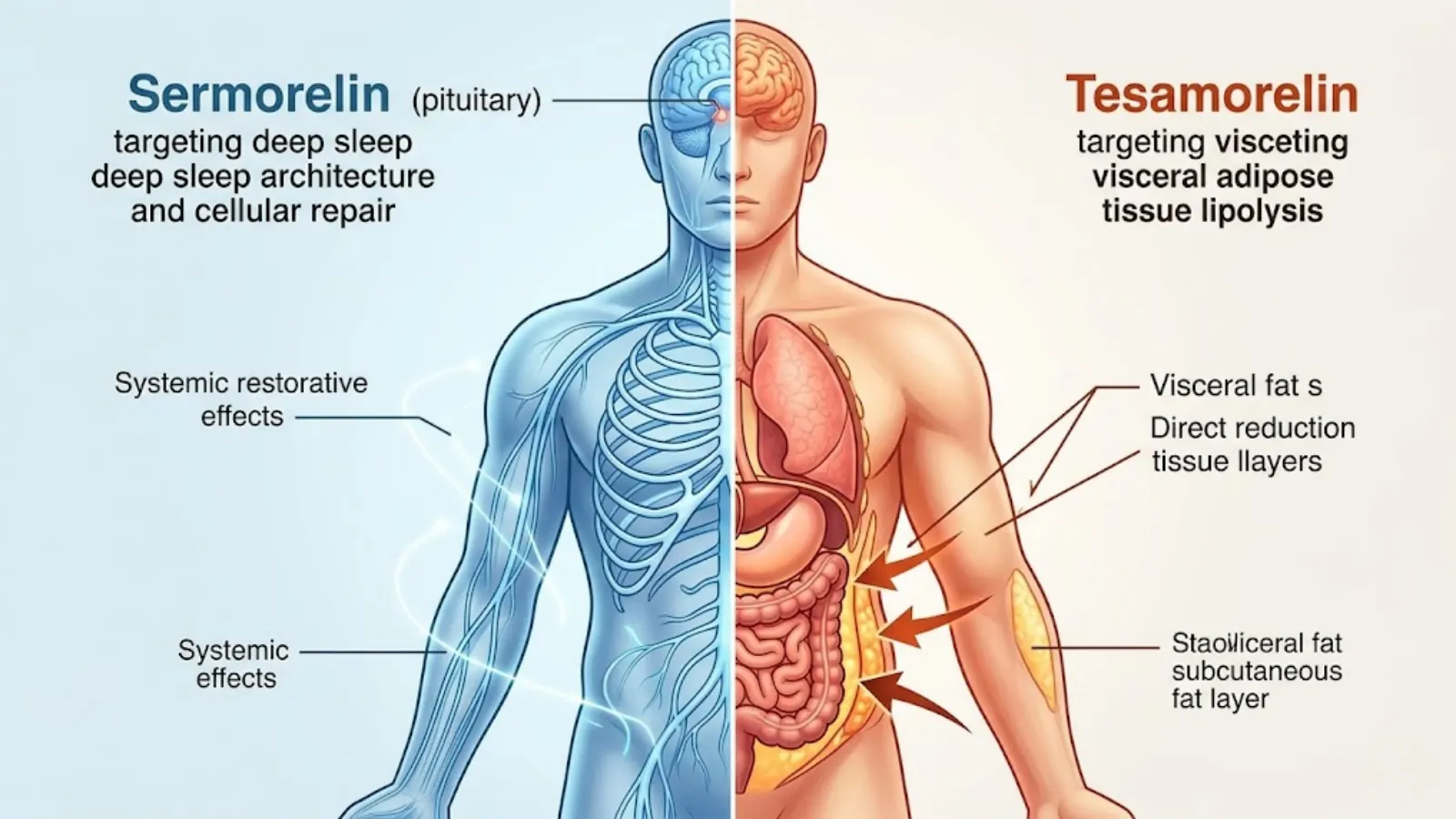
Image 3: Physiological mapping graphic. The left side (Sermorelin concept) highlights systemic restoration, showing gentle vectors targeting brain (sleep), skin, and joint repair. The right side (Tesamorelin concept) uses warmer tones to illustrate aggressive, targeted lipolysis of deep visceral adipose tissue surrounding internal organs.
8.1 Visceral Fat vs. Subcutaneous Fat
It is a physiological axiom that you cannot “spot reduce” subcutaneous fat (the fat directly under the skin). However, tesamorelin possesses a unique affinity for intra-abdominal visceral adipose tissue. Patients using tesamorelin frequently report significant reductions in waist circumference and a flattening of the distended abdomen, even if their subcutaneous fat layers remain relatively unchanged initially. Sermorelin, due to its mild nature, does not aggressively target visceral fat; any fat loss experienced on sermorelin is generally a secondary byproduct of improved sleep and slight metabolic rate increases over many months.
8.2 Lean Muscle Accretion
Muscle hypertrophy requires a highly anabolic environment, heavily dependent on circulating IGF-1. Tesamorelin drives IGF-1 levels significantly higher than sermorelin. As a result, users of tesamorelin often notice an increase in intracellular water retention inside the muscle belly, leading to rapid increases in muscle density, fullness, and enhanced recovery from severe musculoskeletal trauma. Sermorelin is not a primary driver of acute muscle accretion; rather, it aids in the long-term preservation of lean tissue and the protection of joint cartilage.
8.3 The “Deflated” Look Myth
A common misconception in the biohacking community is that tesamorelin will cause generalized, unhealthy weight loss—the “deflated” look. This is mathematically and physiologically false. Tesamorelin does not induce systemic catabolism; it selectively oxidizes ectopic and visceral lipids while simultaneously creating an anabolic (muscle-sparing) environment via elevated IGF-1.
9. Side Effects, Safety Profiles, and Contraindications
All peptide interventions carry inherent risks. The disparity in potency between these two compounds is directly reflected in their safety profiles.
9.1 Mild vs. Pronounced Side Effects
Sermorelin is incredibly well-tolerated. The most frequently reported side effects are localized: injection site erythema (redness), mild pruritus (itching), or a temporary flush to the face immediately post-injection.
Tesamorelin, acting as a much stronger secretagogue, can induce pronounced side effects mirroring those of moderate exogenous HGH use. These include transient edema (water retention in the ankles and wrists), arthralgia (joint stiffness), and mild carpal tunnel syndrome due to synovial fluid expansion compressing the median nerve.
9.2 Blood Sugar and Insulin Resistance
The most critical safety divergence between the two peptides is their impact on glucose metabolism. Growth hormone is inherently diabetogenic—it antagonizes the action of insulin. Because tesamorelin causes massive spikes in GH, it can significantly elevate fasting blood glucose levels and decrease insulin sensitivity over time. Advanced biohackers utilizing tesamorelin must monitor their fasting blood glucose and HbA1c levels regularly to prevent drug-induced insulin resistance. Sermorelin’s mild pulsing rarely disturbs glucose homeostasis.
9.3 Contraindications
Neither peptide should be used by individuals with active malignancies, as elevated IGF-1 can act as a proliferative signal for certain types of cancer cells. Additionally, individuals with benign intracranial hypertension, active pituitary microadenomas, or proliferative retinopathy must strictly avoid GHRH analogs.
10. Sourcing, Synthesis, and Purity Verification
For B2B wholesalers, compounding pharmacies, and serious researchers, the provenance of the peptide is non-negotiable. The grey market of peptide synthesis is fraught with under-dosed vials and toxic byproducts.
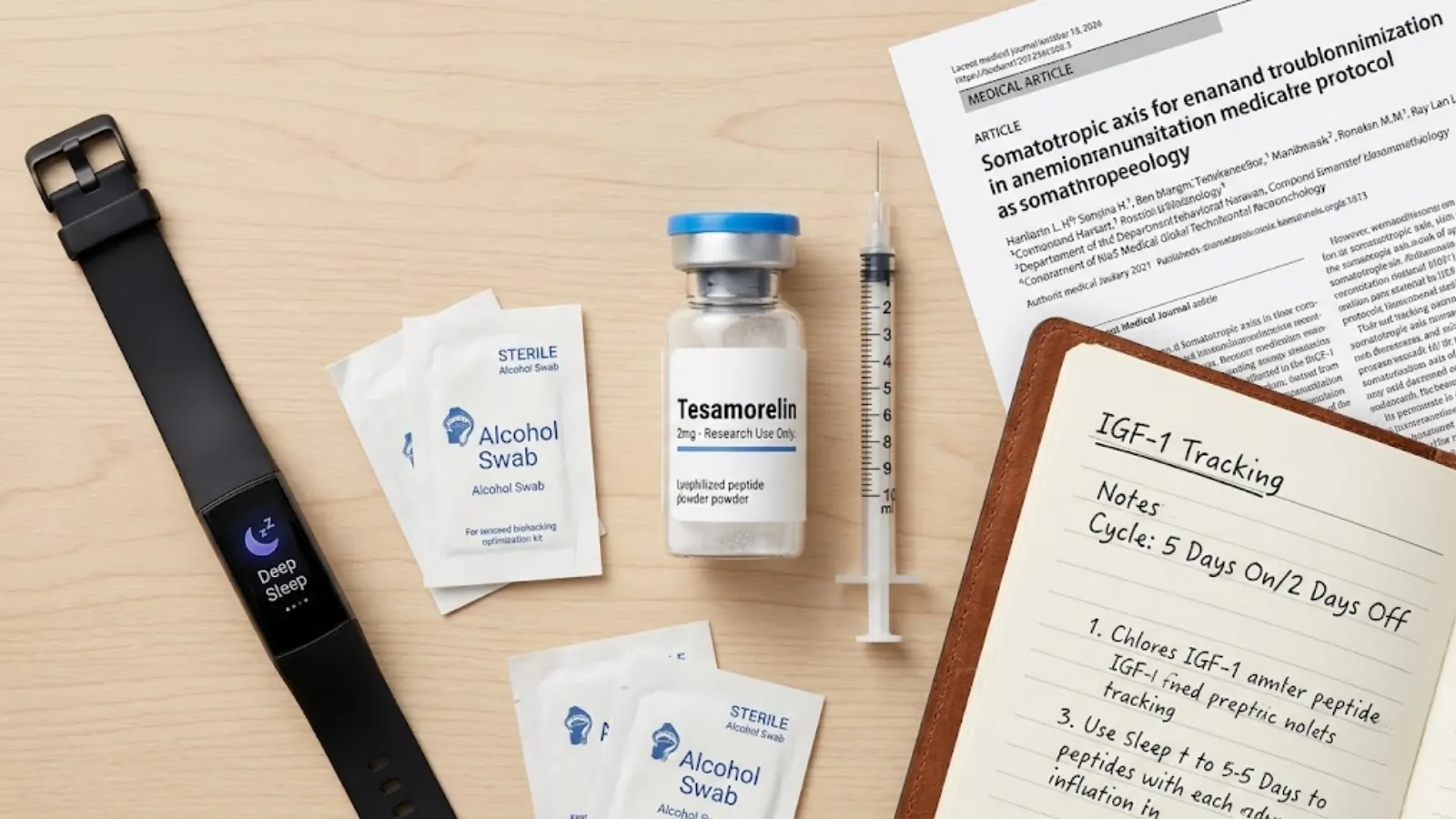
Image 4: A professional medical flat lay. Central are labeled vials of lyophilized Tesamorelin and Sermorelin (Research Use concept). Adjacent are sterile administration tools and a digital sensor displaying a ‘Normal’ glucose reading, emphasizing the protocol requirement for metabolic monitoring.
10.1 The Importance of HPLC Purity Testing
Synthesizing a 44-amino-acid peptide like tesamorelin is highly complex. Errors during the SPPS process result in truncated sequences or misfolded proteins. Buyers must demand independent, third-party High-Performance Liquid Chromatography (HPLC) and Mass Spectrometry (MS) reports. Clinical-grade peptides require a minimum of 98% purity.
Furthermore, during synthesis, trifluoroacetic acid (TFA) is used to cleave the peptide from the resin. TFA is highly cytotoxic. High-tier synthesis laboratories must perform a secondary acetate exchange process to remove residual TFA salts.
10.2 Compounding Pharmacies vs. Research Chemical Sites
For B2C biohackers, the safest route is utilizing a licensed functional medicine practitioner or anti-aging clinic that sources directly from FDA-regulated 503A or 503B compounding pharmacies. Purchasing “research chemicals” from unregulated websites carries immense risk, including heavy metal contamination, bacterial endotoxins, and receiving mislabeled, cheaper compounds.
10.3 Identifying Legitimate Wholesale Peptides
B2B buyers auditing wholesale suppliers must look for distinct E-E-A-T markers: ISO 9001 certification for laboratory standards, GMP (Good Manufacturing Practice) compliance, and the willingness to provide lot-specific, batch-tested Certificates of Analysis (COA) directly from accredited third-party analytical facilities.
11. Frequently Asked Questions (GEO Long-Tail Targets)
Which peptide is better for burning stubborn visceral fat: tesamorelin or sermorelin?
Tesamorelin is drastically superior for burning stubborn visceral fat. Because it is specifically engineered to resist enzymatic breakdown, it creates a massive, sustained pulse of growth hormone that has a unique affinity for lipolyzing intra-abdominal adipose tissue, making it the clinical standard for visceral fat reduction.
How do the anti-aging and sleep benefits of sermorelin compare to tesamorelin?
Sermorelin is considered the superior choice for anti-aging and sleep enhancement. Its short half-life and bio-identical structure perfectly mimic the body’s natural nocturnal GH pulses, profoundly enhancing deep delta-wave sleep and facilitating gentle, long-term cellular repair without disrupting metabolic homeostasis.
Can you safely stack sermorelin with CJC-1295 or Ipamorelin for muscle recovery?
Yes, but stacking sermorelin with CJC-1295 is redundant, whereas stacking it with Ipamorelin is highly synergistic. CJC-1295 is also a GHRH analog, meaning they compete for the same receptor. However, Ipamorelin is a GHRP that works on a completely different pathway, creating a powerful “bleed-and-pulse” synergy for optimal muscle recovery.
What are the standardized reconstitution protocols for lyophilized sermorelin?
To reconstitute lyophilized sermorelin, you must gently inject sterile bacteriostatic water into the vial, allowing the vacuum to pull the liquid in. Do not shake the vial, as peptide bonds are fragile; instead, gently swirl the vial until the powder is fully dissolved, and store it immediately under refrigeration (2°C to 8°C).
12. Key Takeaways
- Mechanistic Differences: Both are GHRH analogs, but sermorelin is a bio-identical 29-amino-acid chain with a rapid half-life, whereas tesamorelin is a modified 44-amino-acid chain engineered for sustained receptor engagement.
- Best for Biohackers Seeking Sleep & Longevity: Sermorelin offers a highly safe, gentle pathway to restoring youthful baseline GH levels, optimizing deep sleep, and supporting joint health.
- Best for Metabolic Overhauls: Tesamorelin is the undisputed choice for aggressively targeting dense visceral abdominal fat and spiking IGF-1 for rapid body composition changes.
- Safety First: Tesamorelin requires strict monitoring of fasting blood glucose due to its potency, while both compounds require cycling (e.g., 5 days on, 2 days off) to prevent pituitary receptor downregulation.
- Purity is Paramount: Always demand batch-specific HPLC and Mass Spectrometry testing to ensure the absence of cytotoxic TFA salts and peptide degradation.