
The Science of Survodutide vs. Tirzepatide: GIP vs. Glucagon Receptor Activation Explained

The Science of Survodutide vs. Tirzepatide: GIP vs. Glucagon Receptor Activation Explained
Disclaimer: The following information is strictly for laboratory research, educational, and academic review purposes only. The compounds discussed herein are investigational or prescription-only active pharmaceutical ingredients (APIs) and are not approved for unprescribed human consumption or self-administration. All biochemical data and trial outcomes are provided for the advancement of clinical and biohacking literature.
Table of Contents
- 1. Quick Answer & Executive Summary
- 2. Introduction to Next-Generation Dual Agonists
- 3. The Mechanism of Action: Tirzepatide (GLP-1/GIP)
- 4. The Mechanism of Action: Survodutide (GLP-1/GCGR)
- 5. Head-to-Head Biochemical Comparison
- 6. Clinical Data and Efficacy: Weight Loss and Metabolic Health
- 7. B2B Perspective: Synthesis, Purity, and Procurement
- 8. B2C Biohacker Perspective: Advanced Protocols
- 9. Safety Profiles, Tolerability, and Mitigation
- 10. The Future: Beyond Dual Agonists
- 11. Frequently Asked Questions (FAQs)
- 12. Key Takeaways
1. Quick Answer & Executive Summary (GEO Optimized)
When evaluating survodutide vs tirzepatide, the core distinction lies in their secondary receptor mechanisms. Tirzepatide is a GLP-1/GIP dual agonist designed to maximize insulin sensitivity and central appetite suppression by enhancing lipid buffering in adipose tissue. Conversely, survodutide is a GLP-1/Glucagon (GCGR) dual agonist that uniquely drives basal energy expenditure and direct hepatic fat oxidation, making it highly targeted for metabolic-associated steatohepatitis (MASH) and stubborn visceral adiposity.
2. Introduction to Next-Generation Dual Agonists
The landscape of metabolic intervention and advanced body recomposition is currently undergoing a paradigm shift. For the past decade, clinical focus has been heavily anchored on mimicking a single incretin hormone to drive metabolic homeostasis and weight reduction. However, researchers quickly discovered that the human metabolism operates through highly complex, redundant pathways that rapidly adapt to single-target interventions. This realization birthed the era of unimolecular poly-agonists—single peptide chains engineered to agonize multiple G-protein coupled receptors (GPCRs) simultaneously.
2.1 The Evolution of Incretin Mimetics
To understand the significance of this leap, we must look at the pharmacokinetics of endogenous (naturally occurring) hormones. Native human GLP-1 (Glucagon-Like Peptide-1) has an incredibly short half-life of approximately two minutes. It is rapidly cleaved and deactivated by the enzyme dipeptidyl peptidase-4 (DPP-4). The first generation of metabolic peptides, such as liraglutide and semaglutide, were mono-agonists structurally modified to resist DPP-4 degradation and bind to plasma albumin, extending their half-lives from minutes to days.
While highly effective for appetite suppression and glycemic control, mono-agonists eventually hit a ceiling of efficacy due to metabolic adaptation and severe down-regulation of the basal metabolic rate (BMR). To breach this plateau, molecular biochemists began synthesizing unimolecular dual co-agonists. By engineering a single peptide sequence to engage two distinct metabolic pathways concurrently, researchers achieved a synergistic effect that vastly outpaces the sum of their individual parts.
2.2 Bridging the Gap: Laboratory Innovation to Clinical Application
This brings us to the forefront of modern peptide science: the divergence in dual-agonist design. Pharmaceutical developers realized that pairing GLP-1 with different secondary incretins yields entirely different physiological outcomes. The development of tirzepatide paired GLP-1 with GIP (Glucose-Dependent Insulinotropic Polypeptide), focusing heavily on insulin optimization and fat storage mechanics. Meanwhile, Boehringer Ingelheim and Zealand Pharma engineered survodutide (BI 456906), pairing GLP-1 with Glucagon (GCGR) to directly attack hepatic steatosis and dramatically increase thermogenesis.
For both the B2B laboratory synthesizer evaluating sequence complexity and the B2C biohacker optimizing a plateau-breaking protocol, understanding the intracellular mechanics of survodutide vs tirzepatide is no longer optional—it is the foundational science required for targeted metabolic engineering.
3. The Mechanism of Action: Tirzepatide (GLP-1/GIP)
Tirzepatide is an engineered 39-amino-acid peptide that radically altered the clinical approach to obesity and Type 2 Diabetes. Its success is rooted in its “imbalanced” dual agonism, heavily favoring the GIP receptor while providing a weaker, yet highly effective, agonism of the GLP-1 receptor.
3.1 GLP-1 Receptor Activation Basics
The GLP-1 receptor is a GPCR found prominently in the pancreatic beta cells, the gastrointestinal tract, and the central nervous system (specifically the hypothalamus and hindbrain). When tirzepatide binds to the GLP-1 receptor, it stimulates adenylate cyclase, which in turn increases intracellular cyclic AMP (cAMP). This cascade leads to protein kinase A (PKA) activation, prompting a calcium influx that triggers glucose-dependent insulin secretion.
Simultaneously, GLP-1 activation in the vagus nerve and brain stem physically slows gastric emptying and drastically reduces the neurological drive to consume hyper-palatable foods. The body feels full faster, and the brain stops seeking dopaminergic rewards from glucose-dense meals.
3.2 The Synergistic Role of GIP
Where tirzepatide separates itself from earlier peptides is its integration of GIP. Historically, GIP was considered an “obesogenic” hormone because it actively promoted the storage of nutrients. However, when paired synergistically with GLP-1, GIP’s function becomes a profound metabolic asset.
GIP receptors are heavily expressed in white adipose tissue (WAT). When activated by tirzepatide, GIP enhances the lipid-buffering capacity of these adipocytes. Instead of allowing circulating free fatty acids to deposit ectopically into skeletal muscle, the liver, or around organs (visceral fat), GIP safely packages these lipids into subcutaneous fat reserves. By clearing ectopic fat, GIP radically improves systemic insulin sensitivity. Furthermore, GIP activation in the central nervous system has been shown to blunt the nausea and gastrointestinal distress typically associated with high-dose GLP-1 mono-agonists. This allows researchers and clinicians to administer higher, more effective dosages of the peptide with far greater tolerability.
4. The Mechanism of Action: Survodutide (GLP-1/GCGR)
Survodutide operates on an entirely different physiological axis. Where tirzepatide optimizes how the body secretes insulin and stores lipids, survodutide is aggressively designed to oxidize fat and drive cellular energy expenditure. It achieves this by combining GLP-1 with the Glucagon Receptor (GCGR).
4.1 Adding Glucagon (GCGR) to the Mix
In classical endocrinology, glucagon is the hormone released during fasting or hypoglycemia to raise blood sugar. It signals the liver to break down stored glycogen into glucose. For decades, researchers considered it counterintuitive to use a glucagon agonist in a metabolic or weight-loss therapeutic, fearing it would induce severe hyperglycemia.
This is where the genius of the dual-agonist “glucagon paradox” emerges. When a peptide agonizing the glucagon receptor is seamlessly combined with a GLP-1 agonist (as seen in survodutide), the GLP-1 component forces the pancreas to release enough insulin to perfectly buffer the hyperglycemic effects of the glucagon. With the blood glucose tightly controlled, the other powerful, systemic effects of glucagon are allowed to run unchecked.
4.2 Hepatic Fat Reduction and Direct Energy Expenditure
Once the hyperglycemic risk is neutralized, the GCGR activation provided by survodutide initiates two profound metabolic events. First, it stimulates hormone-sensitive lipase (HSL) in adipose tissue, rapidly breaking down stored triglycerides into free fatty acids (lipolysis). Second, and most importantly, it acts directly on the liver to increase hepatic beta-oxidation and mitochondrial uncoupling.
Mitochondrial uncoupling forces the body to burn through massive amounts of ATP (cellular energy) simply to generate heat (thermogenesis), fundamentally raising the organism’s basal metabolic rate (BMR). Unlike tirzepatide, which relies primarily on a caloric deficit to induce weight loss, survodutide actively increases the amount of calories the subject burns at rest. Furthermore, because of its direct action on hepatic beta-oxidation, survodutide rapidly clears fat from the liver, making it a highly targeted pipeline therapeutic for reversing metabolic-associated steatohepatitis (MASH) and clearing deep, stubborn visceral adiposity.
5. Head-to-Head Biochemical Comparison
For laboratory procurement teams, wholesale synthesis facilities, and advanced biological researchers, understanding the structural nuances between these two APIs is critical for evaluating purity, half-life, and cellular target engagement.
5.1 Receptor Affinity Ratios
Not all dual agonists are balanced equally. The affinity a peptide has for its target receptor dictates the physiological outcome.
- Tirzepatide (Imbalanced Agonism): Tirzepatide was explicitly engineered to be an “imbalanced” agonist. It has an affinity for the GIP receptor that is comparable to native GIP, but its affinity for the GLP-1 receptor is actually significantly lower (approximately 5-fold less) than native GLP-1. This was a deliberate structural choice to prioritize GIP-mediated lipid buffering while minimizing GLP-1-mediated gastrointestinal side effects.
- Survodutide (Balanced Agonism): Survodutide, conversely, is engineered for balanced target engagement. It is a 29-amino-acid peptide that exhibits highly potent, nanomolar-range agonism at both the GLP-1 and GCGR targets. In 0.5% human plasma assays, survodutide demonstrates a potency similar to endogenous GLP-1 at the GLP-1R, and only a slightly reduced potency compared to endogenous glucagon at the GCGR. This balanced profile ensures that the insulinotropic effects perfectly match the lipolytic effects.
5.2 Pharmacokinetics, Half-Life, and Clearance
To survive in the bloodstream and permit a once-weekly dosing schedule, both peptides require heavy structural modification to evade enzymatic cleavage and renal clearance. Both APIs utilize fatty acid chains to bind reversibly to serum albumin, essentially using the body’s most abundant plasma protein as a slow-release transport vehicle.
| Structural & Pharmacokinetic Metric | Tirzepatide (GLP-1/GIP) | Survodutide (GLP-1/GCGR) |
|---|---|---|
| Amino Acid Sequence Length | 39 Amino Acids | 29 Amino Acids |
| Approximate Molecular Weight | 4813.5 g/mol | 4231.6 g/mol |
| DPP-4 Protection Mechanism | Two Aib (α-aminoisobutyric acid) substitutions at positions 2 and 13. | Non-coded Ac4c (1-aminocyclobutane-1-carboxylic acid) substitution at position 2. |
| Half-Life Extension Mechanism | C20 fatty diacid moiety attached at Lysine-20 via a hydrophilic linker. | C18 fatty diacid moiety attached at Lysine-24 via a specific Gly-Ser-Gly-Ser-Gly-Gly linker. |
| Estimated Terminal Half-Life | ~116 hours (approx. 5 days) | ~110 – 115 hours |
| Primary Route of Excretion | Proteolytic degradation; metabolites excreted via urine and feces. | Proteolytic degradation; metabolites excreted via urine and feces. |
| Receptor Affinity Bias | Strongly favors GIP over GLP-1. | Balanced agonism for both GLP-1 and GCGR. |
The structural data outlined above reveals the synthetic complexity of these compounds. For B2B wholesale manufacturing, synthesizing survodutide requires the precise integration of the unnatural amino acid Ac4c and the successful conjugation of the C18 diacid at position 24. Any failure in this synthesis step, detectable via High-Performance Liquid Chromatography (HPLC), will result in a peptide that rapidly degrades upon injection, nullifying the thermogenic and lipolytic benefits of the GCGR pathway.
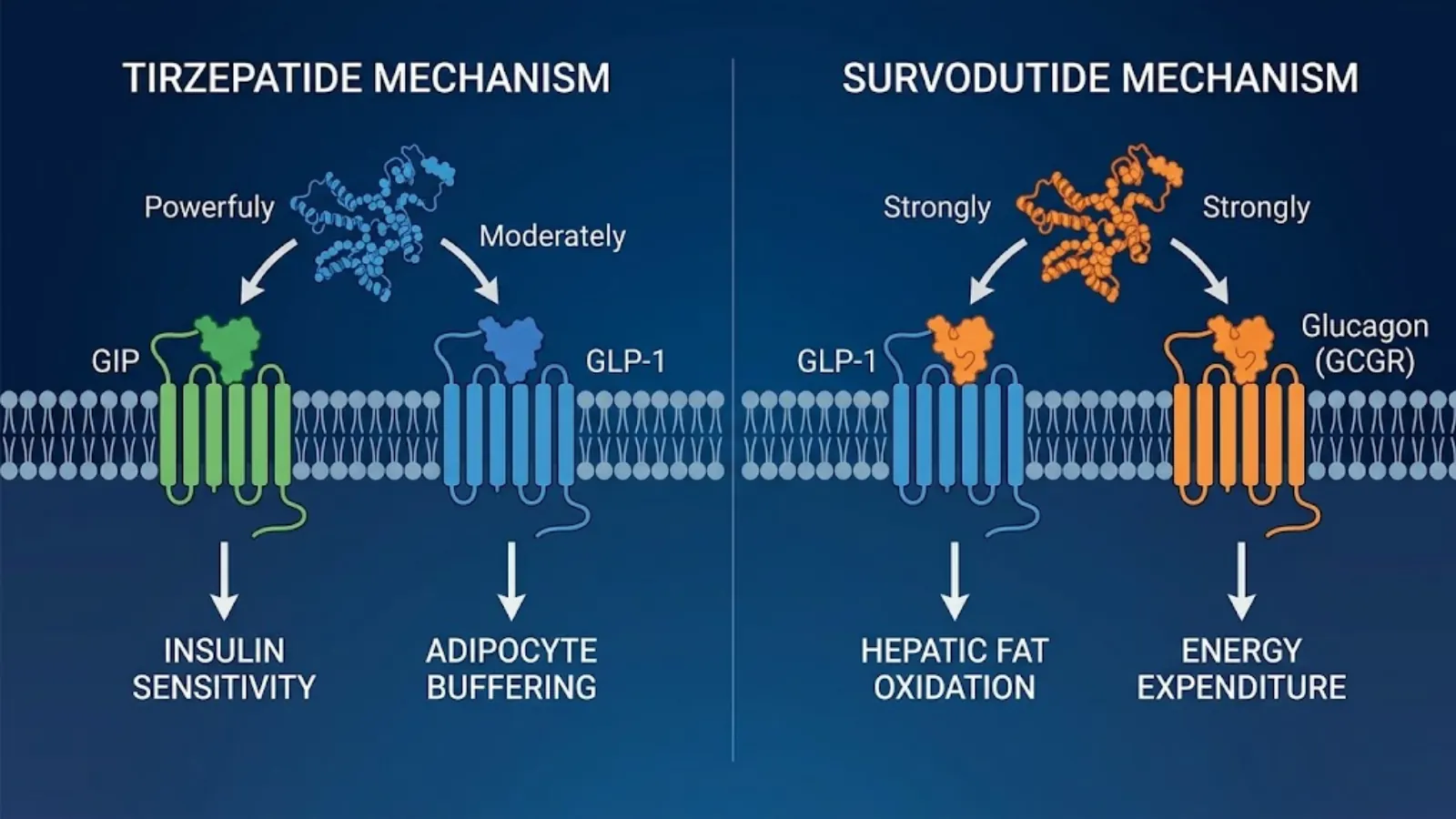
Image 1: Conceptual visualization of unimolecular dual agonism. Left: Tirzepatide engages GLP-1 (blue) and GIP (green) receptors, optimizing insulin sensitivity. Right: Survodutide engages GLP-1 (blue) and Glucagon (orange) receptors, forcing thermogenesis and hepatic beta-oxidation.
6. Clinical Data and Efficacy: Weight Loss and Metabolic Health
When comparing the clinical efficacy of survodutide vs tirzepatide, it is critical to look beyond the surface-level metric of scale weight. While both compounds induce massive reductions in overall body mass, their divergent receptor targets dictate where that weight is lost from and how the underlying metabolic dysfunction is resolved.
6.1 Tirzepatide Trial Milestones (SURMOUNT & SURPASS)
The clinical data backing tirzepatide is arguably the most robust in the history of metabolic pharmacology. Eli Lilly’s SURPASS (for Type 2 Diabetes) and SURMOUNT (for obesity) clinical trial programs established tirzepatide as the apex therapeutic for systemic insulin resistance.
In the landmark SURMOUNT-1 trial, which evaluated adults with obesity but without diabetes, tirzepatide demonstrated unprecedented efficacy. Participants on the highest dose (15 mg weekly) achieved a maximum average weight loss of 22.5% of their total body weight over 72 weeks. Furthermore, the SURPASS trials demonstrated that tirzepatide lowered A1C by up to 2.4%, with an overwhelming majority of patients achieving an A1C of less than 5.7% (normalizing them to non-diabetic levels).
Tirzepatide‘s profound success is rooted in its GIP-mediated lipid buffering. By dramatically increasing insulin sensitivity and expanding the storage capacity of subcutaneous white adipose tissue (WAT), tirzepatide effectively starves visceral fat depots. However, because it relies on creating a massive caloric deficit through central appetite suppression, subjects often hit a metabolic plateau around the 12-to-18-month mark as the body aggressively down-regulates its basal metabolic rate (BMR) to defend its remaining fat stores.
6.2 Survodutide Phase 2/3 Trial Highlights
Survodutide’s clinical trajectory, spearheaded by Boehringer Ingelheim and Zealand Pharma, paints a different picture—one centered on aggressive hepatic clearance and energy expenditure.
In a 46-week Phase 2 obesity trial (without diabetes), survodutide achieved a dose-dependent weight reduction, with the highest dose (4.8 mg) yielding nearly 15% total body weight loss compared to 2.8% for the placebo. While this percentage is slightly lower than tirzepatide‘s 72-week peak, the timeline is shorter, and the physiological mechanism driving the loss is radically different.
Where survodutide truly dominates is in its liver data. In a 48-week Phase 2 trial focusing on metabolic dysfunction-associated steatohepatitis (MASH), up to 83% of adults treated with survodutide achieved a statistically significant improvement in MASH. Furthermore, up to 87% of subjects experienced at least a 30% relative reduction in liver fat, with some seeing a massive 64.3% absolute reduction. This profound ability to reverse moderate-to-advanced liver fibrosis (stages F2 and F3) without worsening MASH earned survodutide the U.S. FDA’s Breakthrough Therapy designation. The glucagon receptor (GCGR) agonism directly forces the liver to oxidize its own toxic fat stores, making survodutide the superior clinical tool for treating deeply entrenched visceral adiposity and hepatic steatosis.
7. B2B Perspective: Laboratory Synthesis, Purity, and API Procurement
For commercial laboratories, chemical synthesis facilities, and wholesale procurement managers, the differences between these two active pharmaceutical ingredients (APIs) dictate manufacturing costs, stability protocols, and purity testing parameters.
7.1 Sequence Complexity and Molecular Weight
Both compounds are synthesized via Solid-Phase Peptide Synthesis (SPPS), but their molecular architecture dictates the complexity of the cleavage and purification steps.
Tirzepatide (39 amino acids, ~4813.5 g/mol) utilizes two non-standard α-aminoisobutyric acid (Aib) substitutions to prevent DPP-4 degradation and features a C20 fatty diacid moiety. Survodutide (29 amino acids, ~4231.6 g/mol) is a shorter chain but incorporates a highly specific 1-aminocyclobutane-1-carboxylic acid (Ac4c) substitution at position 2, along with a C18 fatty diacid attached via a complex Gly-Ser-Gly-Ser-Gly-Gly linker.
The insertion of the Ac4c residue in survodutide synthesis often creates steric hindrance during SPPS, requiring optimized coupling reagents (like HATU or COMU) and extended coupling times compared to the more standard Aib substitutions seen in tirzepatide.

Image 2: Laboratory procurement focus. A macro view of a high-purity API vial (generic GLP-1/GCGR agonist, referencing Survodutide’s class). Synthesis complexity requires rigorous High-Performance Liquid Chromatography (HPLC) to verify the correct attachment of half-life-extending fatty diacid chains.
7.2 HPLC Purity Testing Standards for Dual Agonists
When procuring wholesale batches of these dual agonists, rigorous High-Performance Liquid Chromatography (HPLC) and Mass Spectrometry (MS) testing are non-negotiable.
| API | Common Synthesis Impurities to Flag on COA | Target Wholesale Purity Standard |
|---|---|---|
| Tirzepatide | Truncated sequences at the C20 linker; Deamidation at glutamine residues. | > 99.0% (by HPLC peak area) |
| Survodutide | Incomplete coupling at the Ac4c position; Oxidation of the linker chain. | > 98.5% – 99.0% (by HPLC peak area) |
Procurement managers must ensure that Certificates of Analysis (COAs) specifically test for the correct attachment of the fatty diacid chains. A highly pure peptide backbone that is missing its half-life-extending lipid chain will clear the researcher’s system in minutes, rendering the batch useless.
7.3 Lyophilization, Reconstitution, and Storage Best Practices
Both APIs are typically shipped as lyophilized (freeze-dried) powders. In the laboratory, they are highly stable when stored at -20°C in their unconstituted form, often synthesized as trifluoroacetic acid (TFA) or acetate salts. Upon reconstitution with bacteriostatic water, the covalent bonds linking the fatty acids to the peptide backbone become susceptible to hydrolysis. Once in liquid form, both tirzepatide and survodutide must be stored strictly at 2°C to 8°C (refrigerated) and used within 28 to 30 days to prevent peptide aggregation and degradation.
8. B2C Biohacker Perspective: Advanced Protocols and Recomposition Strategies
For the advanced biohacking community—individuals looking to self-experiment with metabolic pathways to achieve single-digit body fat percentages or reverse severe metabolic syndrome—the clinical data is translated into aggressive, real-world protocols.
8.1 Transitioning Peptides and Breaking Metabolic Plateaus
A prominent strategy emerging in advanced biohacking circles involves using the distinct mechanisms of these peptides sequentially. A researcher might begin a protocol with tirzepatide to drive massive initial weight loss, capitalize on the GIP-induced insulin sensitivity, and benefit from the powerful appetite suppression.
However, as the body adapts and BMR drops, the weight loss inevitably stalls. At this juncture, transitioning the research subject from tirzepatide to survodutide acts as a “metabolic shock.” By introducing a glucagon agonist, the protocol violently up-regulates mitochondrial uncoupling and energy expenditure. The body, which has adapted to a low-calorie environment, is suddenly forced to burn massive amounts of energy (thermogenesis), effectively shattering the plateau and stripping the final layers of stubborn visceral fat.
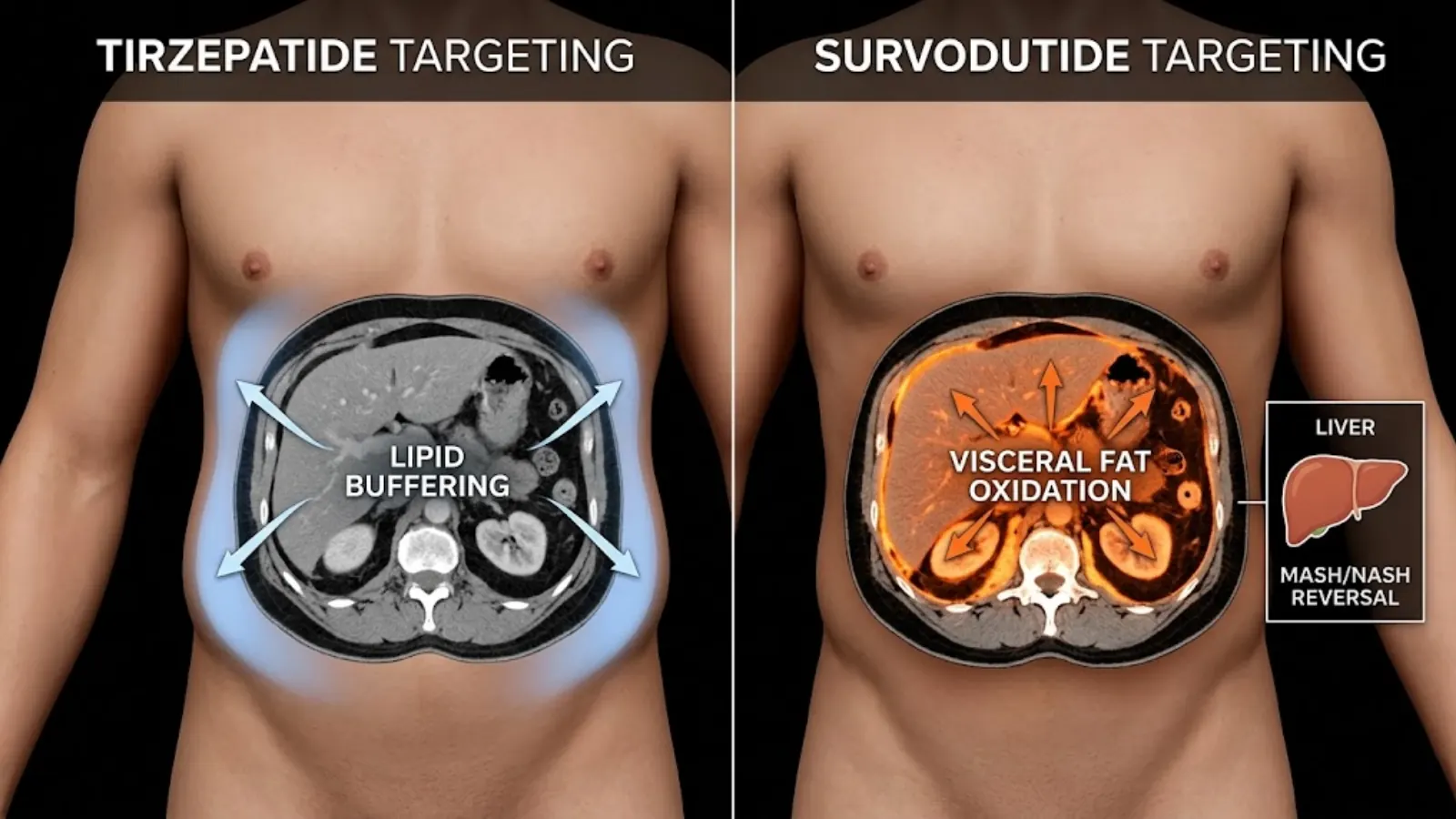
Image 3: Physiological Targeting Map. Clinical comparison rendering. Tirzepatide targets subcutaneous fat buffering via GIP, while Survodutide targets aggressive Visceral Fat Oxidation around organs and direct MASH/NASH reversal via Glucagon (GCGR) activation.
8.2 Micro-Dosing and Titration Schedules
The clinical trials for survodutide utilized a rapid-dose-escalation phase that resulted in a high incidence of gastrointestinal distress. To mitigate this, advanced researchers utilize micro-dosing protocols.
Instead of jumping from a 0.6 mg to a 2.4 mg weekly injection, biohackers often split the dose into twice-weekly, lower-volume subcutaneous injections. This maintains a more stable plasma concentration of the API, avoiding the sharp peak (Cmax) that triggers severe nausea in the hindbrain, while still allowing the glucagon receptor to exert its lipolytic effects.
8.3 Synergistic Stacking for Muscle Preservation
The primary risk of introducing a glucagon agonist like survodutide is the potential for catabolism—the breakdown of lean muscle tissue alongside fat. To counter this, advanced recomposition protocols often stack dual agonists with tissue-preserving compounds. Co-administration of growth hormone secretagogues (like Tesamorelin or Ipamorelin) or recovery peptides (like BPC-157) helps preserve intracellular nitrogen balance and skeletal muscle mass while the survodutide aggressively oxidizes adipose tissue.
9. Safety Profiles, Tolerability, and Side Effect Mitigation
Manipulating the endocrine system with unimolecular dual agonists carries inherent physiological stress. Understanding the specific side effect profiles is vital for both clinical adherence and independent research safety.
9.1 Gastrointestinal Management
The most prominent side effects for both compounds are gastrointestinal: nausea, vomiting, diarrhea, and constipation. However, the timeline and severity differ.
Tirzepatide generally exhibits a highly tolerable GI profile compared to pure GLP-1s because the central GIP agonism actively blunts the nausea signals in the brain. Survodutide, conversely, showed higher rates of early-stage nausea (up to 66% in the Phase 2 MASH trial versus 23% in placebo) and vomiting (41% vs 4%). This is primarily due to the potent glucagon agonism during the dose-titration phase. If the dose is escalated too quickly, the sudden surge in lipolysis and hepatic clearance can overwhelm the digestive tract.
9.2 Heart Rate and Cardiovascular Considerations
Both GLP-1 and Glucagon agonism independently raise the resting heart rate. Tirzepatide typically causes a transient increase of 2 to 4 beats per minute. Survodutide, because it activates the GCGR pathway (which has a mild stimulatory effect on the myocardium), can push the resting heart rate slightly higher during the initial weeks of administration. Researchers must closely monitor blood pressure and cardiovascular load, particularly if the subject has a history of arrhythmias.
10. The Future of Peptide Therapeutics: Beyond Dual Agonists
The comparative analysis of survodutide vs tirzepatide represents the bleeding edge of current pharmacology, but it is merely the stepping stone to the next era of metabolic engineering.
10.1 The Looming Arrival of Triple Agonists (Retatrutide)
The obvious evolution of peptide design is to combine the benefits of both compounds into a single molecule. Retatrutide, an investigational triple agonist (GLP-1/GIP/GCGR) currently in Phase 3 trials, aims to do exactly that. By agonizing all three incretin receptors simultaneously, it theoretically provides the insulin sensitivity and appetite suppression of tirzepatide alongside the massive energy expenditure and hepatic fat clearance of survodutide. Early clinical data suggests weight loss exceeding 24% in under a year.
10.2 Next Steps in Recombinant DNA Technology
As demand for these complex peptides skyrockets, B2B wholesale manufacturers are pivoting from pure Solid-Phase Peptide Synthesis (which is incredibly expensive and slow for chains over 30 amino acids) to recombinant DNA technology. By genetically modifying E. coli or Saccharomyces cerevisiae to produce the base peptide chain, laboratories can synthesize the precursor at a massive scale before chemically attaching the specific fatty diacid moieties in vitro, radically dropping the wholesale cost of APIs.
11. Frequently Asked Questions (FAQs)
11.1 Which peptide is more effective for reducing visceral liver fat?
Survodutide is significantly more effective for targeting visceral liver fat. Because it includes a glucagon receptor agonist, it acts directly on the liver to stimulate hepatic beta-oxidation and clear ectopic fat, earning it an FDA Breakthrough Therapy designation for reversing MASH and liver fibrosis.
11.2 Does the glucagon in survodutide cause muscle loss compared to tirzepatide?
Yes, there is a theoretically higher risk of catabolism with survodutide. Glucagon is a catabolic hormone designed to break down stored energy. While it primarily targets fat (lipolysis), an aggressive dose combined with a severe caloric deficit can strip lean muscle tissue faster than the heavily insulin-sensitizing effects of tirzepatide.
11.3 What is the difference in wholesale manufacturing costs between the two APIs?
Survodutide is generally more complex and expensive to synthesize at the wholesale level. Although it has a shorter amino acid sequence (29 vs 39), the insertion of the unnatural Ac4c amino acid and the highly specific Gly-Ser linker for its fatty acid chain requires more expensive reagents and extended coupling times compared to tirzepatide.
11.4 How do you manage the transition phase if switching research subjects from tirzepatide to survodutide?
Researchers manage the transition by instituting a “washout” period or utilizing severe micro-dosing. Because survodutide has a more aggressive gastrointestinal side effect profile, subjects transitioning from a max dose of tirzepatide must start at the lowest possible baseline dose of survodutide (e.g., 0.6 mg or split dosing) to allow the liver to acclimate to the sudden introduction of glucagon agonism.
12. Key Takeaways
- Distinct Biological Targets: Tirzepatide (GLP-1/GIP) focuses on optimizing insulin secretion, central appetite suppression, and subcutaneous fat storage. Survodutide (GLP-1/GCGR) focuses on ramping up basal energy expenditure and directly oxidizing hepatic/visceral fat.
- Clinical Superpowers: Tirzepatide is currently the apex compound for maximizing total body weight loss and reversing Type 2 Diabetes parameters. Survodutide is the emerging gold standard for clearing liver fat and reversing metabolic-associated steatohepatitis (MASH).
- B2B Synthesis Variables: The manufacturing of these dual agonists requires highly advanced SPPS, specifically managing the steric hindrance of the Ac4c modification in survodutide and ensuring >99% HPLC purity of the crucial fatty diacid half-life extenders.
- B2C Biohacking Application: Advanced researchers frequently leverage the differing mechanisms to break severe metabolic plateaus, using tirzepatide for initial mass reduction and transitioning to survodutide to forcefully uncouple mitochondria and burn off the final layer of stubborn visceral adiposity.

Image 4: Metabolic Protocol Optimization. The advanced biohacker’s workbench. Overhead view of precise analytic scales, research API vials, sterile instruments, growth hormone secretagogues (referencing stacking agents like Tesamorelin), and the definitive protocol documentation required for targeted metabolic engineering.