
Which GHRH Peptide is Superior? Tesamorelin vs. Sermorelin Half-Life, Efficacy, & Results

Disclaimer: The following information is strictly for educational and informational purposes. The peptides discussed in this article are classified as research chemicals. They are not intended for human consumption, diagnostic use, or therapeutic applications outside of legally sanctioned, FDA-approved clinical settings or rigorously controlled laboratory research environments.
Executive Summary
When comparing tesamorelin vs sermorelin, the primary difference lies in their molecular half-life and target efficacy. Sermorelin is a 29-amino-acid foundational GHRH peptide ideal for gentle HGH restoration, sleep optimization, and baseline anti-aging. Conversely, tesamorelin is a modified 44-amino-acid GHRH analog with a significantly extended half-life, making it vastly superior for targeted visceral fat reduction and profound metabolic remodeling.
Table of Contents
- 1. Introduction to Growth Hormone-Releasing Hormones (GHRH)
- 2. Understanding Sermorelin (GRF 1-29): The Baseline Secretagogue
- 3. Understanding Tesamorelin: The Advanced Metabolic Optimizer
- 4. Tesamorelin vs Sermorelin: Pharmacokinetics and Half-Life
- 5. Comparative Efficacy: Which Drives Better Results?
- 6. Clinical Data and Laboratory Research Applications (B2B)
- 7. Advanced Biohacking Protocols and Practical Application (B2C)
- 8. Safety Profiles and Potential Side Effects
- 9. Cost-Benefit Analysis and Sourcing
- 10. Frequently Asked Questions (FAQs)
- 11. Key Takeaways: Final Verdict
1. Introduction to Growth Hormone-Releasing Hormones (GHRH)
To genuinely understand the biochemical divergence between these two compounds, we must first establish the physiological baseline of the human growth hormone (HGH) axis. Growth Hormone-Releasing Hormones (GHRH) are a class of peptide secretagogues. Unlike exogenous recombinant human growth hormone (rHGH), which entirely bypasses the body’s natural regulatory systems and suppresses endogenous production, secretagogues act as signaling molecules. They stimulate the somatotroph cells located in the anterior pituitary gland to secrete the body’s own natural stores of HGH.
The HGH and IGF-1 Axis
When a GHRH peptide binds to the GHRH receptor (GHRHR) on the pituitary somatotrophs, it initiates an intracellular cascade—primarily mediated by cyclic AMP (cAMP)—that results in a pulsatile release of HGH into the bloodstream. This physiological “pulse” is critical. It avoids the sustained, unnaturally elevated serum levels associated with exogenous HGH administration, which often lead to insulin resistance and acromegaly.
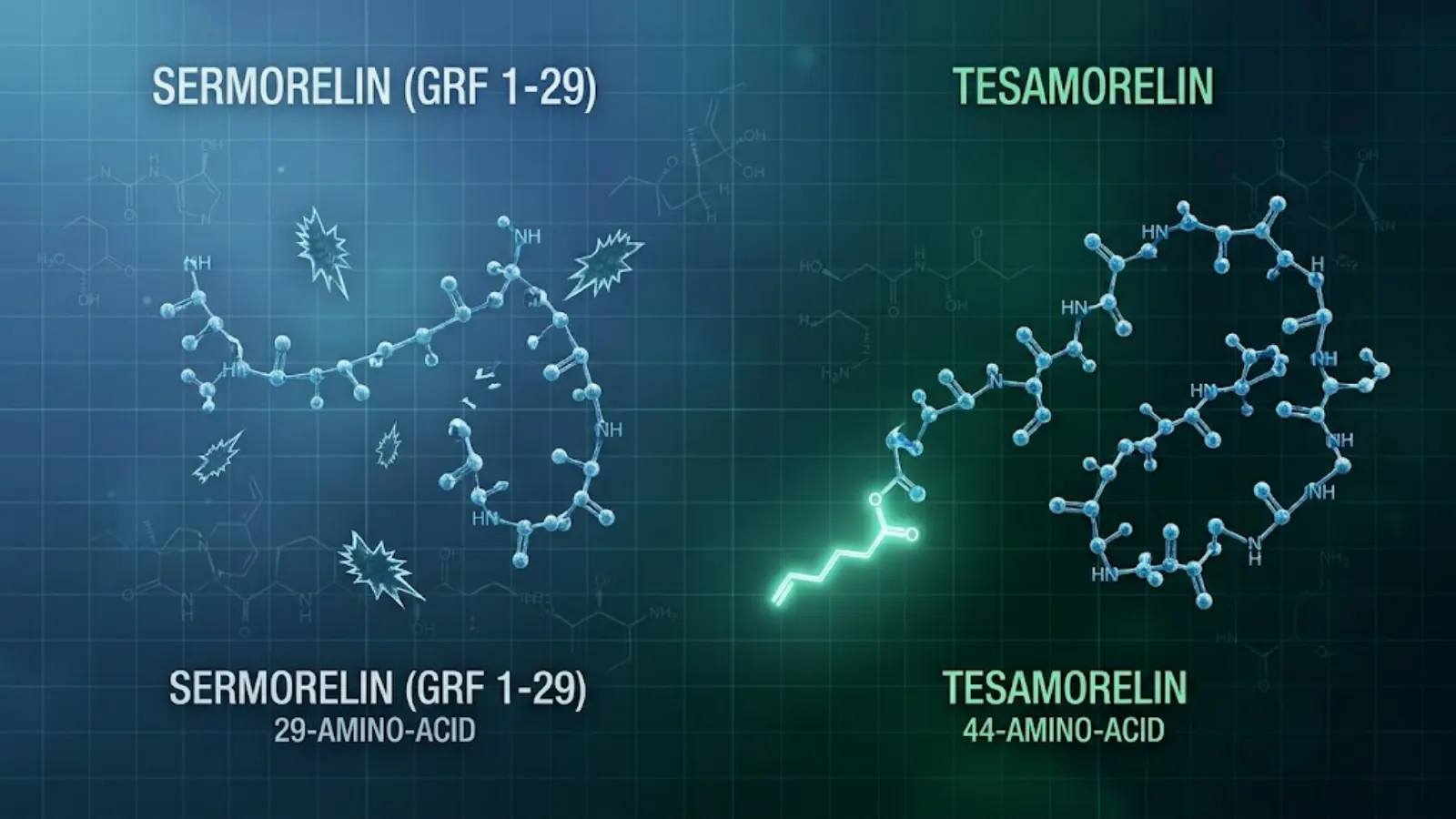
Image 1: Conceptual molecular mechanism visualization contrasting the unprotected amino acid sequence of Sermorelin (cleaved by enzymes) against the protected, lipid-shielded structure of Tesamorelin.
Once released, HGH travels to the liver, where it stimulates the transcription and secretion of Insulin-like Growth Factor 1 (IGF-1). IGF-1 is the primary downstream mediator of growth hormone’s anabolic and lipolytic effects. It drives cellular repair, muscle hypertrophy, bone density regulation, and the mobilization of free fatty acids from adipose tissue. The clinical efficacy of any GHRH analog—whether we are analyzing tesamorelin vs sermorelin in a laboratory or clinical setting—is ultimately measured by its ability to reliably and safely upregulate this HGH/IGF-1 axis without causing receptor downregulation.
2. Understanding Sermorelin (GRF 1-29): The Baseline Secretagogue
Sermorelin, frequently denoted in literature as Growth Hormone-Releasing Factor (GRF 1-29), is the biological yardstick by which all other GHRH analogs are measured. Naturally occurring human GHRH is a 44-amino-acid polypeptide. However, extensive biochemical mapping in the 1980s revealed that only the first 29 amino acids (the N-terminal sequence) are biologically required to bind to the GHRH receptor and stimulate pituitary somatotrophs.
Molecular Structure and Sequence
Sermorelin is an exact synthetic replica of this 29-amino-acid active core. Because it is bio-identical to the functional fragment of endogenous GHRH, its mechanism of action is highly natural and predictable. However, this lack of structural modification is a double-edged sword. While it is incredibly safe and well-tolerated, it is entirely unprotected against enzymatic degradation. Upon administration, widespread blood plasma enzymes—most notably dipeptidyl peptidase-IV (DPP-IV)—rapidly cleave the peptide bonds, neutralizing the molecule within minutes.
Primary Uses in Anti-Aging and Wellness
Despite its rapid clearance, Sermorelin remains a staple in clinical anti-aging protocols and longevity research. Its brief mechanism of action perfectly mimics the natural, physiological pulse of endogenous growth hormone. Biohackers and researchers utilizing Sermorelin generally note improvements in slow-wave sleep (Delta sleep) latency, mild improvements in skin elasticity via enhanced collagen synthesis, and a generalized restoration of youthful baseline IGF-1 levels. It is not an aggressive tissue-remodeling agent; rather, it is a foundational optimizer designed to gently correct somatopause (the age-related decline in growth hormone).
3. Understanding Tesamorelin: The Advanced Metabolic Optimizer
If Sermorelin is the biological baseline, Tesamorelin is the engineered upgrade. Tesamorelin utilizes the entire, naturally occurring 44-amino-acid sequence of human GHRH. However, to circumvent the rapid enzymatic degradation that limits Sermorelin’s efficacy, biochemists introduced a highly specific, synthetic modification at the molecule’s N-terminus.
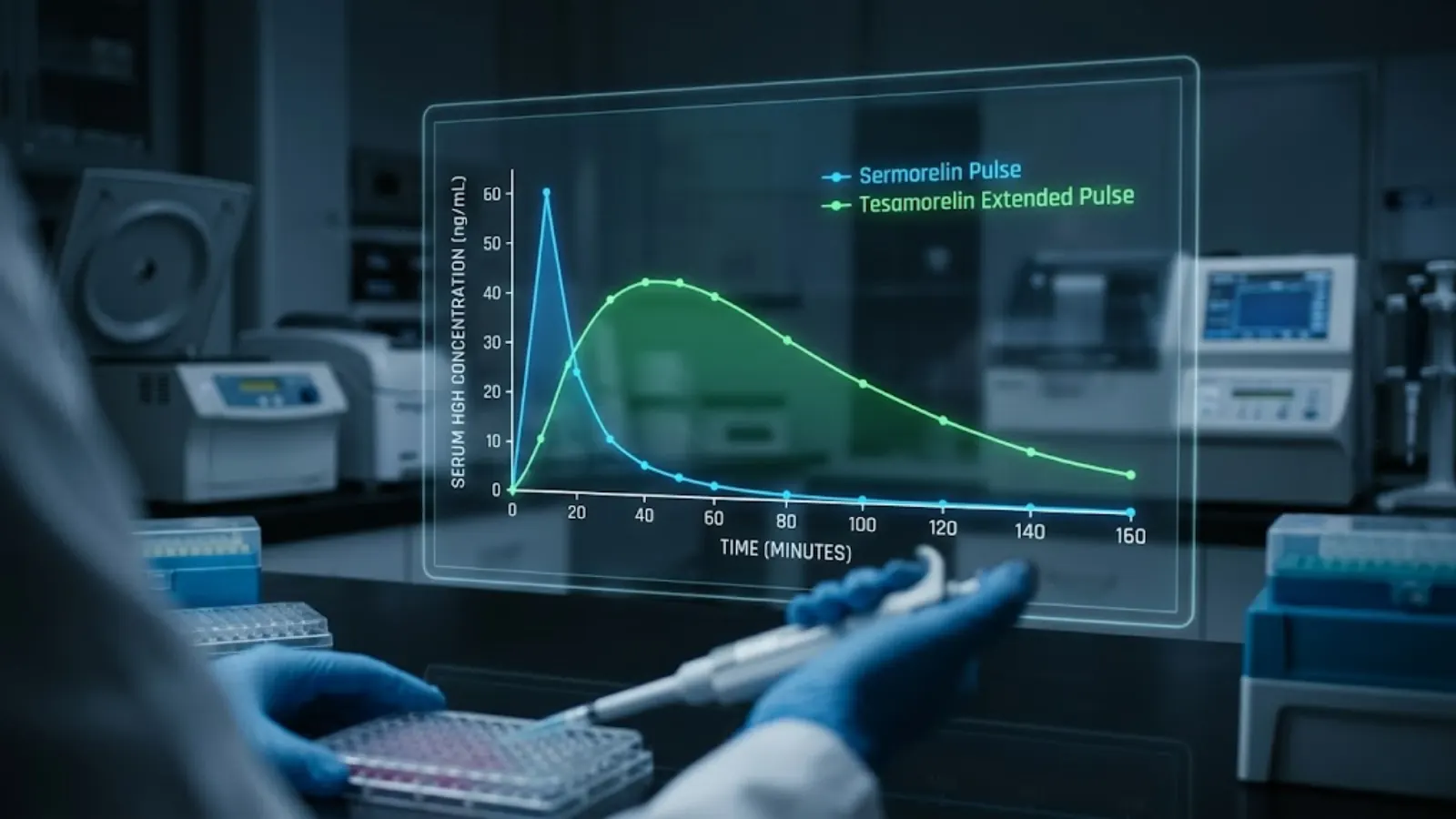
Image 2: Clinical concept illustration showing the comparative area under the curve (AUC) of HGH release, with Tesamorelin providing a significantly more sustained activation lever than Sermorelin.
The Trans-3-Hexenoic Acid Modification
The defining characteristic of Tesamorelin is the addition of a trans-3-hexenoic acid group. This lipid-like appendage provides massive steric hindrance—essentially acting as a biochemical shield. By attaching this group to the N-terminal end of the peptide chain, circulating peptidases (like DPP-IV) are physically blocked from accessing and cleaving the vulnerable amino acid bonds.
This single molecular alteration fundamentally shifts the compound’s pharmacodynamics. The peptide survives significantly longer in the bloodstream, continuously binding to and activating pituitary GHRH receptors to drive a massive, sustained pulse of growth hormone.
FDA Approval and Clinical Indications
The sheer potency of this modified peptide led to rigorous clinical trials and eventual FDA approval under the brand name Egrifta. Tesamorelin is specifically indicated for the treatment of HIV-associated lipodystrophy—a condition characterized by severe, abnormal accumulations of visceral adipose tissue (VAT). Because of its extended bio-availability, Tesamorelin exerts a profound lipolytic effect, upregulating lipolysis specifically in deep abdominal fat stores while sparing subcutaneous fat. This highly targeted metabolic partitioning is unique among secretagogues and is the primary reason advanced biohackers favor it over GRF 1-29.
| Property | Sermorelin (GRF 1-29) | Tesamorelin |
|---|---|---|
| Amino Acid Chain Length | 29 Amino Acids | 44 Amino Acids |
| N-Terminal Modification | None (Endogenous fragment) | Trans-3-hexenoic acid |
| Molecular Weight | ~3358 g/mol | ~5135 g/mol |
| Enzymatic Resistance | Low (Rapidly degraded) | High (Shielded N-terminus) |
| FDA Status | Compounded | FDA Approved (Egrifta) |
4. Tesamorelin vs Sermorelin: Pharmacokinetics and Half-Life
When researchers establish protocols for tesamorelin vs sermorelin, the entire framework hinges on pharmacokinetics—specifically, the half-life and the area under the curve (AUC) of the resulting HGH secretion. The half-life of a peptide dictates its dosing frequency, its cumulative physiological impact, and its risk profile for receptor desensitization.
Sermorelin Half-Life Breakdown
Because Sermorelin lacks the protective trans-3-hexenoic acid group, its in vivo half-life is remarkably brief, clocking in at approximately 10 to 12 minutes following subcutaneous administration. This rapid clearance means that Sermorelin initiates a sharp, transient spike in endogenous HGH that returns to baseline very quickly. To achieve a sustained elevation in daytime IGF-1 levels, Sermorelin often requires multiple daily administrations or must be synergistically stacked with a Growth Hormone-Releasing Peptide (GHRP) to amplify the pulse. However, its short half-life makes it incredibly safe; there is virtually zero risk of “bleeding” into the next physiological pulse, thereby avoiding the downregulation of pituitary somatotroph receptors.
Tesamorelin Half-Life Breakdown
Tesamorelin’s pharmacokinetics are vastly different. Due to its synthetic lipid modification, the half-life of Tesamorelin extends to approximately 30 to 45 minutes, with the resulting HGH elevation persisting for several hours. This extended area under the curve (AUC) is exactly why Tesamorelin is so effective at mobilizing visceral fat. Fat cells (adipocytes) express growth hormone receptors. For lipolysis to occur optimally, these receptors require sustained, robust activation. Sermorelin’s brief pulse is often insufficient to trigger aggressive fat oxidation. Tesamorelin, on the other hand, saturates the receptor sites long enough to initiate profound lipolysis, driving triglycerides out of the visceral fat depots and into the bloodstream for oxidation.

Image 3: Physiological targeting map showing how Tesamorelin’s extended bioavailability allows for deep stimulation of visceral adipocyte GHRH receptors, surpassing the light tissue effects of Sermorelin.
Why Molecular Stability Matters
For the B2B laboratory sector, molecular stability translates directly to synthesis and handling protocols. Sermorelin is highly fragile; once reconstituted from its lyophilized (freeze-dried) state, it is highly susceptible to mechanical and thermal degradation. Tesamorelin, while still requiring cold storage, exhibits a slightly more robust stability profile in solution due to its larger structure and lipid appendage. Ultimately, the pharmacokinetic data makes the clinical distinction clear: Sermorelin acts as a transient, gentle nudge to the pituitary gland, while Tesamorelin serves as a sustained, powerful lever for metabolic remodeling.
5. Comparative Efficacy: Which Drives Better Results?
The ultimate deciding factor for both clinical researchers and advanced biohackers analyzing tesamorelin vs sermorelin is comparative efficacy. While both secretagogues operate on the exact same physiological axis, their downstream phenotypic outcomes differ dramatically due to their respective pharmacokinetics and receptor affinities.
Visceral Adipose Tissue (VAT) Reduction
When it comes to fat loss—specifically, the dangerous, metabolically active visceral adipose tissue that surrounds internal organs—Tesamorelin is unquestionably the superior compound. Visceral fat is notoriously resistant to standard caloric restriction because it is highly sensitive to the lipolytic effects of growth hormone, which naturally declines as we age. Because Tesamorelin creates a massive, sustained elevation in serum HGH over an extended area under the curve (AUC), it saturates the growth hormone receptors on visceral adipocytes. This triggers a robust intracellular cAMP signaling cascade, activating hormone-sensitive lipase (HSL) to break down stored triglycerides into free fatty acids. Clinical trials for Egrifta routinely demonstrate a 15% to 20% reduction in visceral fat over a 26-week period without altering subcutaneous fat or muscle mass. Sermorelin, due to its rapid clearance, simply cannot sustain the receptor activation required for this degree of aggressive lipolysis.
Muscle Recovery and Hypertrophy
Growth hormone itself is not directly anabolic to muscle tissue; rather, its hypertrophic and recovery benefits are mediated primarily through the liver’s production of Insulin-like Growth Factor 1 (IGF-1). Sermorelin is excellent for maintaining baseline lean mass and accelerating recovery from micro-trauma (exercise) by gently elevating systemic IGF-1. It enhances collagen synthesis, which fortifies tendons and ligaments, making it a favorite for aging athletes focusing on longevity and injury prevention. Tesamorelin, due to its profound stimulation of the pituitary gland, pushes IGF-1 levels significantly higher than Sermorelin. This leads to accelerated satellite cell proliferation within skeletal muscle, drastically reducing recovery times between intense training sessions. However, neither peptide should be confused with exogenous anabolic-androgenic steroids; they do not force unnatural muscle accretion, but rather optimize the physiological environment for recovery.
Sleep Quality and Cognitive Benefits
Paradoxically, the milder peptide often wins in the realm of neurology and sleep architecture. The natural pulse of HGH is intimately tied to slow-wave sleep (Delta sleep), the deepest and most restorative phase of the sleep cycle. Sermorelin is highly effective at increasing the duration and quality of slow-wave sleep because its short half-life perfectly mimics the natural nocturnal pulse of endogenous GHRH. Biohackers frequently report waking up profoundly refreshed. Tesamorelin, conversely, is so potent that administering it right before bed can sometimes induce a hyper-metabolic state. The aggressive lipolysis and subsequent elevation of free fatty acids in the bloodstream can increase core body temperature and sympathetic nervous system tone, occasionally causing sleep fragmentation in sensitive individuals.
6. Clinical Data and Laboratory Research Applications (B2B)
For wholesale distributors, compounding pharmacies, and laboratory researchers, the handling, synthesis, and analytical testing of these peptides demand rigorous precision.
Purity Standards and Lyophilized Stability
Both Sermorelin and Tesamorelin are synthesized using solid-phase peptide synthesis (SPPS) and are distributed as lyophilized (freeze-dried) powders. To be viable for in vitro or in vivo research, HPLC (High-Performance Liquid Chromatography) testing must demonstrate a purity exceeding 99%, with minimal truncated sequences or synthesis impurities. Because Tesamorelin contains 44 amino acids plus a complex trans-3-hexenoic acid modification, it is exponentially more difficult—and expensive—to synthesize correctly. The failure rate in raw material manufacturing is higher, necessitating strict third-party mass spectrometry verification.
In Vivo and In Vitro Testing Considerations
When designing laboratory protocols, researchers must account for the molecular fragility of the compounds. First, both peptides must be reconstituted with bacteriostatic water (containing 0.9% benzyl alcohol) to maintain sterility. Second, reconstituted vials must never be shaken; doing so cleaves the peptide bonds, rendering the compound biologically inert. Third, once reconstituted, Sermorelin degrades rapidly, losing potency within 14 to 21 days even under constant refrigeration (2°C to 8°C). Tesamorelin exhibits slightly better stability in solution, remaining viable for up to 28 days due to its larger molecular weight and steric shielding.
7. Advanced Biohacking Protocols and Practical Application (B2C)
Disclaimer: The following protocols are derived from observational biohacking data and longevity clinic practices. They are not prescriptive medical advice.
In the optimization community, the debate over tesamorelin vs sermorelin often comes down to precise administration timing and synergistic combinations.
Dosing Frequencies and Timings
Because these are secretagogues, timing the injection to align with the body’s natural circadian rhythms is critical for maximizing the physiological response. Sermorelin Protocol is typically administered once daily, strictly at night, approximately 30 to 60 minutes before bed on an empty stomach. Because insulin completely blunts the HGH release in response to a GHRH, the user must fast for at least two hours prior to administration. Standard clinical dosages range from 200 mcg to 500 mcg subcutaneously.
Due to its fat-burning imperatives, Tesamorelin Protocol is highly versatile. Many advanced practitioners utilize a split protocol (e.g., 1 mg in the morning in a fasted state prior to cardiovascular exercise, and 1 mg at night). The morning dose capitalizes on naturally low insulin and high cortisol to maximize visceral lipolysis.
Synergistic Stacking: The GHRH + GHRP Axis
To truly unlock the pituitary gland’s potential, advanced biohackers rarely use a GHRH (like Sermorelin or Tesamorelin) in isolation. They stack it with a Growth Hormone-Releasing Peptide (GHRP), such as Ipamorelin or CJC-1295.
Here is the biochemical rationale: While GHRH stimulates the pituitary to release HGH, the body has an opposing hormone called somatostatin, which actively blocks HGH release. GHRPs (like Ipamorelin) bind to the ghrelin receptor, which simultaneously stimulates HGH release and shuts down somatostatin. Stacking Tesamorelin or Sermorelin with Ipamorelin creates a synergistic, rather than additive, pulse. 1+1 does not equal 2; biochemically, 1+1 equals 5.
| Parameter | Sermorelin Protocol | Tesamorelin Protocol |
|---|---|---|
| Primary Goal | Anti-aging, Sleep, Wellness | Visceral Fat Loss, Heavy Remodeling |
| Optimal Timing | Pre-sleep (Nightly) | Morning Fasted or Split Morning/Night |
| Ideal GHRP Stack | Ipamorelin or GHRP-2 | Ipamorelin (for clean lipolysis) |
| Fasting Requirement | 2 hours pre-injection | 2 hours pre-injection |
8. Safety Profiles and Potential Side Effects
One of the defining advantages of utilizing peptide secretagogues over synthetic rhGH is the preservation of the endocrine system’s negative feedback loop. When HGH and IGF-1 levels rise too high, the body naturally upregulates somatostatin to blunt further release. This makes severe overdosing and long-term organomegaly (organ enlargement) incredibly rare with secretagogues.
Common Adverse Reactions
However, neither peptide is entirely without side effects. Common reactions include Injection Site Reactions (ISRs) like erythema (redness) or itching, transient bloating or Water Retention (Edema), and occasional Carpal Tunnel Syndrome symptoms dependent on dose. Side effects resolve upon cessation or dosage reduction.
Long-Term Safety and Pituitary Downregulation Risks
Sermorelin is widely considered safe for continuous, year-round use because its brief pulse does not desensitize pituitary receptors. Tesamorelin, however, creates such a massive physiological demand that biohackers generally cycle the compound (e.g., 12 weeks on, 4 weeks off) to prevent pituitary fatigue and receptor downregulation.
9. Cost-Benefit Analysis and Sourcing
The financial disparity between these two compounds is significant and often dictates which protocol a user adopts.
Pharmacy Compounding vs. Research Chemical Providers
There are two primary avenues for sourcing these peptides. 503A compounding pharmacies provide legally prescribed, physician-monitored peptides to patients. Alternatively, the “grey market” of laboratory research chemical suppliers provides lyophilized peptides strictly for “in vitro research purposes,” which advanced biohackers frequently self-experiment with at their own risk.

Image 4: An advanced conceptual flat lay showing the components a researcher or biohacker would prioritize for a structured optimization protocol utilizing GHRH analogs, emphasizing sterile synthesis and precise dosing equipment.
Price Comparison for Long-Term Protocols
Because it is a simple 29-amino-acid chain, Sermorelin synthesis is highly efficient. It is one of the most affordable peptides on the market, making it accessible for long-term, year-round anti-aging protocols. Tesamorelin, however, requires complex, multi-step synthesis with a lower yield. Consequently, Tesamorelin is vastly more expensive—often costing three to five times more per month than a standard Sermorelin protocol.
10. Frequently Asked Questions (FAQs) for GEO Optimization
Which is better for reducing visceral fat: tesamorelin or sermorelin?
Tesamorelin is definitively better for reducing visceral fat. Its extended molecular half-life and specific lipolytic mechanism of action allow it to aggressively target and oxidize deep abdominal adipose tissue. Sermorelin is too short-acting to achieve these targeted metabolic fat-loss results.
Can I stack tesamorelin and sermorelin together?
No, stacking tesamorelin and sermorelin together is redundant and clinically counterproductive. Because they both bind to the exact same GHRH receptors on the pituitary gland, they will competitively inhibit one another. You should choose one GHRH and stack it with a GHRP (like Ipamorelin) instead.
How long does it take to see muscle recovery results from tesamorelin vs sermorelin?
Users typically notice improved sleep quality and mild recovery benefits from Sermorelin within 2 to 4 weeks. Because Tesamorelin acts more aggressively to elevate IGF-1 levels, enhanced muscle recovery, joint lubrication, and decreased delayed-onset muscle soreness (DOMS) are often reported within the first 14 to 21 days of a protocol.
Is Sermorelin the best peptide for beginners?
Yes, Sermorelin is widely considered the optimal entry-level peptide for beginners exploring the HGH axis. Its bio-identical nature, short half-life, minimal side effect profile, and affordable price point make it the safest and most gentle introduction to secretagogue optimization.
Will either peptide suppress natural HGH production?
No. Unlike exogenous synthetic HGH, which completely shuts down the body’s natural endogenous production, both Tesamorelin and Sermorelin are secretagogues. They work by stimulating the pituitary gland to produce more of its own natural HGH, thereby preserving the body’s delicate endocrine feedback loops.
11. Key Takeaways: Final Verdict on Tesamorelin vs Sermorelin
Understanding the nuanced biochemical and clinical differences between tesamorelin vs sermorelin is paramount for optimizing human performance and laboratory success.
- Mechanism: Both are GHRH secretagogues that stimulate the pituitary gland, but their molecular structures dictate vastly different outcomes.
- Sermorelin (The Optimizer): Best for biohackers and anti-aging patients seeking a cost-effective, daily-use peptide to restore youthful sleep architecture, maintain baseline wellness, and gently support the HGH/IGF-1 axis.
- Tesamorelin (The Remodeler): The premier choice for aggressive, targeted visceral fat reduction and profound metabolic remodeling. Its lipid-shielded extended half-life drives unparalleled lipolysis, but it comes at a significantly higher financial cost and requires meticulous cycle planning.
- Synergy: Neither peptide should be used together; instead, stack your chosen GHRH with a GHRP like Ipamorelin to maximize pituitary stimulation while inhibiting somatostatin.
Whether you are a B2B supplier analyzing synthesis purity or a B2C biohacker structuring an advanced optimization protocol, aligning the specific pharmacokinetic properties of the peptide with the desired clinical outcome is the true secret to peptide mastery.